
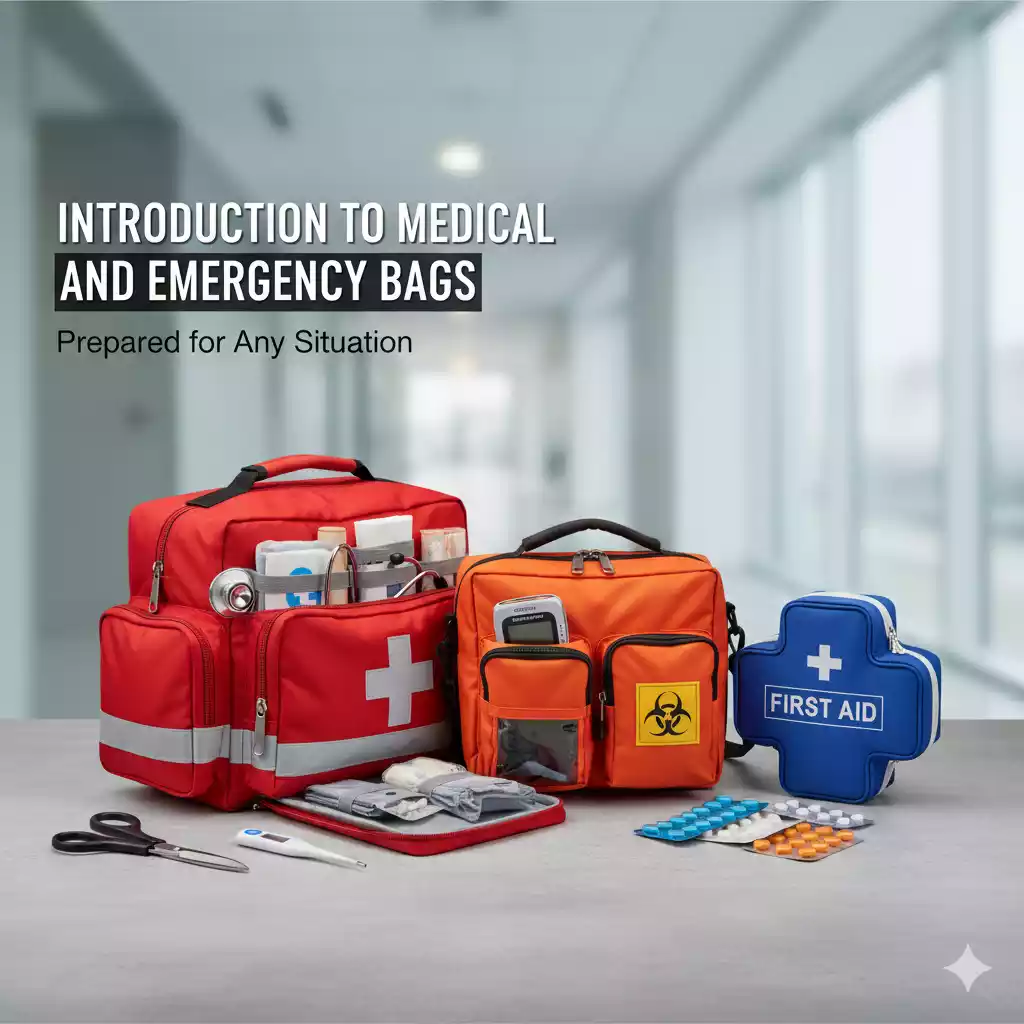
Introduction to Medical and Emergency Bags
Medical and emergency bags serve a critical function within healthcare environments, designed to store and transport essential medical supplies efficiently. These bags are indispensable tools for healthcare professionals, enabling them to respond promptly to medical emergencies and deliver necessary care in various situations. From hospitals to emergency rescue scenarios, the significance of these bags cannot be overstated, as they ensure that vital equipment and medications are readily accessible when every second counts.
Typically, medical bags are equipped with specialized compartments for organizing medical instruments, personal protective equipment, and emergency response items, catering to the unique needs of different healthcare settings. The portability and accessibility of supplies within these bags enhance the readiness and effectiveness of healthcare providers, allowing for swift action during critical events. Additionally, these bags must be durable and easy to disinfect, as they are used in diverse and often challenging environments where contamination risks are heightened.
Choosing the right medical bag is a crucial endeavor for hospitals and emergency services. Factors such as size, material, and organizational features must be carefully considered to ensure that the bag meets the specific demands of the intended use. For instance, a paramedic may require a larger, more rugged bag to accommodate advanced life support equipment, whereas a surgical suite may necessitate a smaller, highly organized bag for quick access to instruments during procedures. Consequently, understanding the essential requirements and functionalities of medical and emergency bags is paramount for hospital buyers and distributors, setting the foundation for informed decisions that enhance patient care and emergency preparedness.
Durability: Ensuring Long-lasting Use
Durability is a paramount factor when selecting medical and emergency bags, as these bags are often subjected to rigorous conditions and heavy-duty usage. The longevity of a bag is largely dependent on the quality of the materials employed in its construction. One common material used in the manufacturing of such bags is high-denier nylon, which is renowned for its exceptional strength and resistance to wear and tear. The denier rating indicates the thickness of the fabric; a higher rating signifies a more robust material capable of withstanding rough handling and harsh environments.
In addition to fabric, the stitching used in constructing medical and emergency bags plays a critical role in their durability. Reinforced stitching techniques, such as double- or triple-stitching, provide additional strength and prevent seams from splitting, which is essential when bags are overloaded with medical supplies or equipment. This attention to detail ensures that the bags maintain their integrity over time, reducing the likelihood of wear that could compromise their functionality during crucial moments.
Moreover, the use of waterproof or water-resistant coatings can also significantly enhance the durability of these bags, protecting their contents from moisture and other environmental factors. Such features are vital for maintaining the integrity of the medical supplies contained within, particularly in emergency situations where time is of the essence. Consequently, hospital buyers and distributors should consider not only the exterior materials and construction but also how these elements contribute to the overall usability of the bag in a variety of operational settings.
By prioritizing durability through quality materials and robust construction methods, medical and emergency bags can provide reliable performance that meets the demands of healthcare professionals and emergency responders alike. Investing in durable bags ultimately ensures longevity and effectiveness in delivering life-saving care when it is needed most.
Compartmentalization: Organized Storage Solutions
In medical and emergency contexts, efficient organization is paramount, as it directly influences the ability to respond swiftly in critical situations. Compartmentalization in medical and emergency bags is a fundamental feature that enhances the storage and accessibility of essential supplies. Properly designed compartments allow healthcare professionals and first responders to locate and retrieve items without unnecessary delay, which can be a crucial factor in life-or-death scenarios.
Various design elements contribute to effective compartmentalization. For instance, designated pockets for specific items—such as bandages, medications, and diagnostic tools—ensure that everything has its place. By clearly labeling these sections, users can quickly identify what they need during emergencies, thus minimizing search time and contributing to better patient outcomes. Additionally, adjustable dividers can be particularly useful, as they allow users to customize the layout according to their specific needs. This flexibility can accommodate diverse situations, ranging from emergency medical responses to routine clinical operations.
Furthermore, some medical and emergency bags are designed with transparent pockets or compartments, allowing users to visually assess their inventory at a glance. This approach enhances inventory management and preparedness, as one can promptly identify supplies that may need replenishment post-use. The incorporation of modular compartments also aids in maintaining essential items’ sterility and integrity, aligning with strict healthcare standards.
Ultimately, effective compartmentalization not only promotes organized storage solutions but also fosters greater efficiency in emergency responses. The thoughtful integration of various compartments can be a game-changer for hospital buyers and distributors seeking to equip their teams with the best tools for patient care. Investing in bags with well-thought-out organizational features is essential for optimizing operational effectiveness in any medical or emergency setting.
Water Resistance: Protection against Elements
Water resistance in medical and emergency bags is a critical feature that directly impacts the effectiveness of healthcare services in unpredictable situations. In emergency scenarios, such as natural disasters or unpredictable weather conditions, it is essential that medical equipment and supplies remain protected from water damage. Exposure to water can impair the functionality of essential medical instruments and compromise the integrity of pharmaceuticals, therefore emphasizing the need for diligent consideration of water-resistant designs in such bags.
There are various levels of water resistance that can be integrated into medical bags. Generally, these levels are determined by industry standards such as the International Protection (IP) ratings, which classify the degree of protection provided against dust and water. For instance, a bag rated IPX4 can withstand splashes of water from any direction, while a rating of IPX7 means the bag can endure temporary immersion in water up to 1 meter deep. Understanding these ratings is crucial for hospital buyers and distributors in making informed choices about the products they procure.
In terms of materials, manufacturers often employ waterproof fabrics, such as nylon with a polyurethane coating or thermoplastic polyurethane (TPU) films, which provide excellent moisture resistance. Additionally, critical design elements, such as sealed zippers and welded seams, further enhance the bag’s water-resistant capabilities. It is imperative for healthcare providers to select bags that adhere to these high standards, ensuring that the equipment and supplies within them are safeguarded against the elements, thus facilitating optimal performance in emergency situations.
Incorporating these water-resistant features not only improves the reliability of medical bags but also plays a significant role in safeguarding patient care. By ensuring that the medical supplies remain intact and operational, hospitals can maintain their readiness to respond efficiently in critical times.
Certifications: Ensuring Quality and Safety
In the medical and emergency supply industry, ensuring the quality and safety of products is paramount. One of the primary means of achieving this assurance is through obtaining certifications from recognized regulatory bodies. Certifications serve as a testament to the fact that medical and emergency bags meet specific standards of quality, safety, and performance. Understanding these certifications is crucial for hospital buyers and distributors when making procurement decisions.
One of the most recognized certifications in the medical field is the International Organization for Standardization (ISO) certification. ISO standards provide guidelines that manufacturers must adhere to in order to demonstrate their commitment to quality management and product safety. For instance, ISO 13485 specifically addresses quality management systems for medical devices, ensuring that organizations consistently provide products that meet customer and regulatory requirements. Certification to this standard indicates that the manufacturer has implemented a systematic approach to managing quality, which is essential for minimizing risks associated with medical bags.
In addition to ISO certifications, other certifications like the CE mark are also significant. The CE mark indicates that a product has been evaluated and meets European health, safety, and environmental protection standards. This certification is particularly crucial for products distributed in the European market, as it signifies compliance with comprehensive regulatory requirements. Furthermore, obtaining certifications such as the FDA (U.S. Food and Drug Administration) approval for medical devices reinforces the manufacturer’s adherence to safety regulations, ensuring that their products are reliable and effective in emergency situations.
Overall, the presence of adequate certifications not only enhances the credibility of medical and emergency bags but also instills confidence among healthcare providers. Hospital buyers and distributors should thoroughly evaluate these certifications to ensure that they are acquiring high-quality and compliant products that will ultimately contribute to improved patient safety and care.
Size and Portability: Finding the Right Fit
When selecting medical and emergency bags, size and portability are crucial factors that directly influence their functionality and usability in various scenarios. Different healthcare settings and emergency situations demand bags of varying capacities. For instance, a paramedic responding to an emergency call may require a smaller, easily maneuverable bag to navigate crowded spaces, while a hospital setting may need larger bags designed to carry extensive medical supplies for multiple patients. Therefore, understanding the specific requirements of each situation is essential in ensuring that the selected bag meets the needs of healthcare providers effectively.
Furthermore, the design features of medical and emergency bags can significantly impact portability. Padded straps are a vital aspect as they enhance comfort during transport, especially when the bags are filled with heavy medical supplies. Healthcare professionals often face long shifts, making it imperative that bags are comfortable to carry over extended periods. Additionally, bags equipped with ergonomic designs can help reduce strain and fatigue, thus enabling providers to deliver care more effectively.
Wheels on medical bags also provide added convenience, allowing for easy transport in hospitals or while responding to emergencies. In situations where speed is critical, bags that can be pulled rather than carried ensure that medical personnel can move swiftly without compromising on the equipment they need. Therefore, assessing the weight distribution and the bag’s overall design will also play a role in the decision-making process.
In summary, finding the right balance between size and portability is essential when selecting medical and emergency bags. By considering the specific needs of various healthcare scenarios and incorporating features designed for ease of mobility, buyers and distributors can ensure that healthcare providers are well-equipped to deliver timely and effective care.
Ease of Cleaning: Keeping Equipment Safe
In the context of medical and emergency bags, the ease of cleaning is a crucial factor that cannot be overlooked, especially when addressing infection control in hospital environments. The prevalence of healthcare-associated infections (HAIs) necessitates that equipment used in medical settings is not only functional but also hygienically maintained. Therefore, the materials and design of medical bags need to facilitate straightforward cleaning and disinfection processes.
Typically, medical bags made from polypropylene, PVC, or other non-porous materials are preferable due to their resistance to stains and ability to withstand various cleaning agents. These materials do not harbor pathogens, which makes them more suitable for environments where sterility is paramount. Furthermore, bags equipped with smooth, flat surfaces are easier to disinfect than those with intricate designs or multiple compartments. Choosing bags with minimal seams can also aid in reducing areas where dirt and contaminants might accumulate.
Additionally, the choice of color can impact the cleaning process. Darker colors tend to show fewer stains and scratches, making it easier to maintain a professional appearance with less frequent cleaning required. It is equally important for hospitals and distributors to consider bags that indicate whether they have been properly disinfected, such as color-changing materials or integrated indicators. These features serve not only a functional purpose but also enhance compliance with hygiene protocols.
In hospital settings, where the stakes are consistently high, the design and material choices for medical bags directly affect the ability to maintain a sterile environment. Therefore, when selecting bags for use in medical facilities, buyers must prioritize those that allow for efficient cleaning and support effective infection control measures.
User Feedback: The Voice of Healthcare Professionals
User feedback plays a critical role in the design and selection of medical and emergency bags. The insights derived from healthcare professionals such as doctors, nurses, and paramedics directly influence the functionality, usability, and overall effectiveness of these essential tools. Unlike standard equipment, medical bags serve various purposes in rapidly changing environments, which makes the input from end-users invaluable. By integrating the perspectives of those who utilize these bags daily, manufacturers can enhance their designs to better meet the needs of healthcare providers.
Healthcare professionals frequently offer suggestions that highlight the practical usage of medical bags in real-life situations. For instance, doctors and nurses may recommend specific organizational features that enable quick access to crucial medical supplies. Parametric feedback can reveal insights about mobility and weight distribution, which are critical when time is of the essence in emergency settings. This direct line of communication between users and designers ensures that new innovations address real-world challenges faced by medical personnel.
Moreover, user feedback can foster a sense of ownership among healthcare professionals, promoting collaboration between them and manufacturers. When designers actively seek and incorporate insights from frontline workers, the result is a more tailored product. This collaboration can lead to the development of specialized compartments for various medical tools, better hydration options, and improved materials that withstand the rigors of use in emergency applications. Continuous dialogue with users helps identify areas for improvement, leading to a cycle of innovation that benefits everyone involved in patient care.
In conclusion, the voice of healthcare professionals should remain at the forefront of developing and selecting medical and emergency bags. Their feedback not only drives better product choices but also enhances safety, efficiency, and overall patient outcomes in medical settings.
Conclusion: Making Informed Decisions
Understanding the essential requirements for medical and emergency bags is crucial for hospital buyers and distributors seeking to ensure optimal care. Throughout this guide, we have outlined a variety of important features that should be taken into account when selecting these critical tools. From durability and capacity to organization and accessibility, each characteristic plays an integral role in ensuring that healthcare professionals have the supplies they need at their fingertips.
Additionally, this guide emphasized the importance of adhering to industry regulations and standards, which not only safeguard patients but also protect healthcare providers from liability. Knowledge about the recommended materials, design attributes, and functionalities of medical bags enhances decision-making processes, fostering more effective emergency responses. The integration of user-friendly designs can greatly improve efficiency, ultimately benefiting patient outcomes.
As you consider which medical and emergency bags to procure, it is vital to prioritize quality and safety above cost alone. Inadequate equipment can lead to delays in critical situations, thus underscoring the need for buyers and distributors to invest in robust and reliable options. Furthermore, engaging with manufacturers and suppliers who prioritize innovation and compliance ensures a comprehensive understanding of new technologies and practices within the medical bag sector.
In conclusion, the choices made in selecting medical and emergency bags have far-reaching implications for healthcare delivery. Buyers and distributors are encouraged to reflect on the key features detailed in this guide to make informed decisions that enhance operational efficiency and patient safety. By prioritizing quality, regulatory compliance, and innovative design in your purchasing process, you contribute positively to the broader healthcare landscape. Ultimately, the effort put into acquiring the right equipment will translate into improved patient care and operational success.