
Aluminum foil, foam and EPE records
Use the identified sample and recorded inspection or test items when discussing liners, insulation or cushioning. Do not infer thermal, food-contact or protective performance beyond the document.
Scoped material evidence
Direct answer: This library presents test, inspection and reference documents for selected Benshine material and packaging samples. Each document applies only to its identified sample, method, date, result and conclusion; it is not a factory-wide certification or universal proof for every bag, material option or production lot.
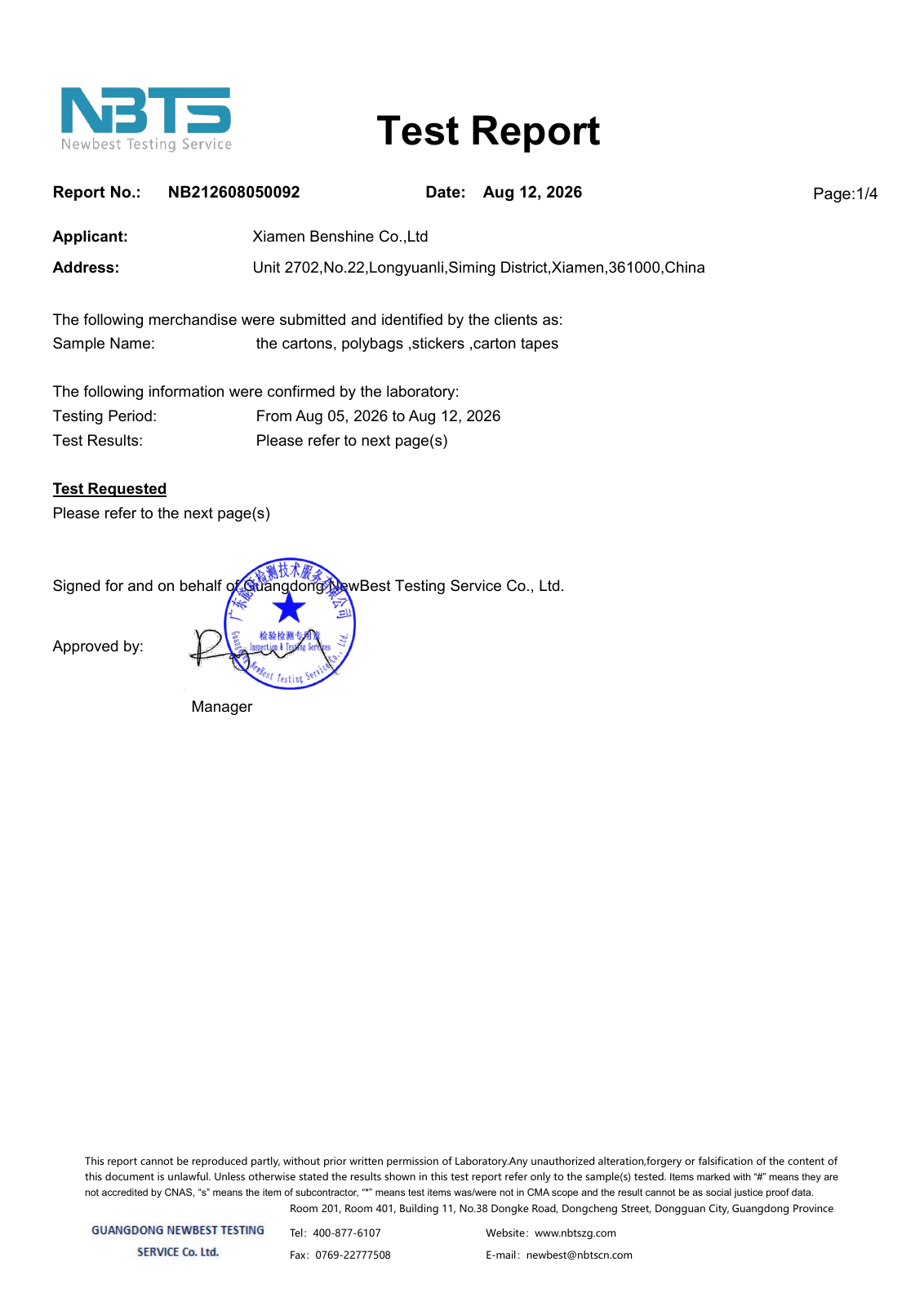
Featured report
The report dated 12 August 2026 identifies carton tape, polybags, cartons and printed stickers submitted under Xiamen Benshine Co.,Ltd.
It records testing for lead, cadmium, mercury and hexavalent chromium with reference to Regulation (EU) 2025/40. Its conclusion lists the submitted packaging samples as passing the stated combined heavy-metal limit.
Scope boundary: this result is evidence for the samples named in the report. It does not by itself establish compliance for a finished bag, a different packaging component or a later production lot.
Evidence review
Read the document fields before deciding whether its conclusion is relevant to a proposed custom bag project.
| Report field | Question to ask | Why it matters |
|---|---|---|
| Identity and date | What are the report number, applicant, issuing body and date? | Distinguishes the record from marketing copy and helps check whether it is current for the decision. |
| Submitted sample | What exact material, component, colour or construction was tested? | A result should not be transferred automatically to a different material, finished product or supplier source. |
| Method and scope | Which standard, method, substances or performance properties were examined? | A report answers only the questions included in its stated test scope. |
| Result and conclusion | What values, limits and pass/fail wording are actually recorded? | The conclusion must be read with the method, sample identity and any qualifications. |
| Project applicability | Does the proposed bag use the same controlled material or packaging component? | Changes to material, coating, colour, print, adhesive, hardware or construction may require a new review. |
| Production traceability | How will the approved evidence be connected to the purchase specification and lot? | Traceability helps prevent a general reference from being treated as proof for unrelated production. |
Document subjects
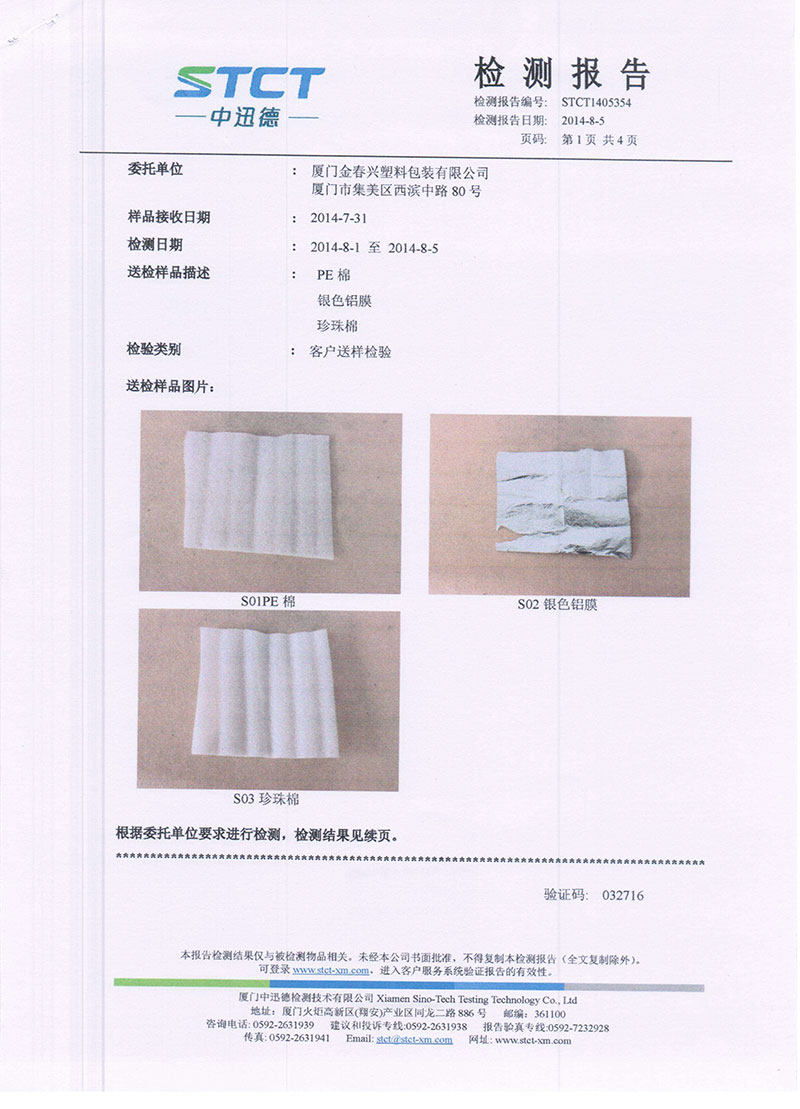
Use the identified sample and recorded inspection or test items when discussing liners, insulation or cushioning. Do not infer thermal, food-contact or protective performance beyond the document.
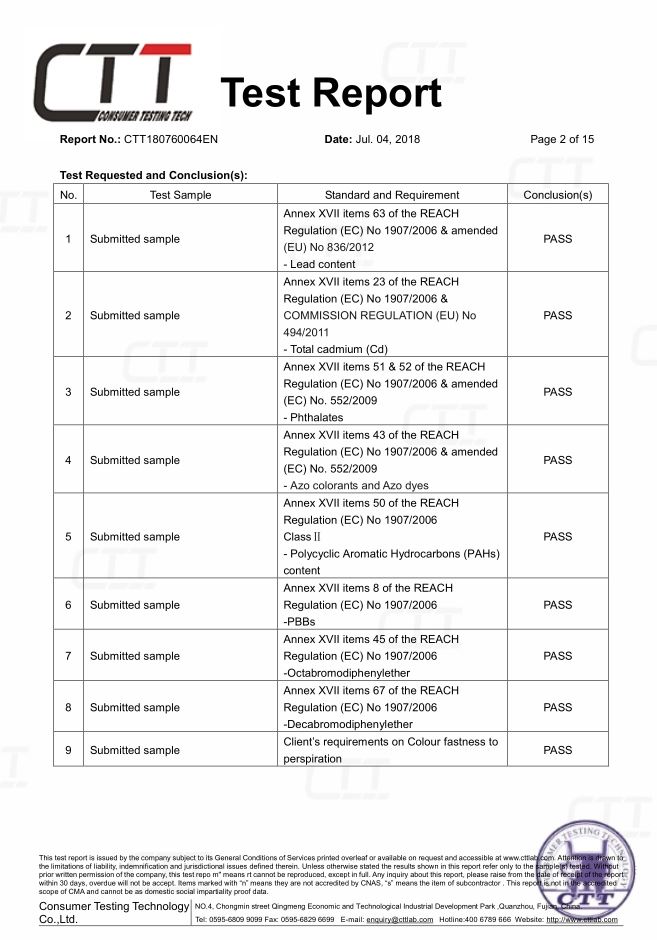
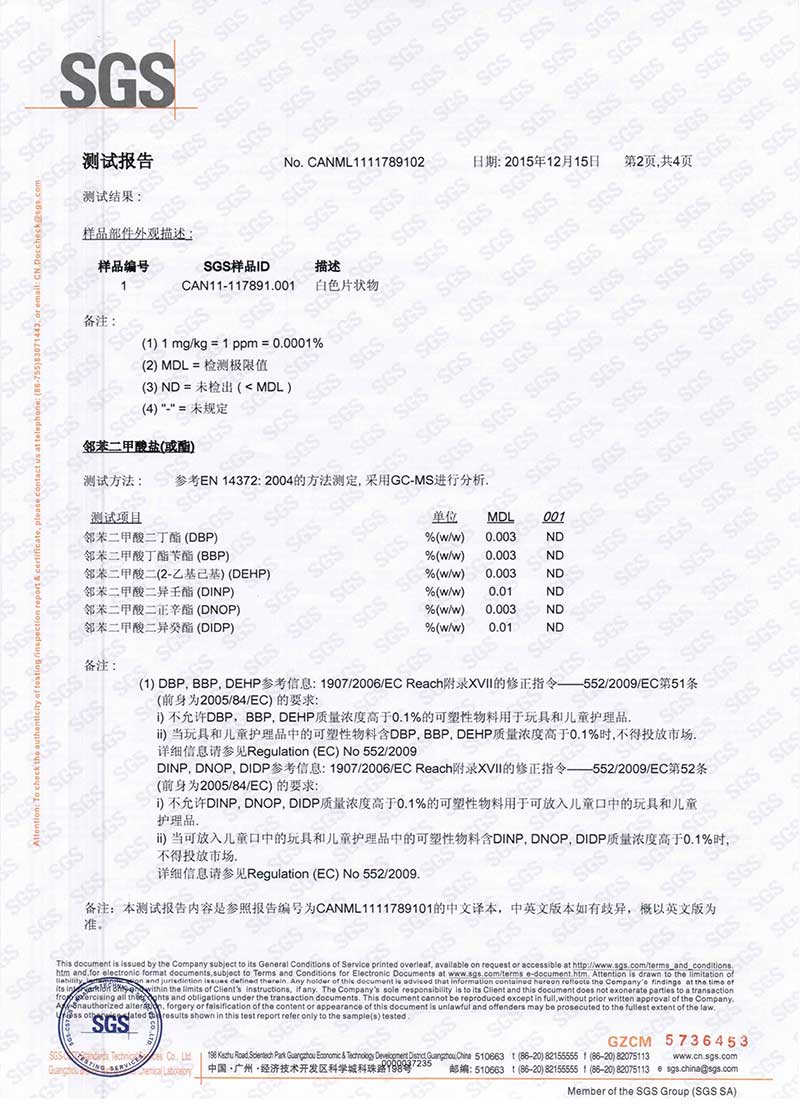
Review the exact sample, substances, method, date and conclusion. A document for one material is not blanket REACH evidence for every component in a finished bag.
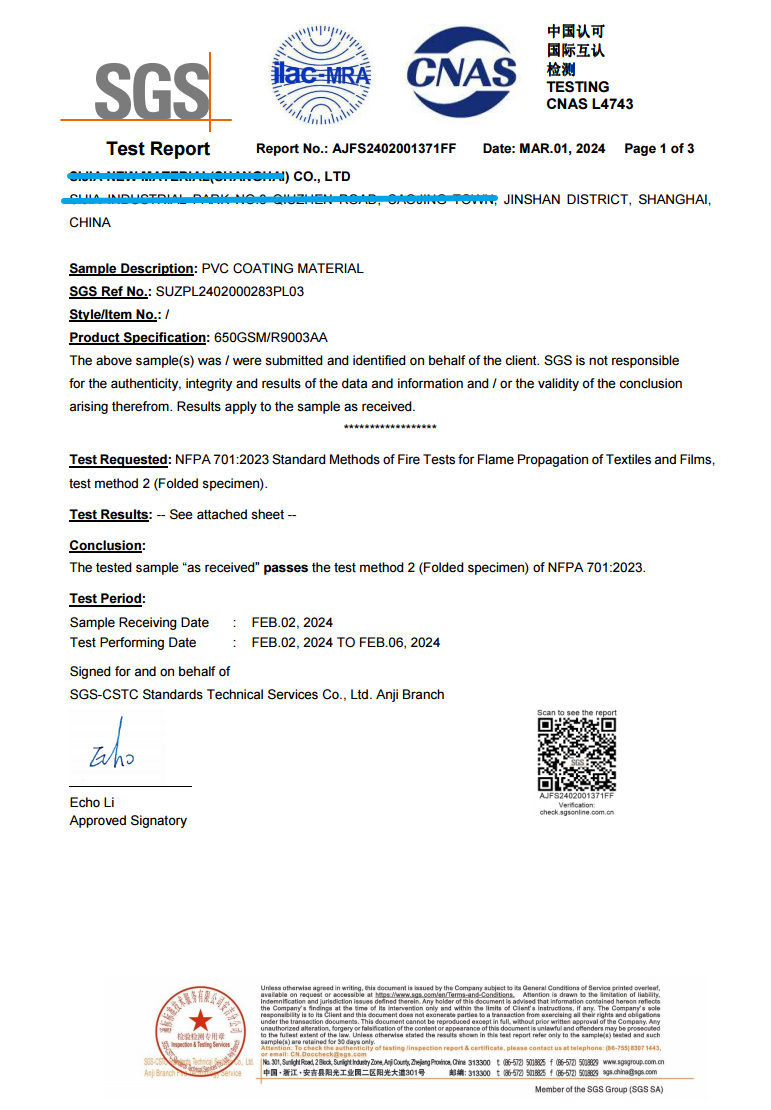
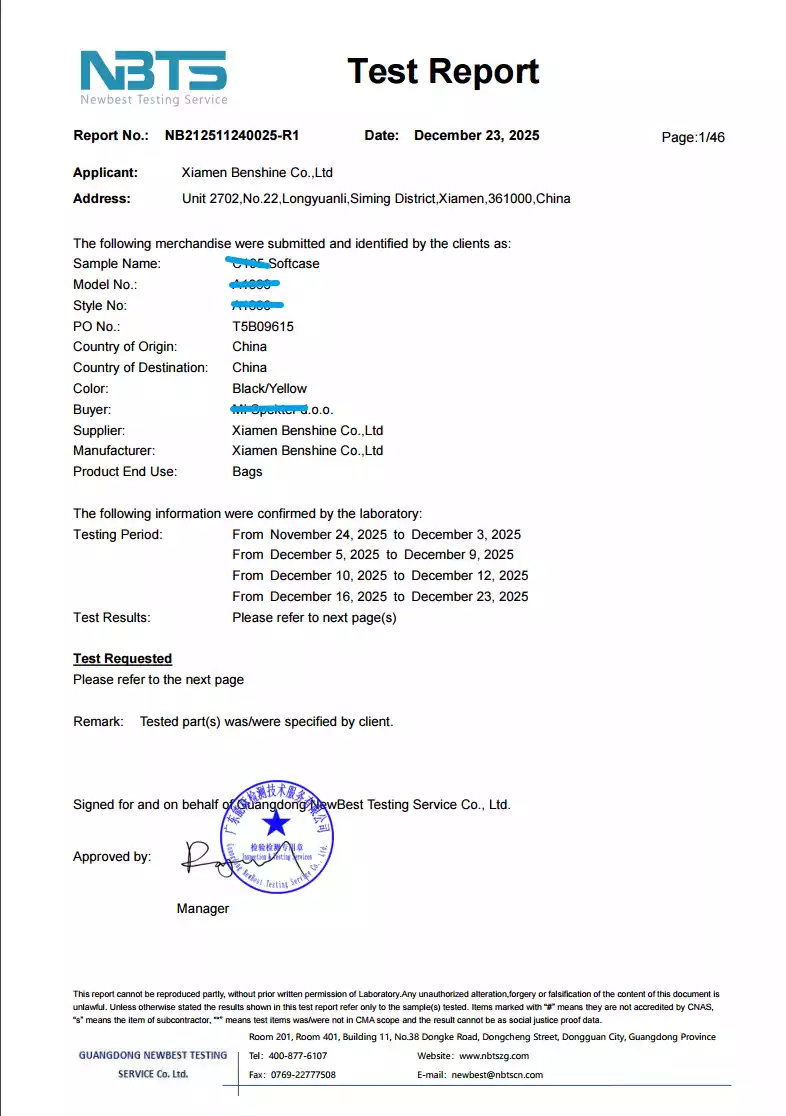
Use the report only for the submitted sample and stated test scope. The document title alone does not prove that a different fabric or finished bag meets a requirement.
Connect the named packaging samples and recorded heavy-metal tests to the proposed packing specification; do not extend the result to unlisted materials or products.
Document labels describe their subject. They do not claim that Benshine, its factory or every product holds a universal certification.
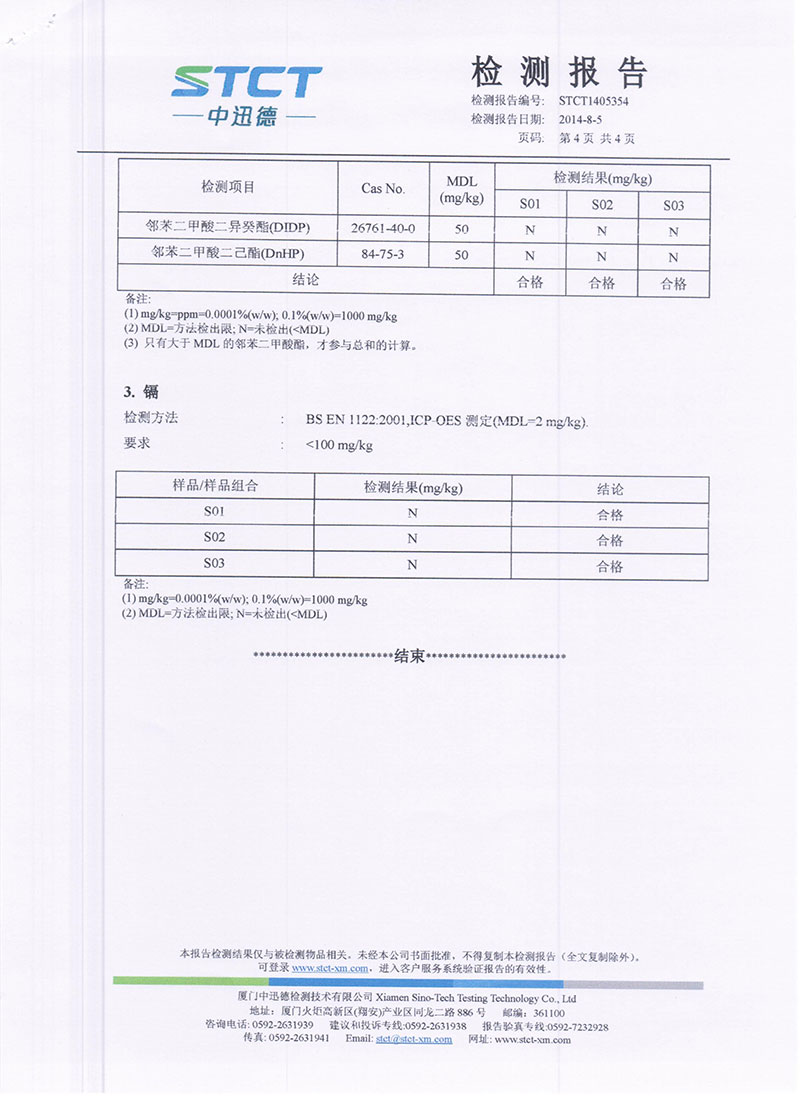
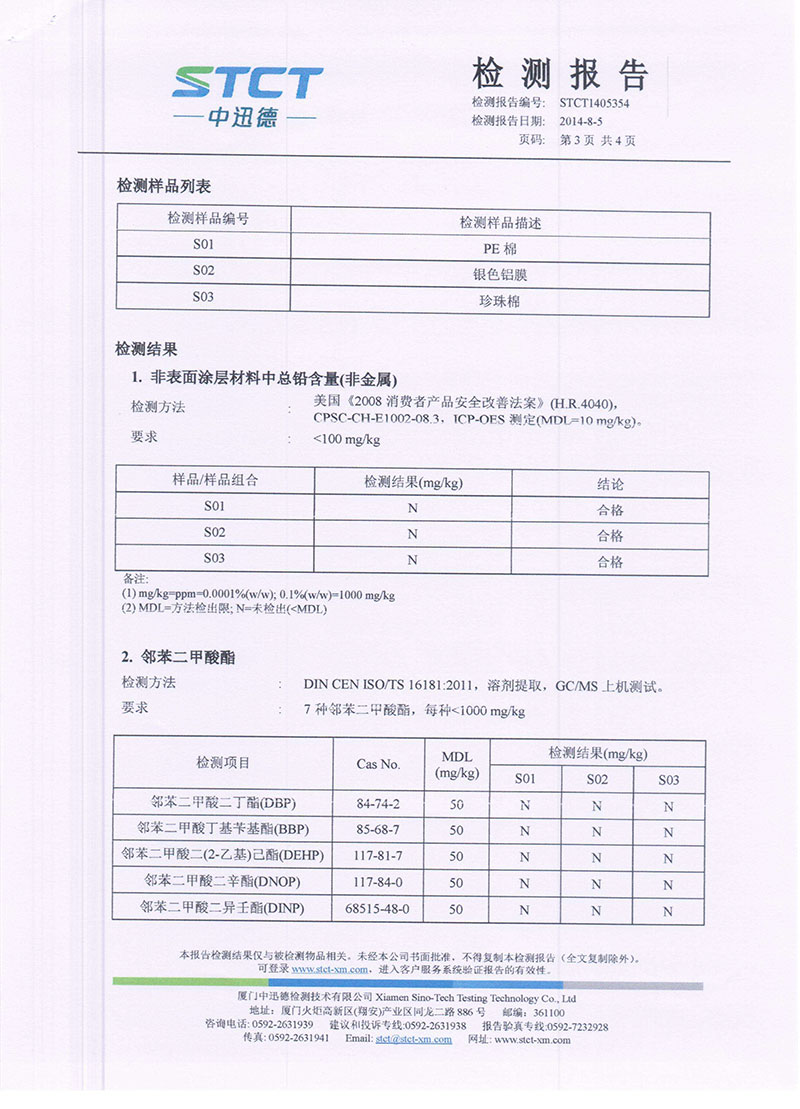
Visual document references
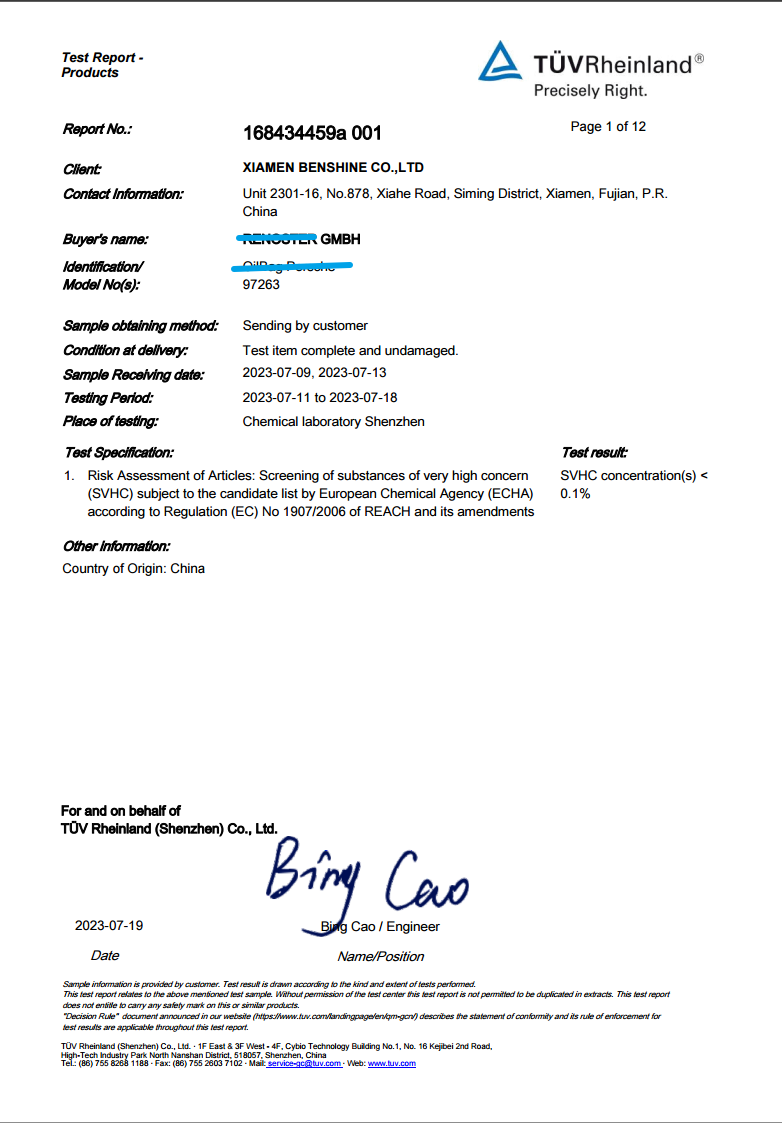
Use these previews to identify the relevant record. Request a complete, legible document and confirm its sample, method, date and applicability before relying on it for a sourcing or compliance decision.
Project evidence brief
Evidence-led enquiry
Share the bag type, material and packaging specification, destination market, estimated quantity and required test or document. Applicability, availability and any new testing need can then be reviewed for that project.
Quick answers
No. Each report or inspection document applies only to the sample, material, test method, date, result and conclusion identified in that document. It is not a factory-wide certificate or evidence for every product or production lot.
Report NB212608050092, dated 12 August 2026, identifies carton tape, polybags, cartons and printed stickers. It records lead, cadmium, mercury and hexavalent chromium testing with reference to Regulation (EU) 2025/40 and reports that the submitted samples passed the stated combined heavy-metal limit.
No. The named samples are packaging components, not every finished bag, material option or future batch. A buyer should match the exact sample and report scope to the proposed packaging and destination-market requirement.
Check the report number, applicant, laboratory or issuing body, report date, sample description, test method, substances or properties tested, result and conclusion. Then confirm whether the proposed project uses the same controlled material or requires new testing.
No. A preview helps identify a document, but sourcing and compliance review should use the complete, legible report and any required supporting records. The complete PPWR PDF is linked on this page.
Evidence needs depend on the selected materials, construction, intended use, destination market and buyer requirements. State the required standards and documents in the RFQ so applicability, availability and any project-specific testing can be reviewed before approval.