
Organize the set around real garments and luggage
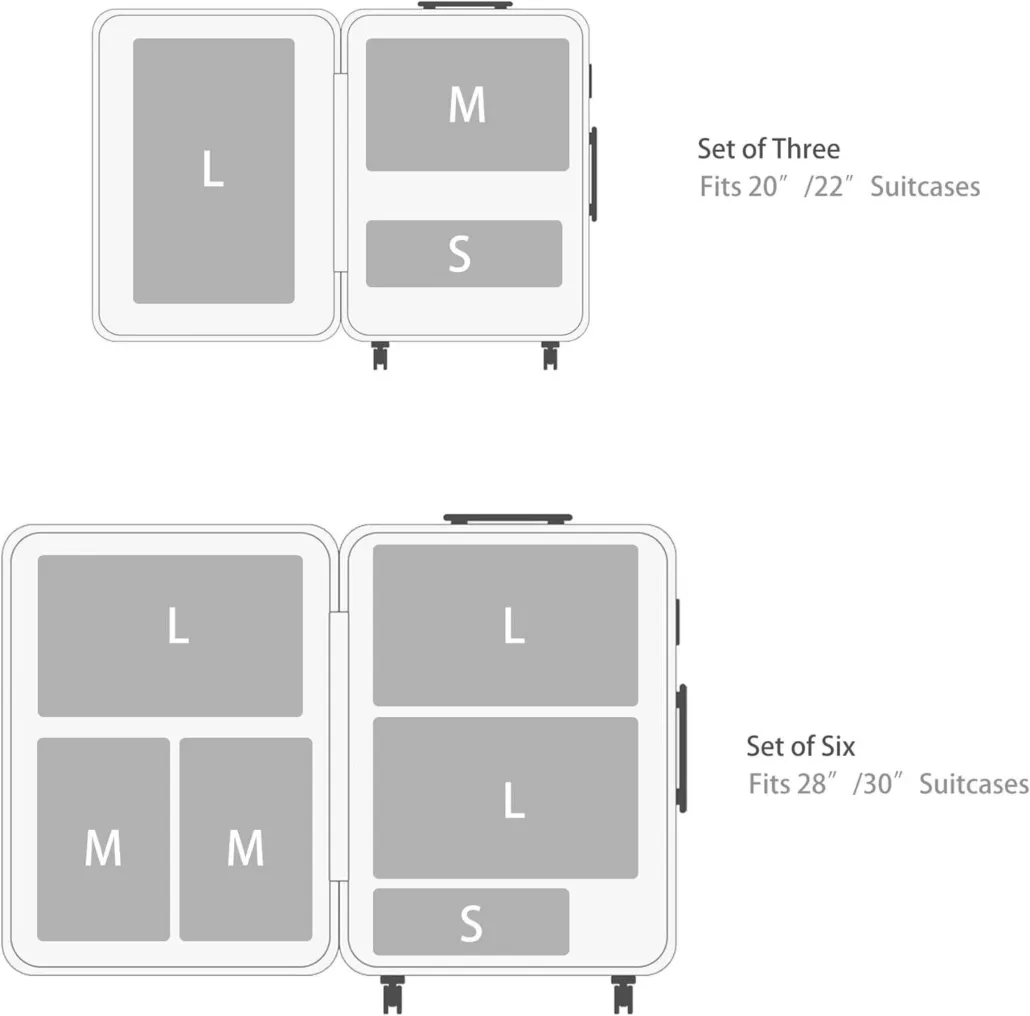
Packing cube development should begin with what the traveller actually packs and the suitcase that receives the set. Shirts, knitwear, trousers, underwear and accessories occupy different folded volumes, while luggage interiors lose usable space around wheels, handles and curved corners.
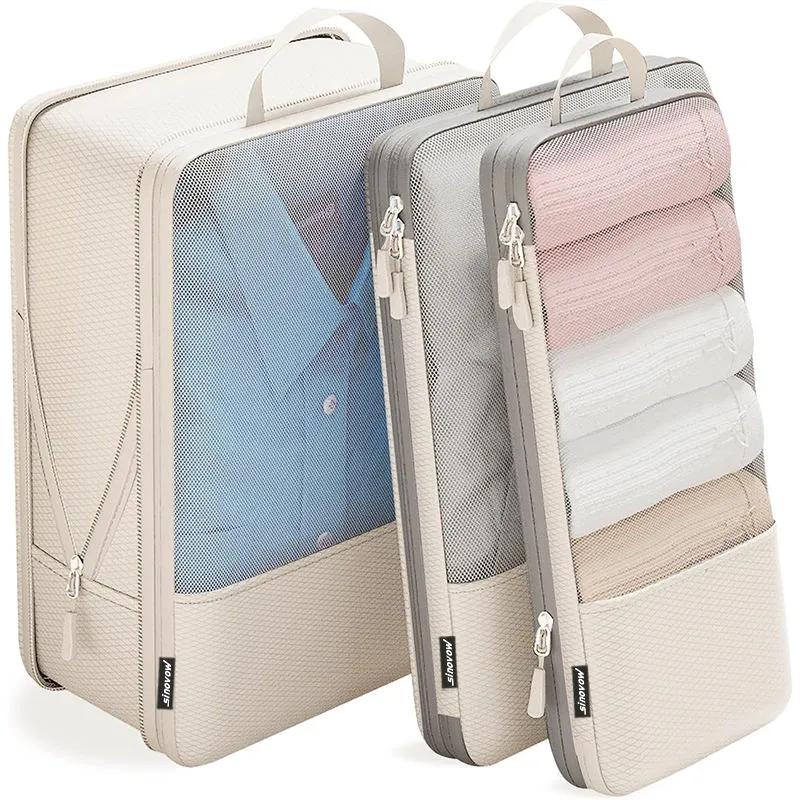
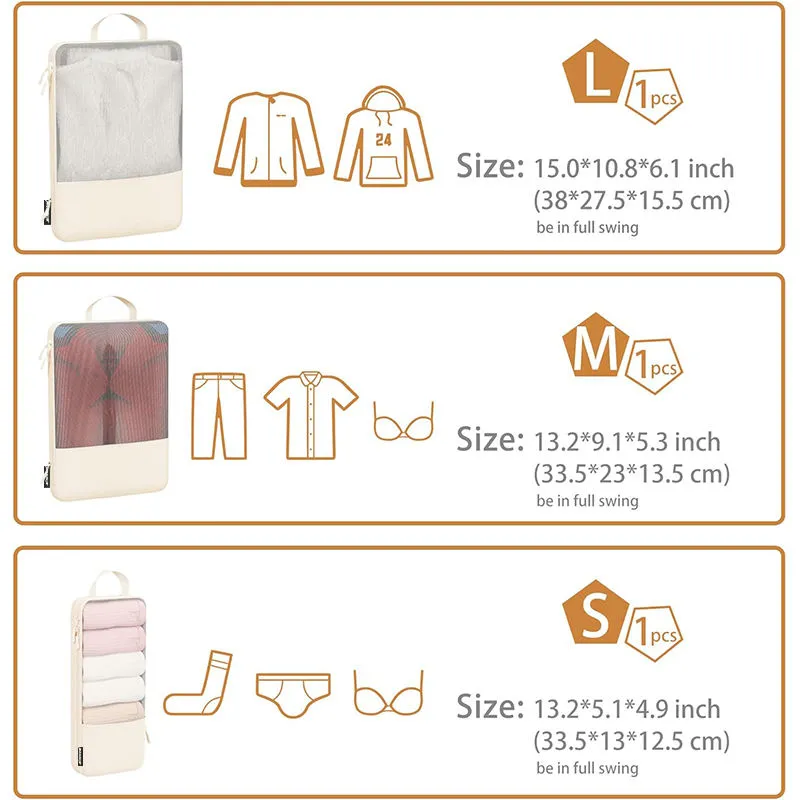
ES0322 provides a first-party multi-size organizer direction with mesh faces, carry handles and zip closures. Its source imagery shows clothing loaded into different cube sizes and arrangements inside suitcases, making it a useful starting point for a controlled custom specification.
Treat compression as a construction to verify
A compression bag manufacturer brief should define the cube when expanded, the intended loaded depth, the compression-gusset geometry and the zipper route. Pulling the second zipper changes load on the seams, slider, mesh and contents, so representative garments should be used during sampling.
Source artwork includes promotional space-saving language, but Benshine does not treat a pictured percentage as verified performance. If a reduction target matters, agree on the clothing load, folding method, starting and final measurement points, operating procedure and acceptance criteria.
Specify mesh, panels and zippers together
Mesh can help users see packed contents, while solid lower panels can conceal small items or provide a different branding surface. Neither visibility nor a mesh appearance proves airflow, snag resistance, strength or washability. Record the exact material direction, binding, seams, zipper tape, sliders, handles and colour standard as one construction.
For a custom packing cube manufacturer enquiry, also identify likely overfilling and handling conditions. A loaded sample can reveal whether the opening, gusset and handle remain practical across each size in the set.
Approve the whole set and retail presentation
Packing cubes are often sold as a nested set, so piece count, size naming, colour coding and instruction copy should be controlled together. Check how each cube nests or folds, how the set fits the unit package and how the buyer verifies that every size is present.
Branding, labels and packaging should be reviewed on the production-style materials. The final approved record should cover the cube dimensions, set composition, compression procedure, workmanship checkpoints, tests and pack-out without relying on unsupported universal MOQ, lead-time or performance promises.