
Purpose-built board bags specified around the exact equipment

Surfboard Bag Factory in China

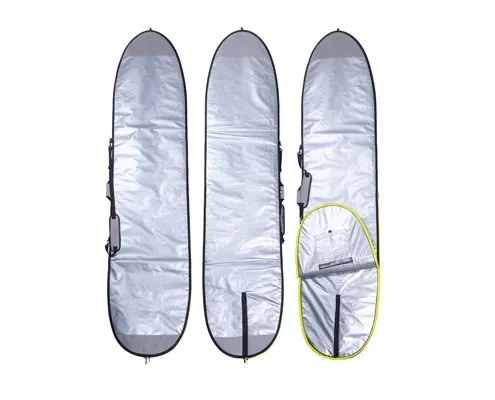
Direct answer: Benshine Bags supports custom surfboard bag development in China and has first-party surfboard-bag reference imagery. Buyers should provide the board shape and dimensions, nose and tail profile, fin configuration, packed accessories, protection zones, opening, carrying method, exposure conditions, branding, packaging and test criteria so feasibility can be reviewed.

Surf and watersports brandsBoard retailers and distributorsTravel accessory buyersPrivate-label product teams
Discuss on WhatsAppEmail Sales

Build the pattern around the actual board

Surfboards with the same nominal length may differ in maximum width, thickness, rocker, nose and tail profile or fin arrangement. Those differences affect seam lines, clearances and how the board moves through the opening. Use controlled measurements and profile information rather than selecting a bag from length alone.

Benshine’s existing surfboard-bag images provide a real development reference, but they do not prove that the same shape, materials or construction will suit a different board. A new project remains subject to specification review, sampling and confirmed production terms.

Define protection as a system

Exterior fabric, lining, padding, rail reinforcement, closure placement and handle attachments work together. If impact, abrasion, heat, water or UV exposure matters, describe the condition and acceptance method. The words padded, protective or travel do not establish a performance level by themselves.

Review loading, clearance and carrying with the board

An empty sample cannot confirm board fit. Load the intended board and accessories, check nose and tail space, fin clearance, zipper contact, removal, balance and strap position, then document any revisions against the controlled brief.

Coordinate branding and pack-out before approval

Large artwork and colour blocking can cross seams or padded zones. Confirm artwork size, location, application method, labels and claim wording before the sample is frozen. Also define whether the finished bag will be folded, rolled or shipped flat, because pack-out can affect presentation and logistics.

Application-led design

Choose the construction by how the bag will be used

An application is a starting point for specification—not a substitute for dimensions, materials, components and measurable requirements.

Daily board storage and local transport

Define the exact board geometry, opening, handle balance, vehicle handling and routine exposure before selecting the construction.

Padded surfboard bags

Map vulnerable areas and buyer-defined impact conditions so foam type, thickness, coverage and reinforcement can be sampled and tested.

Surfboard travel bags

Document board count, accessories, handling route, labels, straps and transport constraints; suitability is not implied by the word travel.

Private-label board programmes

Coordinate colour blocking, artwork, labels, instructions, folding or rolling and retail or shipment packaging.

Benshine product references

Explore surfboard bags construction options

Select a reference to review the available source details, then identify what must change for your product.

RFQ specification checklist

Decisions to control before sampling

A complete brief helps Benshine review feasibility and gives buyers a clearer basis for comparing quotations and samples.

DecisionInformation to provideWhy it matters
Board geometry and clearanceLength, maximum width, thickness, nose and tail profile, rocker, fin type, fin position and required allowanceNominal board length alone cannot establish finished fit or opening geometry.
Protection systemPadding material, thickness, coverage, rail or nose reinforcement, lining, surface contact and test criteriaA padded appearance does not prove protection under a particular handling condition.
Opening and retentionZipper path, flap, closure direction, fin access, internal straps, accessory pockets and loading sequenceThe board profile and fins affect insertion, removal, zipper placement and internal clearance.
Carrying and handlingGrab handles, shoulder strap, attachment points, balance location, packed weight and lifting sequenceHandle position and reinforcement should be reviewed with the intended board and accessories loaded.
Materials, exposure and brandingExterior and lining, heat or water exposure, abrasion points, cleaning, artwork, labels, packaging and required evidenceWater, heat, UV, abrasion and material claims require a defined scope and applicable evidence.

From reference to production brief

A controlled sourcing path

01

Record the board and use case

Share controlled dimensions, profile images or drawings, fin configuration, accessories, handling route, market and target quantity.

02

Build the protection brief

Define clearances, padding zones, opening, retention, carrying, exposure, branding, packaging and measurable tests.

03

Review the sample with the board

Check insertion, removal, nose and tail fit, fin clearance, zipper contact, balance, straps, seams and buyer-defined protection tests.

04

Freeze production details

Approve the controlled sample, materials, artwork, labels, quality checkpoints, pack-out and current commercial terms.

Buyer questions

Frequently asked questions about surfboard bags

What dimensions are needed for a custom surfboard bag?

Provide overall length, maximum width, thickness, nose and tail profile, rocker, fin type and position, board count, accessories and the desired fitting allowance. A drawing, template or physical board reference improves fit review.

Does padding thickness prove a surfboard bag will protect the board?

No. Foam type, density, coverage, seams, lining, reinforcement, closures, packed contents and handling conditions all affect the result. Define the test method and acceptance criteria for the project.

Can a surfboard travel bag be approved from outside dimensions alone?

No. Travel use also depends on board and accessory fit, fin clearance, opening access, zipper contact, carrying, labels, packed weight, transport conditions and any buyer-defined protection test.

What should a private-label surfboard bag brief include?

Include board geometry, construction, materials, padding zones, closures, handles and straps, artwork, labels, claim wording, testing, packaging, quantity, destination market and timing.

EmailWhatsApp