Choose the construction behind the jute appearance
Jute bags can use different fabric specifications, laminations, linings, trims and handle materials. These choices affect hand feel, appearance, print response, folding and care. Approve a representative material standard rather than relying on a generic material label.
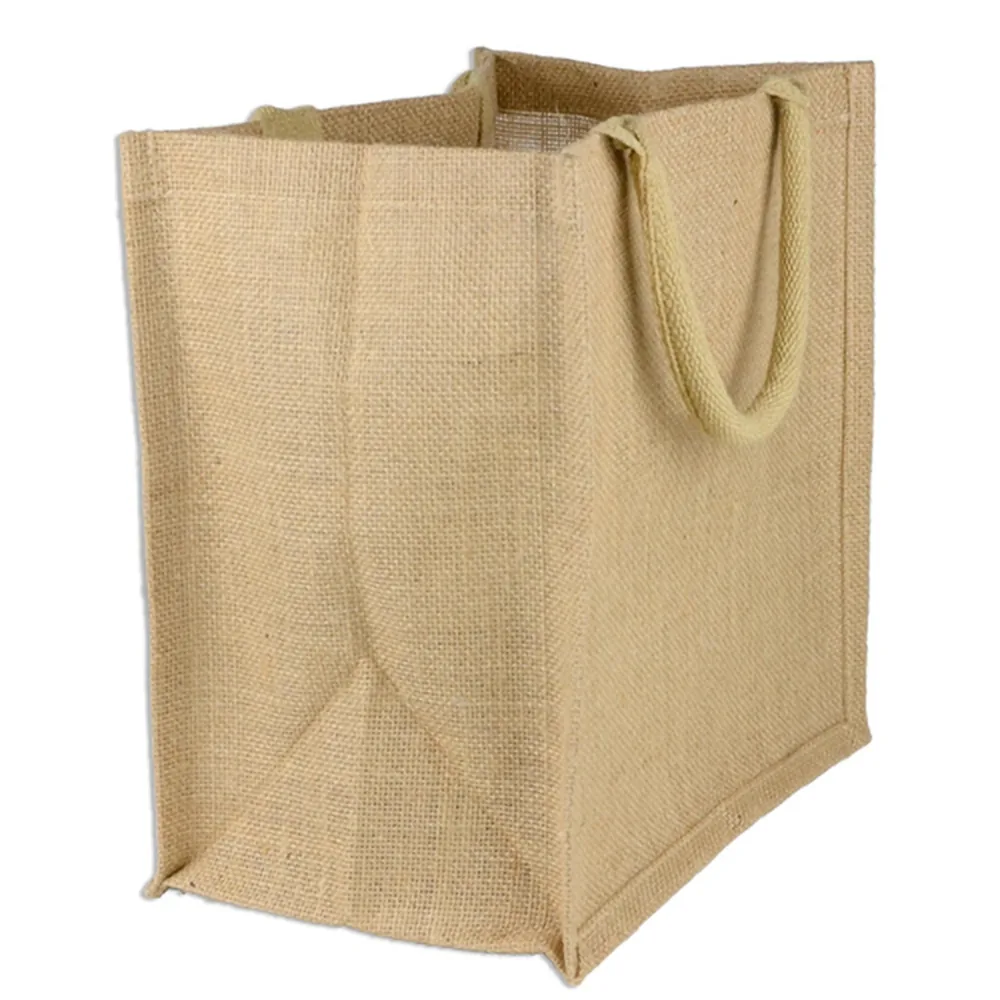
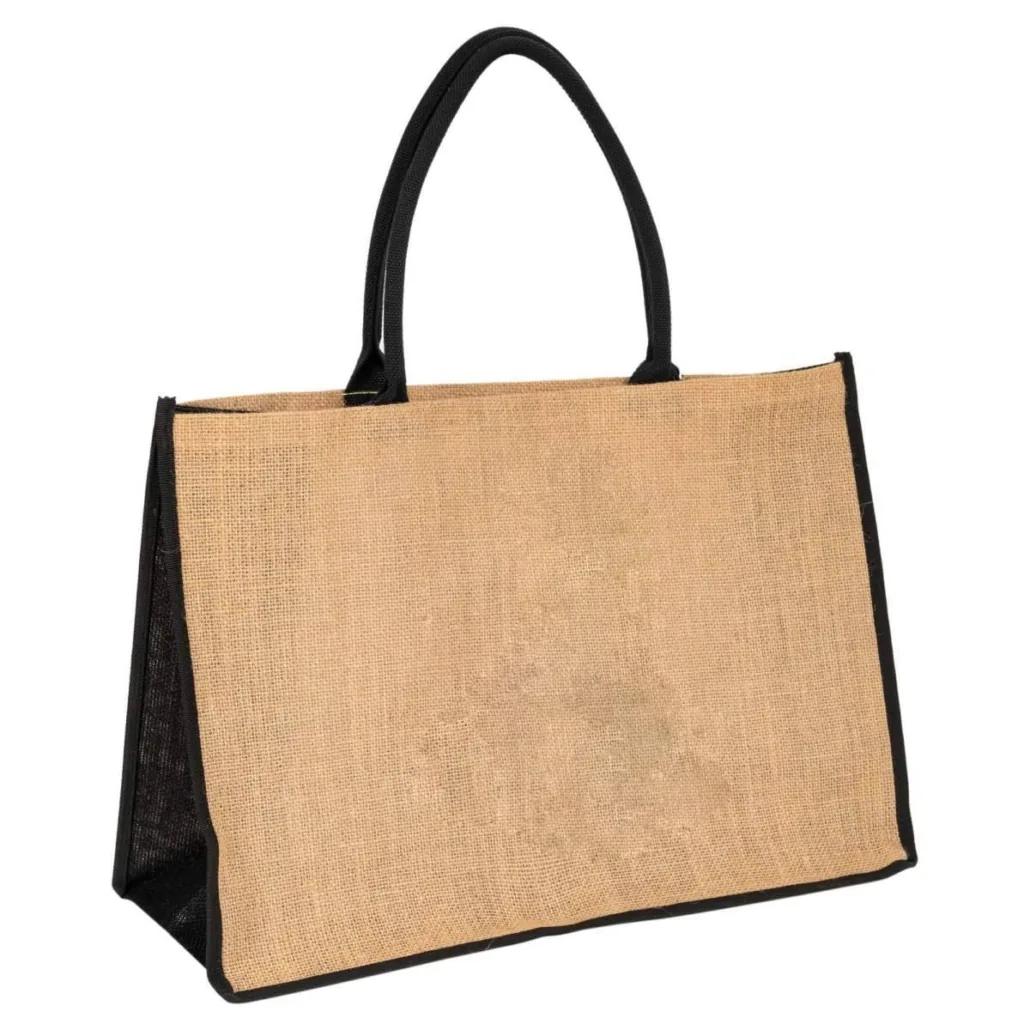
Benshine’s tote bag03 and Tote bag10 records provide laminated-jute and jute-fabric reference directions. They are development starting points, not guarantees of final dimensions, load performance, material claims, price or availability.
Design the bag around the packed contents
A retail tote, grocery carrier and gift bag can share a material but require different proportions and reinforcement. Send the contents and packed load so the gusset, base, handles, seams and closure can be evaluated together.
Substantiate environmental language
Natural-looking texture is not evidence for a finished-product environmental claim. Consider every layer, coating, ink, trim and package, then retain buyer-approved documentation for the precise claim and target market.
Adapt a jute tote reference for gift presentation
Jute tote bags and jute gift bags can use similar panels but serve different packing routines. Tote Bag03 is a laminated-jute tote reference; Tote Bag10 provides a jute-fabric direction. Choose the closest construction, then send the actual gift dimensions, packed weight, desired opening, handles, logo area and presentation packaging. The reference does not establish that every gift size or decoration method is feasible.
For custom jute gift bags with a logo, approve artwork on the proposed material and check a loaded sample for item fit, handle attachment and appearance. If the brief includes a sustainability or biodegradability statement, define the exact claim and evidence separately. The shopping bag category compares other material and format options for retail programmes.