
Clothing collection and storage bags developed around the real workflow

Laundry Bag Factory in China

Direct answer: Benshine develops custom fabric bags and has published drawstring kitbag, large clothing-storage and garment-cover references relevant to laundry-bag development. Buyers should define the clothing load, clean-or-used workflow, dimensions, opening, carrying, ventilation direction, materials, cleaning, branding, packaging and required tests.

Home-organization and lifestyle brandsHospitality and accommodation buyersSports, travel and uniform programmesRetailers and promotional distributors
Discuss on WhatsAppEmail Sales

Define the laundry journey before choosing the bag

“Laundry bag” can describe a home collection sack, a guest-room handoff bag, a travel separator or a uniform-handling cover. Each route changes the required capacity, access, carrying and identification. Start with the garments and the people who load, move, empty and clean the bag.

Benshine’s BSDB13, TYV09 and GB01 references provide drawstring, large handled storage and hanging-cover directions. They are development references rather than proof that one construction meets every laundry workflow.

Match construction to the clothing load

Loose clothing and towels behave differently from folded uniforms or full-length garments. Record the maximum representative load, not only a nominal litre target. The opening must allow loading and emptying without excessive snagging, while the base, seams, handles and shoulder strap should be reviewed under the agreed packed condition.

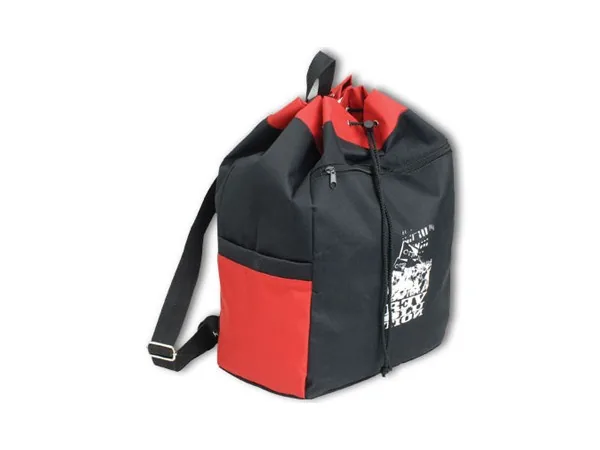
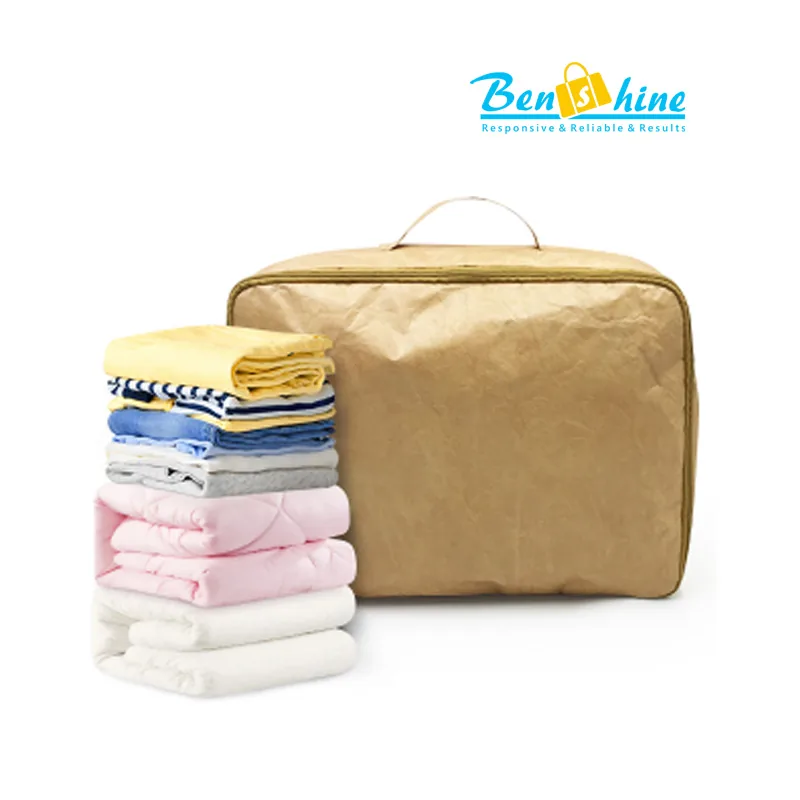
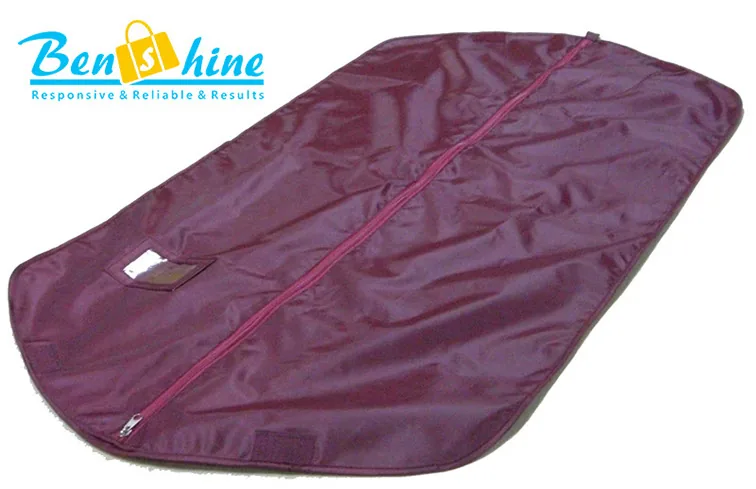
BSDB13 offers a drawstring kitbag direction with a three-dimensional body. TYV09 provides a large handled storage format and source evidence for clothing storage. GB01 supports hanging garment handling. A loaded sample determines whether any direction should be adapted for the intended programme.

Keep cleaning and separation claims measurable

A laundry bag factory brief should state whether the bag itself is wiped, hand washed, machine washed or handled through another controlled process. Materials, coatings, mesh, cords, zippers, labels and printed decoration may respond differently, so “washable” should not be assumed from a fabric name.

Likewise, separate panels or compartments can organize clean and used clothing but do not automatically establish a hygiene barrier, moisture control, ventilation or odour reduction. Define the exposure, cleaning procedure, test method and acceptance criteria when these outcomes matter.

Build identification and pack-out into the specification

Hospitality, uniform and group programmes may need room, owner, team or route identification. Share the label hierarchy, artwork, language, colour references and scanning or tracking requirements where applicable. Review visibility both when the bag is empty and when it is fully loaded.

Finally, confirm how the bag folds, ships and returns to service. Packing affects creasing, logo presentation and storage efficiency. A controlled sample, inspection checklist and project-specific evidence give both teams a clearer basis for production than broad performance or commercial promises.

Application-led design

Choose the construction by how the bag will be used

An application is a starting point for specification—not a substitute for dimensions, materials, components and measurable requirements.

Home laundry collection

Define the clothing volume, collection location, opening, floor or hanging position, carrying and empty storage.

Hospitality and accommodation programmes

Coordinate guest or staff workflow, identification, closure, handoff, branding, cleaning requirements and replenishment.

Sports and travel clothing separation

Plan the packed garment load, luggage fit, wet-or-used item separation, closure and return journey.

Uniform and garment handling

Map issue, collection, identification, transport and storage steps before selecting a drawstring, zipped or hanging format.

Benshine product references

Explore laundry bags construction options

Select a reference to review the available source details, then identify what must change for your product.

Structured drawstring kitbag reference BSDB13

Reference BSDB13

Drawstring Kitbag BSDB13

A dimensional drawstring reference for discussing clothing load, opening, base depth, shoulder carrying and exterior organization.

View reference →
Large handled clothing-storage bag reference TYV09

Reference TYV09

Large Storage Bag TYV09

A large handled reference whose source material explicitly includes clothing storage among its intended organization uses.

View reference →
Hanging garment storage bag reference GB01

Reference GB01

Garment Storage Bag GB01

A hanging cover direction for uniform or garment workflows that prioritize full-length storage and identification.

View reference →

RFQ specification checklist

Decisions to control before sampling

A complete brief helps Benshine review feasibility and gives buyers a clearer basis for comparing quotations and samples.

DecisionInformation to provideWhy it matters
Clothing load and capacityGarment types, maximum quantity, folded or loose condition, dimensions, expected weight and any footwear or towelsThe real load determines usable volume, opening size, panel geometry, base and reinforcement.
Clean-or-used workflowCollection point, user, handoff, transport, storage duration, clean/used separation and contamination concernsWorkflow controls compartments, labels, contact surfaces and the evidence the buyer may require.
Opening and carryingDrawstring, zipper or flap; handles, shoulder strap, hanging points, access frequency and packed carrying distanceA closure that works for home storage may behave differently during repeated transport.
Materials and cleaningFabric, lining, mesh or solid panels, colour, cleaning method, chemical exposure and test criteriaWashability, breathability, moisture handling, odour control and colourfastness cannot be inferred from appearance.
Branding, labels and packingArtwork, owner or room identification, care text, folding, unit packaging, carton limits and destination marketIdentification supports the workflow, while folding and packing influence presentation and creasing.

From reference to production brief

A controlled sourcing path

01

Map the clothing workflow

List the garments, users, collection point, separation, transport, storage, cleaning responsibility, market, quantity and timing.

02

Choose a construction direction

Compare drawstring, large handled storage and hanging-cover formats against capacity, access and handling.

03

Review a loaded sample

Pack representative clothing and check opening, closure, loaded shape, seams, handles, labels, insertion and empty storage.

04

Confirm evidence and production details

Approve materials, cleaning tests, workmanship points, artwork, packing and commercial terms for the controlled project.

Buyer questions

Frequently asked questions about laundry bags

Can Benshine develop a custom laundry bag?

Benshine has published drawstring, clothing-storage and garment-cover references relevant to a custom laundry-bag enquiry. Send the clothing load, workflow, dimensions, closure, carrying, materials, cleaning, labels, branding, packing and required tests for feasibility review.

Which laundry bag format should a buyer choose?

Choose from the real workflow. A drawstring format can support simple collection and carrying, a structured handled bag can support larger storage, and a hanging cover can support full-length garments. Final suitability requires a loaded sample.

Are Benshine laundry bags machine washable?

No universal washability claim is made. The complete fabric, trims, labels, decoration and construction must be matched to a defined cleaning method and verified with agreed acceptance criteria.

Does mesh or fabric automatically provide ventilation or odour control?

No. Airflow, drying and odour performance depend on the complete construction, load and environment. Define the desired result and test method rather than relying on the material name.

Can clean and used clothing be separated in one bag?

A divided or modular direction can be reviewed when both loads, the required separation, access sequence, labels, cleaning and validation method are specified. A divider alone does not establish hygiene or barrier performance.

EmailWhatsApp