Compare published garment-bag references
Benshine’s published product sheets identify several garment-bag formats. Use each as a starting point and confirm fit and construction on an approved sample.
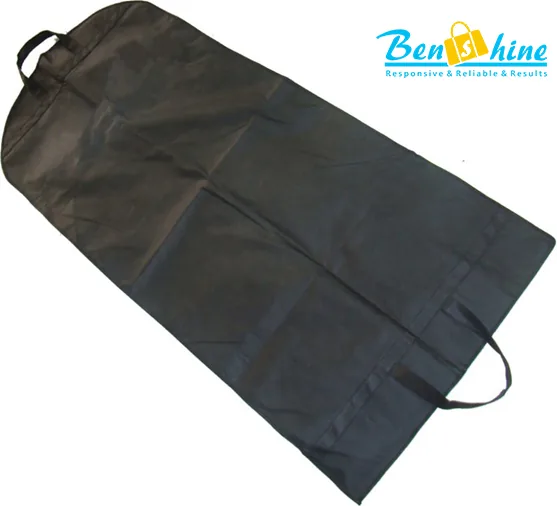
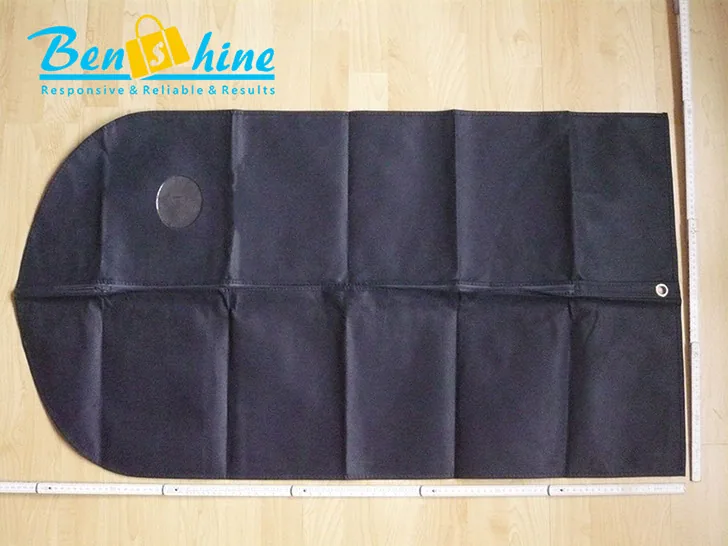
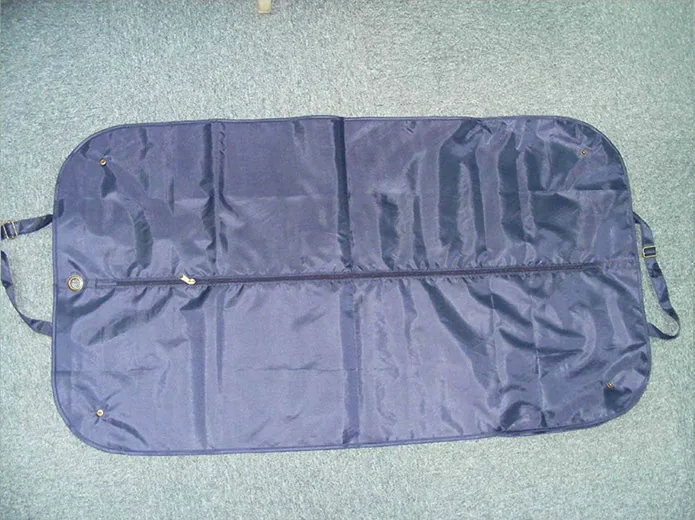
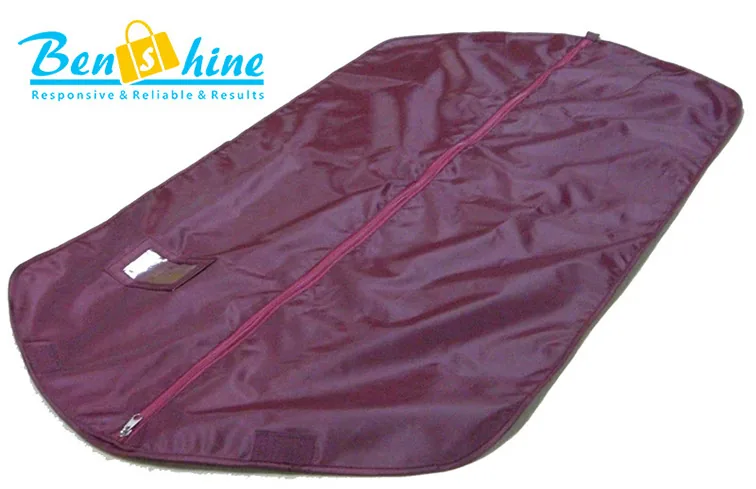
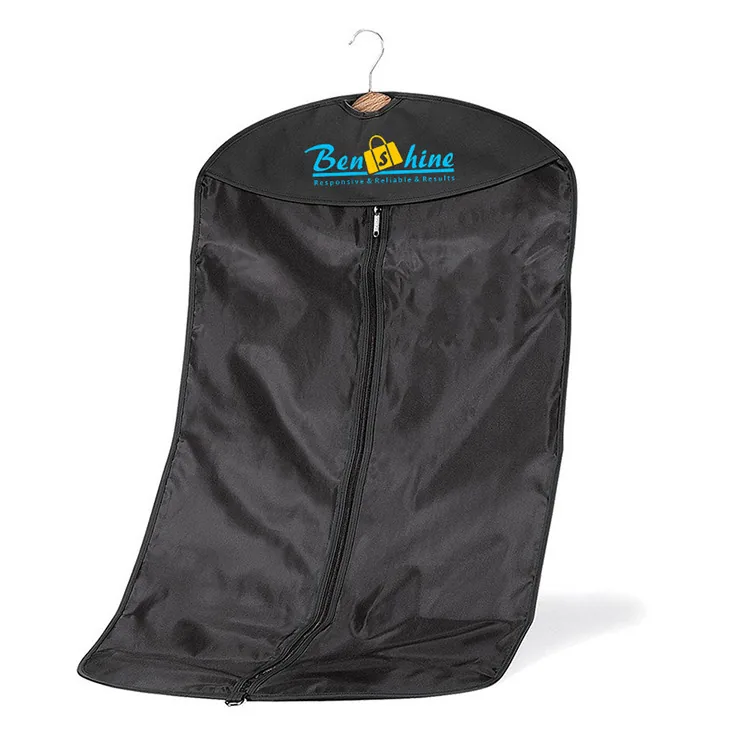
- GB01 suit bag: the source describes a 210D suit bag, lists Polyester 210D/PU and a 61 × 110 cm reference size.
- GB05 suit cover: the source lists Polyester 210D/PU and dimensions 61 W × 120 L × 9 D cm.
- GB13 suit cover: the source describes a suit cover with customized material and lists 90 × 60 cm; it does not specify the size axes.
These model references do not determine fit for every garment. Confirm the packed garment, hanger, closure and opening against the selected sample before approving final dimensions.
Begin with the garment, hanger and handling process
The garment determines the bag. A single jacket, long dress, suit set and bulky uniform need different length, width and gusset decisions. Buyers should also explain whether the product remains hanging, folds for travel or moves through a retail, laundry or distribution workflow.
Benshine’s garment bag references provide starting points for format and construction discussions. Final dimensions, materials, performance expectations and commercial terms are confirmed for the project.
Make access and folding part of the specification
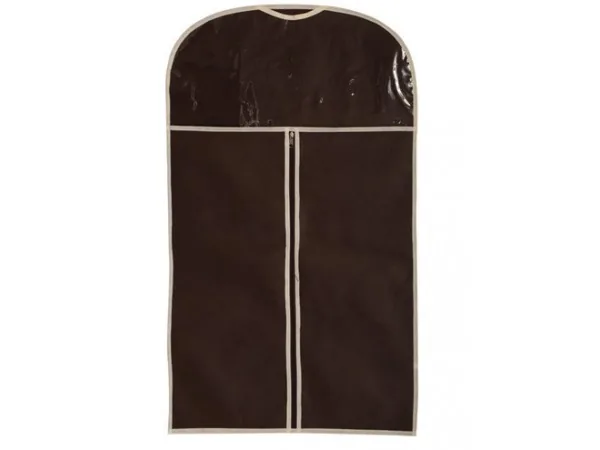
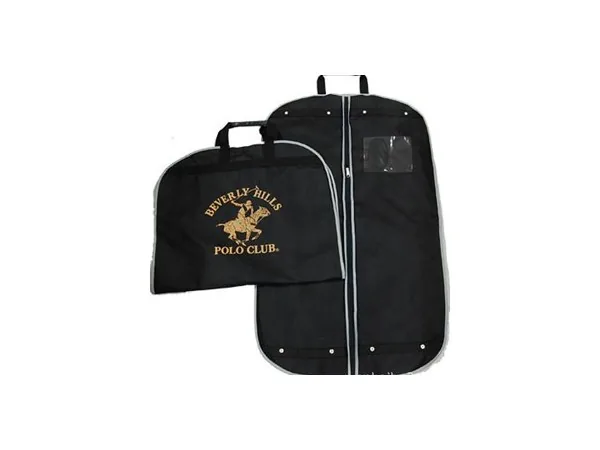
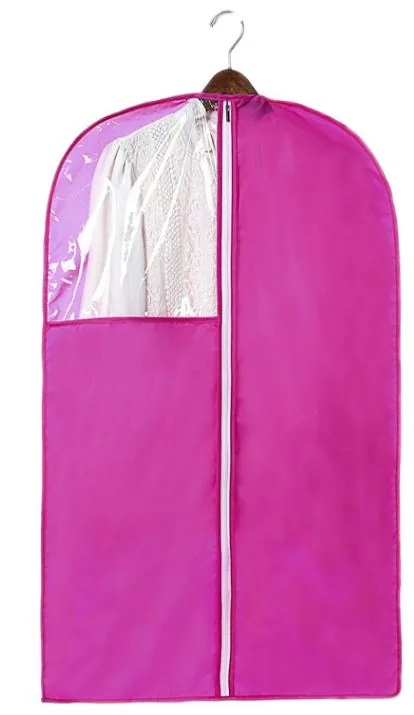
Hanger openings, front or side zippers, inspection windows and accessory pockets influence both use and production. For foldable formats, define the folded dimensions, handles, fastening points and how the garment should sit during carrying. Review these points with the intended garment inside the sample.
Align branding with the finished presentation
Logo position can change when a garment bag is folded or displayed. Share artwork, placement dimensions, colours, labels and the final pack-out before sampling. If visibility, dust protection, breathability or another functional property matters, describe the requirement and verification method rather than relying on the category name.