
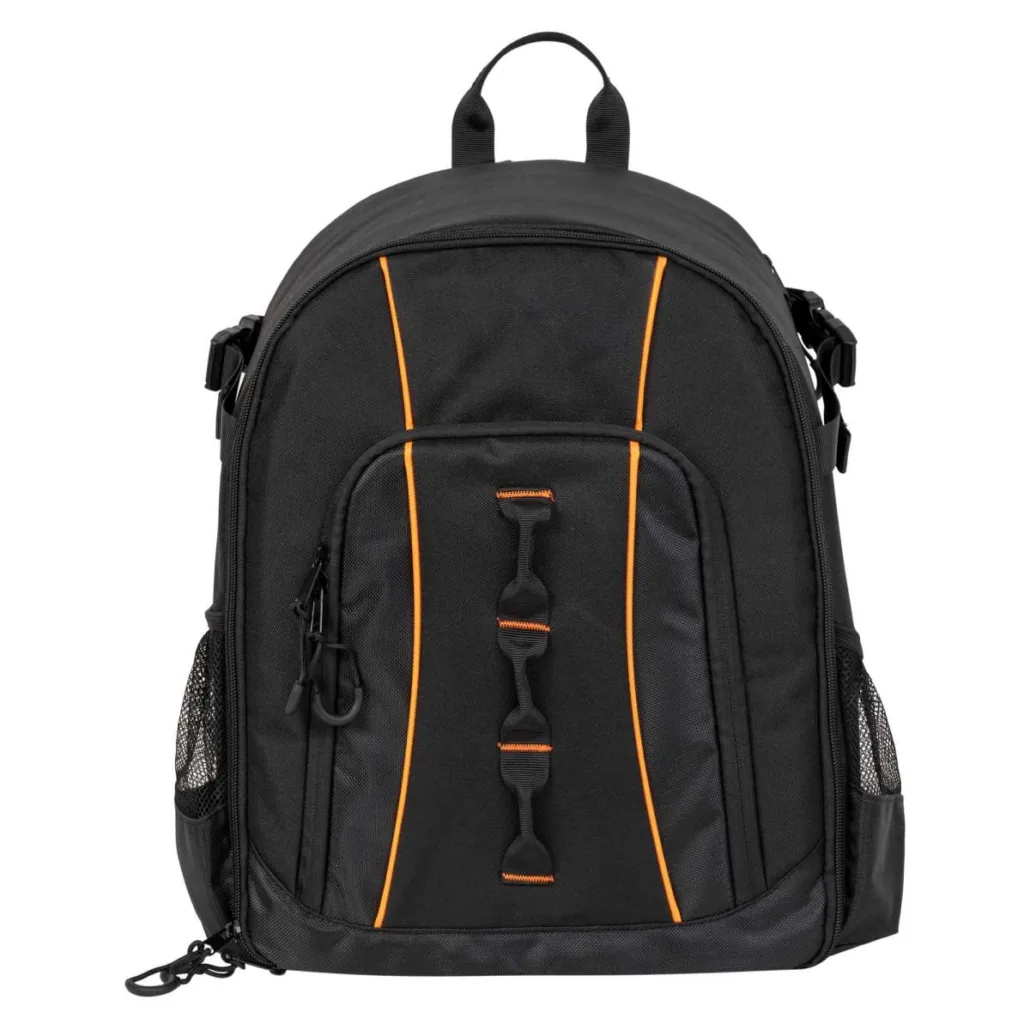
The right backpack is the one that fits the user, holds the real load, provides sensible access and suits the journey. A long feature list or a litre number cannot answer those questions by itself.
Direct answer: Choose a backpack by first listing the journey, user and actual contents. Measure the largest item, check usable internal dimensions and opening size, try the bag with a representative load, and then compare straps, back panel, pocket layout, materials, construction, weather exposure and care. For school, work and travel, prioritize the tasks repeated every day rather than the greatest number of features.
Start with use, load and route
Write down one primary use and any important secondary use. A bag that tries to cover every situation can become larger, heavier or more complicated than necessary.
| Use | Typical planning questions | Features to evaluate | Common mistake |
|---|---|---|---|
| School | Which books, folders, device, lunch or activity items are carried? Who is the user? | Adjustable carrying system, clear organization, opening access, visible lining, reinforced load points and suitable care | Choosing by school year or age alone without checking user and load |
| Work and commuting | What device, charger, documents, bottle and personal items travel together? | Sized device sleeve, document shape, quick-access pockets, stable base, transit access and workplace appearance | Assuming a labelled laptop pocket fits the device plus its case |
| Day travel | What must stay accessible while moving or passing security? | Wide opening, secure personal-item storage, bottle access, comfortable carrying and manageable dimensions | Adding unused volume that encourages overpacking |
| Multi-day travel | Which transport rules, clothing system and transfers apply? | Packing access, internal restraint, external compression, carry options and loaded dimensions | Treating a nominal capacity as proof of carry-on eligibility |
If cycling, hiking, sport, camera transport or another specialist activity is the main purpose, use a product designed around that activity’s load and movement rather than relying on a general backpack label.
Measure the contents before choosing capacity
Capacity in litres is useful for broad comparison, but it does not guarantee that a laptop, folder, shoe pair or rigid object will fit. Two bags with the same stated capacity can have very different proportions and usable space.
Use this measurement sequence:
- Measure the largest rigid item, including its protective case.
- Note the thickness of the complete everyday load.
- Check the bag’s usable internal height, width and depth, allowing for padding and curved panels.
- Compare the zipper opening with the item, not only the main compartment dimensions.
- Check whether dividers, seams or pocket gussets reduce usable space.
- Load the sample and confirm that closures operate without forcing the contents.
For a custom backpack, name the measuring method and whether dimensions are internal, external, empty or loaded. Do not convert a sketch volume into a marketing litre claim without an agreed calculation or test method.
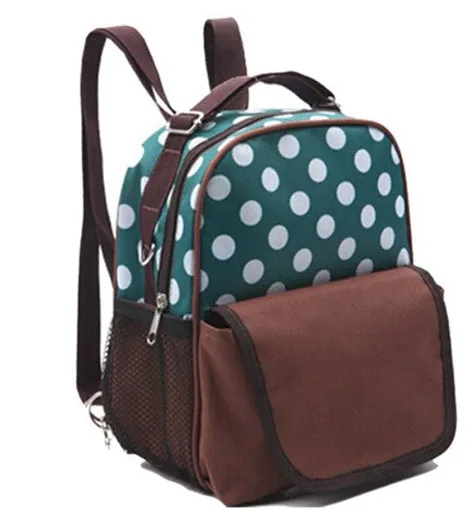
Check fit with the intended load
Try the backpack with a representative load rather than empty. Adjust the shoulder straps so the bag sits securely and observe whether the user can put it on, remove it, walk, turn and reach necessary pockets comfortably.
Review:
- overall bag height and width relative to the user;
- shoulder-strap spacing, length, curve, width and padding;
- back-panel contact, structure and ventilation approach;
- grab-handle position and how the bag behaves when lifted;
- load position and whether heavy items can stay close to the back;
- whether a sternum or waist strap is useful for the intended activity and load;
- loose strap-end management and hardware accessibility.
Comfort is user- and load-specific. A thicker pad, larger bag or additional strap is not automatically better. This guide does not make medical, posture or injury-prevention claims.
Choose access and pockets by repeated actions
Imagine a normal day from packing to arrival. Which item is used first? Which must remain protected? Which should be reachable without opening the main compartment?
| Task | Design direction to consider | Verification question |
|---|---|---|
| Carry a laptop or tablet | Padded sleeve, raised base, controlled opening and closure clearance | Does the named device and case fit without stressing the zipper? |
| Carry documents | Flat compartment with suitable height and corner clearance | Do the required folder and paper format remain usable? |
| Find small items | Light or contrasting lining, divided pocket or key attachment | Can the user identify and retrieve items without emptying the bag? |
| Carry a bottle | Sized side pocket, retention method and separation from sensitive contents | Does the actual bottle remain retained during intended movement? |
| Pass a travel checkpoint | Wide or panel opening and organized device access | Can required items be removed and repacked efficiently? |
| Protect valuables | Body-side or controlled-access pocket where appropriate | Is the pocket accessible to the user and suitable for the item? |
More pockets add material, operations, weight and possible failure points. Include a compartment only when it has a defined item or task.
Compare the complete material system
A fabric name does not describe the finished backpack. Evaluate the shell fabric, lining, foam, reinforcement, webbing, mesh, thread, zippers, buckles, coating, decoration and packaging together.
Ask about:
- material composition, weight and finish for the selected colour;
- abrasion, colourfastness or other performance needs tied to real use;
- foam thickness, density and recovery where cushioning matters;
- zipper type, slider access, end construction and pull design;
- webbing width, adjustment range and edge feel;
- reinforcement at shoulder straps, handles, bottom corners and other load paths;
- print, embroidery, patch or label placement relative to seams and pockets;
- care-label wording supported by the complete material build.
Material substitutions can change appearance, hand feel, colour, weight, sewability, care and test relevance. Link approved materials and components to the controlled sample and specification.
Water protection is a system claim
“Water-resistant,” “water-repellent” and “waterproof” should not be used interchangeably. A coated fabric may resist some exposure while needle holes, seams, zipper tracks and openings remain entry paths.
Define:
- expected exposure, duration and orientation;
- whether the requirement applies to fabric or the complete bag;
- sensitive contents and acceptable ingress;
- construction details such as flaps, coated zippers or sealed seams;
- the test method, sample condition and acceptance criteria.
If protection is critical, request evidence for a representative finished product. Browse the waterproof-bag category for construction directions without assuming every pictured item has the same performance.
Inspect construction and load paths
Pay particular attention to areas that transfer force: shoulder-strap attachments, top handles, lower strap anchors, zipper ends, pocket corners and the base.
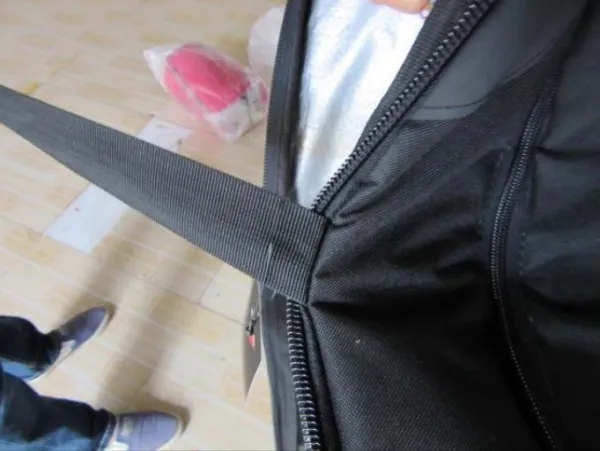
For a retail purchase, inspect alignment, skipped stitches, loose thread, exposed sharp edges, zipper movement and obvious strain around attachment points. For a custom programme, define tolerances, workmanship examples, test conditions and the inspection plan rather than relying on “good quality” as an acceptance criterion.
School, work and travel trade-offs
School backpack
Prioritize the specific user’s fit and the real school load. Confirm folder format, device size, bottle shape, lunch arrangement and any activity kit. Bright or contrasting lining can improve visibility, while removable organizers may simplify cleaning. Requirements for children need age-appropriate review by the buyer and applicable market specialists.
Work backpack
Map the commute: walking, bicycle, car, train or mixed transport. Device protection, document organization and quick access may matter more than maximum volume. Check whether the base remains stable when set down and whether branding and silhouette suit the intended workplace.
Travel backpack
Check the current transport operator’s baggage rules close to travel. Measure the bag when packed, including bulging pockets, handles and wheels if present. Carry-on acceptance is controlled by the carrier and journey, not by the product title. Security, comfort and organization should be evaluated with the travel load.
Review cleaning and maintenance before purchase
Care depends on the complete construction. Coatings, foam, bonded parts, leather-like trims, prints, metal components and colour combinations may rule out machine washing or soaking.
Before cleaning:
- follow the product-specific care label;
- remove loose contents and detachable parts where instructed;
- spot-test an inconspicuous area when appropriate;
- avoid assuming that one method suits every backpack;
- dry using the method appropriate to the selected materials and construction.
Use the backpack washing and cleaning guide for a risk-based cleaning workflow.
Convert the buying checklist into a custom backpack brief
For a Benshine custom backpack enquiry, provide:
- primary use, user group and journey;
- named contents, largest-item dimensions and representative target load;
- desired external dimensions and any transport constraints;
- compartment map, access sequence and pocket contents;
- carrying-system and adjustment needs;
- material, colour, trim and branding direction;
- exposure, cleaning, performance and evidence requirements;
- labels, packaging, carton marks and destination market;
- quantity by colour or variant and commercial delivery terms;
- reference images with a note explaining what to copy, change or avoid.
Benshine can review these inputs against relevant backpack references, construction options and sampling needs. Product availability, MOQ, price, testing, sample timing, production timing and performance are confirmed for the controlled project rather than promised by this guide.
Sample approval checklist for a custom backpack
Approve the sample and its specification revision together:
- external and usable internal dimensions;
- fit of named contents and operation of every closure;
- loaded carrying and adjustment review with representative users;
- pocket positions, access and retention;
- approved face fabric, lining, foam, webbing, zipper and hardware;
- logo size, position, colour and appearance;
- seam, stitch, reinforcement and workmanship criteria;
- required test methods and acceptance results;
- care label, packaging and carton requirements;
- open corrections and the written change record.
The approved sample is a physical reference, not a substitute for measurable requirements.
Continue your backpack research
- Browse Benshine custom backpack references
- Compare school bag directions
- Review laptop bag sourcing considerations
- Explore travel bag formats
- See the custom bag manufacturing workflow
- Send Benshine a controlled backpack brief
Quick answers
What should I check before choosing a backpack?
Define the main journey and actual load, measure the largest item, check usable internal dimensions and access, assess fit with a representative load, then compare pocket layout, materials, construction, weather-exposure needs and care instructions.
How do I choose the right backpack size?
Use the dimensions and shape of the items you carry, not litres alone. External dimensions, internal usable space, padding, dividers and opening geometry all affect fit. For custom projects, verify the loaded sample against named contents.
What should I look for in a school backpack?
Start with the user's size and required books, folders, device, lunch or activity items. Check adjustable straps, practical access, visibility of small items, reinforcement at load points and a cleaning method suitable for the selected materials.
What features matter in a work backpack?
Useful work features may include a device compartment sized for the actual device and case, document organization, quick-access storage, cable or accessory pockets, stable carrying and an appearance suited to the workplace. Prioritize repeated tasks instead of maximum pocket count.
Can every travel backpack be used as airline carry-on luggage?
No. Airline, fare, route and aircraft rules can change, and a soft bag can exceed limits when packed. Check the current carrier allowance and measure the loaded backpack, including handles and pockets, before travel.
Is a water-resistant backpack waterproof?
Not necessarily. Fabric, coating, seams, zippers, openings and construction all affect finished-bag water ingress. Ask for a defined claim and appropriate test evidence if water protection is important.