
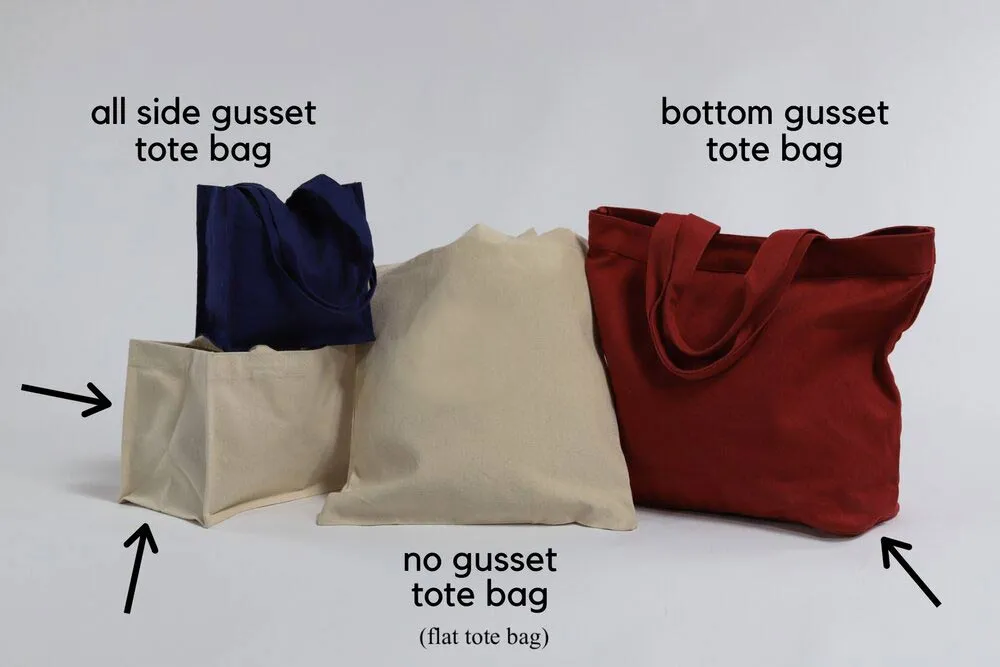
A tote bag gusset creates depth, but the word “gusset” does not describe one universal pattern or finished shape. Side panels, a bottom fold, boxed corners and a continuous side-and-base panel can all produce different silhouettes, openings and usable interiors.
Direct answer: A tote bag gusset is the panel, fold or corner construction that gives the bag depth. Choose the gusset from the intended contents, opening, standing behaviour, material, seam design and visual direction. Specify finished width, height and depth with named measurement points, then approve a loaded sample. A deeper gusset changes geometry but does not by itself guarantee usable capacity, stability or carrying performance.
Tote bag gusset types at a glance
| Tote direction | How depth is created | Main specification questions |
|---|---|---|
| Flat tote | Front and back join with little or no intentional depth | Item thickness, seam allowance, opening, stretch and loaded distortion |
| Bottom gusset | Fold or separate construction expands mainly at the base | Finished base depth, corner shape, fold recovery and opening relationship |
| Side gussets | Separate or folded side areas create depth along the sides | Side taper, top/bottom depth, seams and handle placement |
| Full gusset | Side and bottom depth form one connected system | Mating lengths, corner transitions, base shape and continuous seam path |
| Boxed corners | Corners are folded and sewn to create a base | Corner seam position, finished depth, symmetry and internal finish |
| Bellows or folded gusset | One or more folds open when contents expand the bag | Closed thickness, expansion limit, restraint and fold direction |
These names are useful for concept discussion. Production still requires a drawing, construction notes, finished dimensions and an approved physical reference.
A gusset can be a panel, fold or shaped corner
In a separate-panel construction, the gusset is an identifiable pattern piece sewn between front and back panels. In another tote, depth may come from a fold in one larger body piece. Boxed corners can convert a flat lower section into a base without a separate side strip.
Ask these questions before choosing a term:
- Is there a separate side panel, bottom panel or continuous strip?
- Is depth present when empty, or does a fold open only when loaded?
- Are the sides parallel or tapered?
- Does the base have a rectangle, oval, curved or other profile?
- Where are the visible and internal seams?
- Is the gusset lined, padded, coated or supported?
- Must the bag fold flat for packing?
- Which surfaces carry print, labels, pockets or handles?
The construction—not the label—controls the pattern and operation sequence.
Compare flat, bottom-gusset and full-gusset totes
The original visual reference below shows three useful concept directions: a flat tote, a tote expanding at the bottom, and a tote with defined side and bottom depth. The silhouettes are visibly different even before dimensions are added.
Flat tote
A flat tote can suit thin or flexible contents and a simple visual direction. It can still gain some apparent depth from material stretch, seam geometry or the contents pushing the panels apart, but that is not a controlled gusset.
Bottom-gusset tote
A bottom gusset allows the lower portion to open. The top can remain relatively flat or narrow, depending on the pattern. Control how the fold closes when empty, how the corners form, and whether the opening lets the intended contents reach the expanded base.
Full-gusset tote
A full gusset gives defined side and base depth. It may use separate side and bottom pieces or a continuous strip. This direction makes depth visually explicit, but it also adds mating seams, corner transitions and more surfaces to specify.
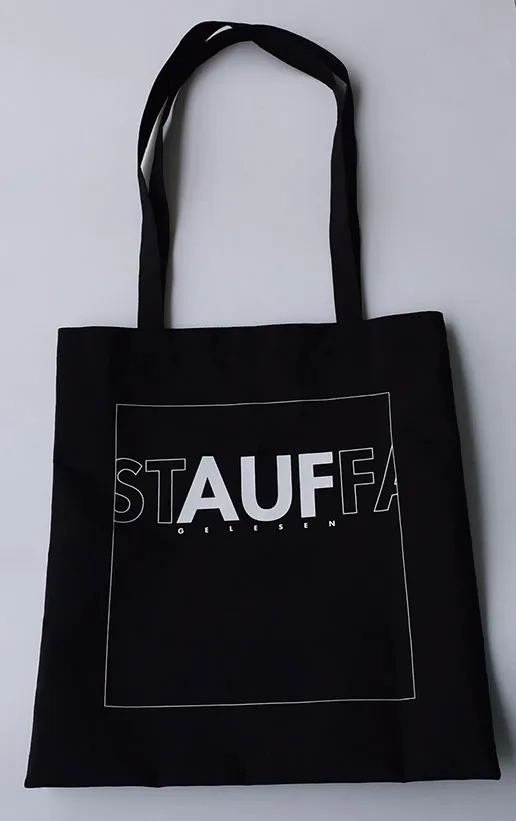
A flat tote can carry flexible items, but its loaded shape depends on contents and material behaviour. See the Tote Bag 16 product reference.
Finished depth is not the same as a flat fold
A folded gusset may look like one width when the empty bag is flattened and another when opened. A separate panel also includes seam allowances outside the finished seam line.
Define the dimension as one of the following—or provide a drawing with another clear method:
- finished side depth measured between seam references;
- finished base depth measured on a supported bag;
- gusset panel finished width between stitch lines;
- flat fold depth in the closed condition;
- maximum opened depth at a named height;
- top depth and bottom depth for a tapered side;
- internal usable depth under a controlled loading method.
Do not mix cutting width, fold width and finished depth in one field. Record the unit, measurement points, bag condition and tolerance.
Finished dimensions and cutting dimensions must be separated
A gusset pattern may need to account for:
- seam allowances on one or both edges;
- folded edges, hems or binding;
- piping inserted into the seam;
- lining, foam or reinforcement thickness;
- corner radius and seam-line length;
- box-corner seam location;
- turns and material bulk;
- shrinkage or process compensation only when supported by the project method;
- notches and alignment points.
If a buyer requests a finished 100 mm depth, that does not mean every gusset part is cut at 100 mm. The required cut geometry depends on construction and where the finished dimension is measured.
Use the bag pattern, gusset and pocket guide for the full pattern-set and seam-allowance workflow. This page keeps the focus on tote-bag gusset decisions.
Gusset depth does not equal usable capacity
External width × height × depth may describe a simple bounding box, but a soft tote rarely uses that entire rectangular volume. Usable space can be affected by:
- side taper or a narrower top opening;
- rounded or folded corners;
- inward-projecting seam allowances;
- lining and internal pockets;
- base board, foam or padding;
- handles or tabs entering the interior;
- closure position;
- material stiffness or collapse;
- the rigid dimensions of the intended items.
For a capacity claim, define the method and evaluate a finished sample. For product development, it is often more useful to load the actual items or dimensionally controlled mock contents and record orientation, access and closure.
The opening must work with the gusset
A deep base is not useful when the intended item cannot pass through the opening. Control:
- clear opening width;
- top edge shape and reinforcement;
- zipper, snap, hook-and-loop or open-top direction;
- side-gusset taper near the opening;
- handle tabs that reduce access;
- lining or facing that narrows the entry;
- ability to see and reach the lower corners;
- closure operation when the bag is loaded.
A zipper can also change how far a side gusset opens. Approve the bag with the intended closure, not as an unfinished shell.
Side gussets: parallel, tapered and folded
Parallel side gusset
The finished side depth remains approximately consistent from lower to upper reference points, subject to the exact construction and soft-material behaviour. This can create a box-like direction.
Tapered side gusset
Top and bottom depths differ. Taper can change the silhouette and opening, and it requires clearly named measurement heights. A single “depth” dimension is insufficient.
Folded side gusset
An inward fold can reduce the empty profile and open with contents. Specify the fold direction, crease or non-crease expectation, closed appearance, opened limit and any restraint at the top or base.
For every direction, review how the side panel meets the bottom corner and top opening.
Bottom gussets and boxed corners
A bottom gusset may be formed through a folded body panel, separate base panel, inserted strip or corner construction.
Folded bottom
The fold should be located consistently and open in the intended direction. Material memory, print placement and packing can affect how it appears when empty.
Separate bottom panel
Control the panel shape, seam path, corner radius, reinforcement and alignment marks. A contrast base can be a visual feature, but the two materials must be compatible for sewing and care.
Boxed corners
A boxed corner creates depth by aligning and sewing a corner section. Control the seam position, symmetry, trimmed or retained allowance, internal finish and how the corner behaves when loaded.
No corner method automatically makes a tote stand upright or carry a stated load. Those outcomes depend on the complete material and structure.
Base support and standing behaviour are separate decisions
A gusset creates depth, while base support controls another aspect of shape. A tote may use:
- no separate support layer;
- a removable or fixed base insert;
- foam, felt or another structure layer;
- a stiff board direction;
- a reinforced base material;
- feet or external protective elements.
Define whether the bag should stand when empty, under a particular representative load, or not at all. Record the surface, content arrangement and acceptance rule. “Self-standing” should not be inferred from a rectangular gusset photograph.
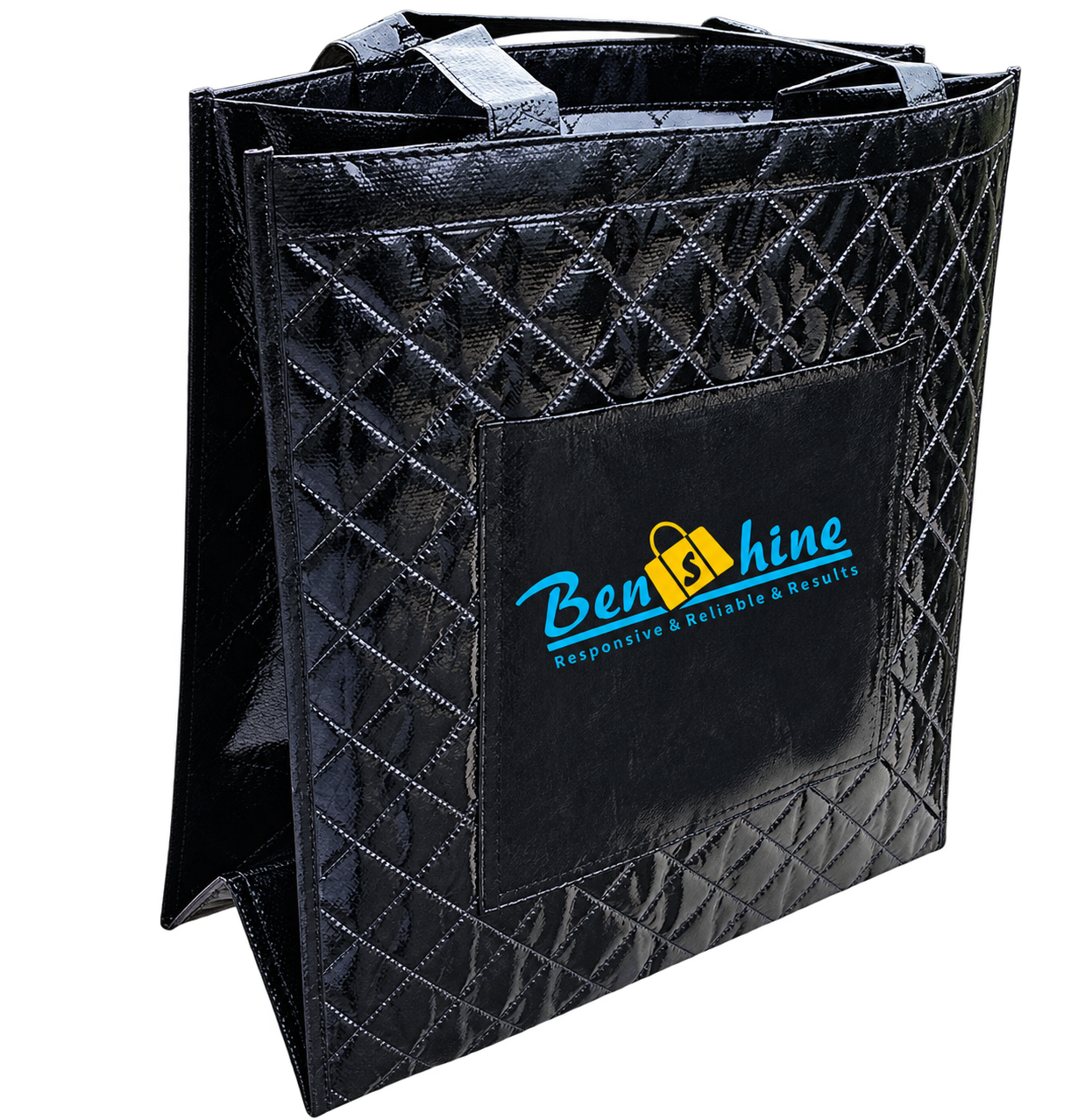
The BSTB-07 reference shows defined side and base structure. Its appearance does not establish capacity, standing performance or load rating for another construction. See the BSTB-07 product reference.
Handles and load paths must relate to the bag body
Handle placement changes how forces enter the front, back or gusset panels. Specify:
- attachment location and spacing;
- handle drop and usable opening clearance;
- webbing or self-material construction;
- continuation beneath hems or into seams;
- reinforcement layers;
- stitch or programmed attachment direction;
- relationship to pockets, print and side seams;
- representative loaded test if required.
Attaching a handle near a gusset seam can create a different layer stack and stress path from attaching it within a broad front panel. Validate the complete assembly. A gusset does not automatically distribute weight evenly or make a tote comfortable.
Printing, pockets and branding need gusset-aware placement
The front panel may be flat during printing but curve when the gusset opens. Side and bottom panels can also be used for colour blocking or branding, subject to construction.
Control:
- artwork size and coordinates from stable references;
- visible area in both flat and loaded conditions;
- distance from side seams, folds and corners;
- whether artwork crosses a fold or seam;
- pocket position relative to expanded depth;
- pattern matching across separate panels, if required;
- print sequence before or after relevant operations;
- physical colour and placement approval.
A large gusset may change the perceived position of front artwork when the tote is full. Review both an empty and representative loaded sample.
Material choice changes gusset behaviour
The same pattern can look different in soft cotton, coated woven fabric, nonwoven material, laminated construction or quilted layers. Review:
- thickness and layer bulk at corners;
- drape, stiffness and recovery;
- fraying and edge finish;
- coating or laminate face direction;
- folding and crease appearance;
- stretch or bias distortion;
- sewing, welding or bonding compatibility;
- cleaning and care method;
- colour or texture differences between body and gusset.
A thicker material does not automatically create a better-standing tote, and a lighter material does not automatically fold neatly. Approve the exact construction.
Measure the finished tote under a controlled condition
Measurement instructions can state:
- whether the bag is empty, filled, flattened or supported;
- whether closures are open or closed;
- where width, height and depth begin and end;
- whether piping, binding or protruding seams are included;
- the height at which tapered side depth is measured;
- how the base is squared without overstretching;
- the nominal value, tolerance and rounding rule;
- how soft-material variation is recorded.
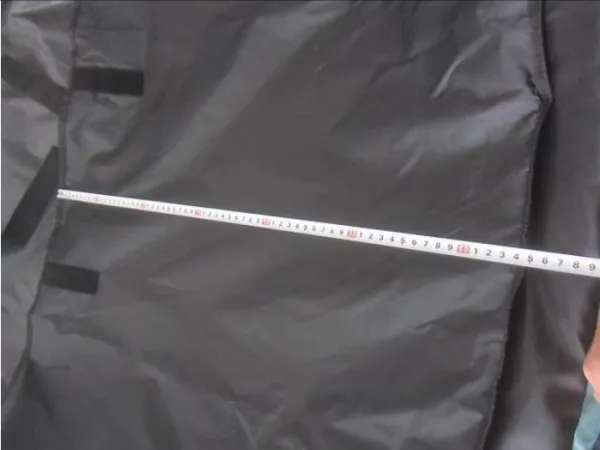
A dimensional check becomes repeatable when the bag condition and reference points are defined. Pulling a soft gusset farther open can change the reading, so the method must limit operator interpretation.
Pair measurements with photographs or a diagram showing the exact reference points.
Prototype and approve the gusset in stages
- Use brief: list intended contents, orientation, access and closure needs.
- Concept comparison: select flat, bottom, side, full or folded-gusset direction.
- Dimension drawing: define finished width, height, depth, opening and taper.
- Pattern trial: check seam lengths, folds, notches, corner geometry and material direction.
- First prototype: review empty silhouette, opening, seams and handle relationship.
- Loaded review: use representative contents and observe access, shape and base behaviour.
- Measurement and tests: apply the agreed dimensional and project-specific functional criteria.
- Pre-production freeze: link the approved sample, pattern revision, bill of materials and inspection rules.
If gusset depth changes, review every related part: front/back width, base, lining, opening, closure, pocket, handle placement and packaging may also be affected.
Production quality-control points
Order-specific controls can include:
- correct gusset material, colour and face direction;
- cut-part identity and orientation;
- fold and notch position;
- alignment of side panels with front, back and base;
- seam allowance and corner construction;
- left/right symmetry;
- finished top and bottom depth;
- base shape and support-layer placement;
- pocket, handle and artwork positions;
- closure operation with the gusset opened;
- appearance empty and under the approved review load;
- packing method that avoids unintended creasing;
- traceability to the approved pattern and sample.
Use the custom bag quality-control guide to define sampling, defect rules, rework and release.
Tote bag gusset RFQ checklist
Send the manufacturer:
- intended tote use and representative contents;
- finished width, height and depth;
- flat, bottom, side, full, box-corner or folded-gusset direction;
- top and bottom depth for any taper;
- opening width and closure;
- body, gusset, lining and support materials;
- seam, binding, piping and corner construction;
- required empty, folded and loaded appearance;
- base insert or standing requirement, if any;
- handles, reinforcement and attachment positions;
- pockets, labels and hardware;
- logo method, artwork size and placement references;
- measurement method and tolerances;
- capacity, load, seam or other test methods when claims matter;
- approved sample and change-control requirements;
- quantity by colour and version;
- folding, packing and delivery requirements.
MOQ, cost, feasibility and timing depend on the selected materials, pattern, construction, branding, tests, quantity and packing. Request current project confirmation.
Specify the gusset as part of the complete tote
Benshine can review tote references, intended contents, finished dimensions, material direction, handles, pockets, artwork and inspection requirements. The selected gusset should be confirmed through a measured and loaded physical sample rather than a generic capacity assumption.
Explore custom tote bags, review custom bag manufacturing, or send your tote specification.
Quick answers
What is a gusset on a tote bag?
A gusset is the material geometry that creates or controls depth in a tote bag. It may be a separate side or bottom panel, a continuous panel around several edges, a folded section of the body, or a boxed-corner construction. The specification should identify the exact construction and finished measurement points.
What is the difference between a bottom gusset and a side gusset?
A bottom gusset creates expansion mainly at the base, while side gussets create depth along the sides. A full or continuous gusset can connect the sides and base. Each direction changes silhouette, opening behaviour, seams, printing area and how the bag accommodates contents.
Does a deeper gusset always mean more tote bag capacity?
It changes geometric depth but does not guarantee usable capacity. Opening width, taper, corner shape, lining, pockets, support layers, seam allowances and the dimensions of the intended contents can limit usable space. Validate a loaded finished sample.
How is tote bag gusset depth measured?
Define whether depth is measured across the finished base, between side seam references, with the bag opened and supported, or in another controlled condition. Record the points, bag condition, nominal value and tolerance; flat fold width and finished depth may not be the same.
Can the gusset be a different colour or material?
Yes, a separate gusset panel can support a contrast direction, subject to compatible thickness, stretch, coating, colourfastness, seam behaviour and care requirements. Approve the complete material combination and physical sample.
What should a custom tote bag gusset specification include?
Include intended contents, finished width, height and depth, gusset type, opening, taper, corner construction, material layers, seams, base support, handle relationship, print area, measurement method, tolerances, sample tests, quantity and packaging.