Custom bag quality control works best as a planned system, not as one final look at packed cartons. Incoming, first-piece, in-line, finished-product and pre-shipment checks occur at different decision points. Together they help buyers and manufacturers compare one defined production lot with one approved product revision.
Direct answer: Custom bag quality control should start with controlled specifications and approved references, check materials and components before use, verify the first production pieces, monitor critical operations while work is in progress, inspect finished goods with an agreed sampling and defect plan, confirm packing, and record the disposition of any nonconformity. No inspection stage by itself proves that every unit is defect-free or that a product complies with every market requirement.
Bag quality-control stages at a glance
| Stage | Main question | Typical evidence or record |
|---|---|---|
| Incoming | Did the received input match the approved direction before use? | Material/component identity, lot, colour, dimensions, surface and functional checks |
| First-piece | Is the production setup building the current approved revision? | First completed panel, subassembly or bag; measurements; artwork and construction review |
| In-line | Is the process remaining controlled at risk-bearing operations? | Check sheets, defect location, affected operation, containment and corrective action |
| Finished product | Does the assembled bag meet defined workmanship, dimension and function criteria? | Sample selection, findings by unit, defect class and measurement record |
| Pre-shipment | Does the defined lot, assortment and packing meet release requirements? | Lot identity, carton selection, labels, quantities, assortment, packing and release status |
Testing, document review and a factory audit may support this system, but they answer different questions. The order-specific quality plan should show which activity controls each requirement.
Start with one controlled inspection package
Inspectors need a clear answer to “compared with what?” before they can record conformity. A useful inspection package can include:
- approved specification, drawings and revision code;
- bill of materials with supplier, component and colour identifiers;
- approved physical sample or clearly identified reference pieces;
- artwork files, placement dimensions and physical colour approval;
- finished dimensions and one measurement method for each point;
- construction, seam, reinforcement and component directions;
- functional checks and any representative test method;
- defect definitions, classification and acceptance rules;
- assortment, labels, unit packing and carton requirements;
- approved deviations and a dated change record;
- lot definition and responsibility for release.
If the specification, sample and later message disagree, the team should resolve the conflict before inspection. Quietly choosing whichever reference is easiest produces an unreliable result.
Build the quality plan around product risk
A generic checklist cannot identify every important feature of every bag. Quality planning should begin with the product’s intended use, contents, load paths, access pattern, environment and target-market obligations.
For each requirement, record:
- the feature or risk being controlled;
- the approved requirement and reference;
- the inspection or test method;
- the production stage where it can be checked effectively;
- sample frequency or lot sampling direction;
- acceptance rule and defect classification;
- record owner and disposition authority.
A cosmetic mark, reversed buckle, missing reinforcement, incorrect warning label and failed closure function do not necessarily have the same consequence. Classification belongs to the defined product and application.
Incoming inspection for bag materials and components
Incoming inspection asks whether selected inputs match the approved production direction before those inputs are cut, printed or sewn into finished bags.
Identify the material or component
Use purchase, supplier, material or component codes where available. Record the received lot and the corresponding order or variant. A broad name such as “black polyester,” “metal buckle” or “waterproof zipper” is not enough to control construction, size, finish or performance.
Compare visible and measurable attributes
Depending on the input, review points may include:
- fabric colour, texture, surface, weave direction and visible damage;
- width, thickness, mass or other specified material dimensions;
- coating, backing, lamination or foam direction;
- webbing width, thickness, weave, colour and surface condition;
- zipper chain direction, size, tape colour, slider, puller and operation;
- buckle, adjuster, hook, ring and fastener dimensions and mating fit;
- label content, artwork revision, size and readability;
- packaging components, inserts, markings and carton direction;
- document identity, sample scope, date, method and result where evidence is required.
An incoming check should not be described as material certification unless the applicable evidence actually establishes that claim. Review the test-report scope guide when evaluating documents.
Control status before release to production
Accepted, pending, rejected and conditionally authorized inputs should be identifiable. If a material substitution or shade difference is proposed, approval should be recorded before use. Keep suspect lots from being mixed with released inputs while a decision is pending.
First-piece approval before repeated production
A first-piece check reviews an early output after the production setup is established but before the same error can be repeated across more units. The “piece” may be a cut panel, printed panel, pocket, strap assembly, zipper subassembly or complete bag.
Useful first-piece points include:
- current pattern and artwork revision;
- cut orientation, notches and part identity;
- logo size, position, direction and visual result;
- pocket, zipper, strap and hardware placement;
- seam allowance, stitch direction and visible stitch appearance;
- reinforcement coverage and attachment geometry;
- critical dimensions and mating-part alignment;
- opening, closure, adjustment and access function;
- label position and variant identity.
Approval of one piece does not remove the need for continuing controls. It confirms that the setup can produce the approved direction at that point in time.
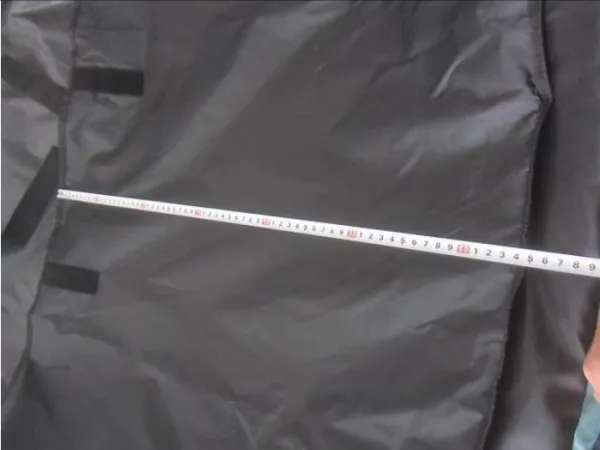
A dimension is meaningful only when the reference points, bag condition, tool and tolerance are defined in the inspection package.
In-line bag inspection during cutting, decoration and sewing
In-line inspection monitors the operations most likely to create repeated or hidden problems. It can occur at a workstation, between subassemblies or after a defined production interval.
Choose inspection points where action is still possible
Examples include:
- after cutting, before bundles move to decoration or sewing;
- after printing, transfer or embroidery, before the panel is enclosed;
- after zipper, pocket, strap or handle subassembly;
- when reinforcement becomes hidden by lining or binding;
- after a new operator, machine setting, material lot or approved change;
- at planned intervals on dimensions, stitch appearance and component function;
- before finished bags enter final cleaning and packing.
Record the issue, not only the quantity
An actionable record identifies the unit or sample, time or batch, operation, location, requirement, observed condition and defect class. It should also record containment, decision, responsible person and follow-up result.
Counts without location or cause make it difficult to determine whether one isolated unit or one repeated process created the finding.
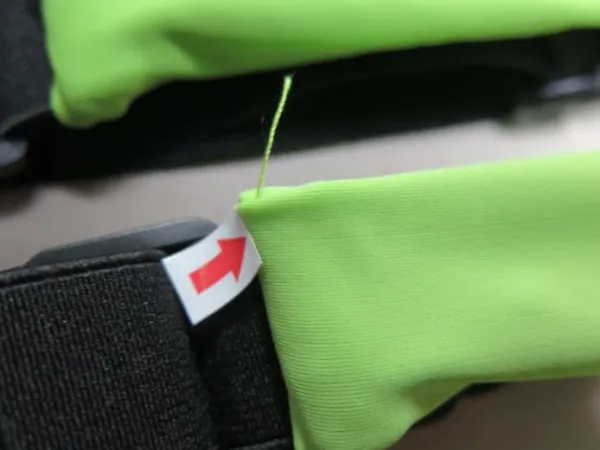
Photographs and marked locations can make a finding easier to reproduce and correct, but they should remain linked to written criteria and the affected lot.
Finished-product and pre-shipment bag inspection
Pre-shipment inspection should begin only when the lot is sufficiently complete and presented in the agreed condition. Define the inspection lot: product, style, colour, size, order, production period and quantity included in the decision.
Select cartons and units without convenience bias
The plan should state how cartons and units are selected across the defined lot. Inspecting only open cartons, top layers or factory-selected “good” pieces does not provide a representative sample by assumption.
Inspect the finished bag systematically
A route can move from overall identity to exterior, interior, carrying system and function:
- product, colour, variant and artwork identity;
- overall shape, symmetry, cleanliness and surface condition;
- dimensions using the agreed reference points and bag condition;
- panels, gussets, pockets, openings and lining;
- zippers, sliders, closures, buckles and adjusters;
- handles, shoulder straps, anchors and reinforcement locations;
- seams, binding, piping, edge finishes and loose threads;
- labels, warnings, country or product information where specified;
- opening, closure, adjustment and other agreed functional checks;
- item-fit or representative-use checks where explicitly required.
Visual inspection does not prove load rating, waterproofness, chemical compliance, food-contact suitability, insulation duration or clinical suitability. Those claims require defined evidence appropriate to the exact product and market.
Verify assortment and packing
Packing review can include:
- unit packing method and protective materials;
- inserts, hangtags, labels, barcodes and price information;
- colour, size and variant assortment;
- units per inner pack and carton;
- carton dimensions, markings and closure direction;
- visible carton condition and shipment identification;
- approved special handling or pallet instructions.
The release record should identify what was inspected, the result, unresolved deviations and who authorized shipment.
Sampling and AQL: define the method before inspection
Sampling inspects selected units to make a decision about a defined lot. AQL is commonly used with an agreed sampling standard, inspection level and lot size to determine sample size and acceptance numbers.
An AQL instruction is incomplete if it omits:
- the sampling standard and revision;
- lot definition and lot size;
- inspection level or special level;
- single, double or other sampling direction;
- AQL or acceptance rule for each defect class;
- critical-defect handling;
- whether measurements or functional tests use a different sample;
- what happens after rejection, rework or lot change.
“AQL passed” does not mean every unit was checked or no defect exists. Separately controlled safety, regulatory or critical-function requirements may need different sampling or verification.
Define critical, major and minor defects for the product
Generic labels become useful only when tied to examples and consequences for the approved bag.
| Defect class | Decision basis to define before inspection | Possible product-specific examples |
|---|---|---|
| Critical | Potential safety, legal or specifically defined critical-function consequence | Prohibited sharp point, incorrect mandatory information or defined critical closure failure |
| Major | Likely functional failure, material specification departure or condition affecting normal sale/use | Missing required part, unusable zipper, wrong variant, dimension outside a major tolerance |
| Minor | Limited departure that does not meet the agreed appearance/workmanship standard | Defined small mark, thread end or visual variation within the project’s minor criteria |
These are planning examples, not automatic classifications. A condition can change class according to location, severity, intended use, market or buyer-approved standard.
Measurement and functional checks need repeatable methods
Two inspectors can obtain different results if the bag is compressed differently, the strap is adjusted differently or the reference points are unclear.
For every controlled measurement, specify:
- named start and end points;
- whether the bag is empty, filled, flattened, closed or relaxed;
- whether removable or adjustable parts are included;
- tool and resolution appropriate to the tolerance;
- force, fixture, duration or cycle where a functional test requires them;
- tolerance, rounding and recording convention;
- sample quantity and lot relationship.
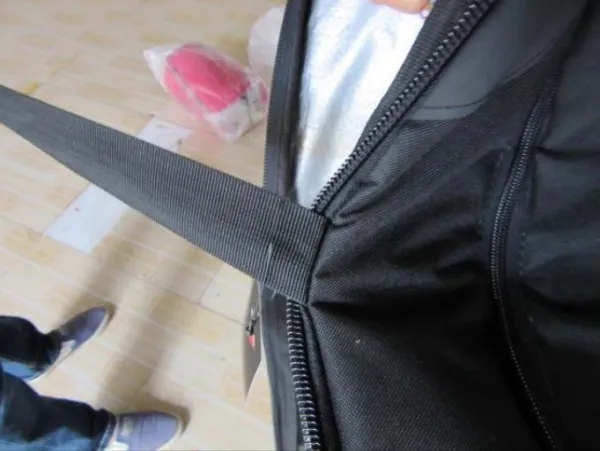
A photographed pull check shows an activity, not a universal load claim. The force, fixture, duration, sample, acceptance rule and result must be recorded for a test statement to be meaningful.
Inspection, testing, document review and audits are different
| Activity | Primary question | Important limitation |
|---|---|---|
| Product inspection | Do sampled units match defined visual, dimensional, functional and packing criteria? | Sampling does not inspect every unit or prove every performance claim |
| Product or material test | Did the named sample meet the stated method and acceptance requirement? | Result applies only within the report’s sample, method, date and scope |
| Document review | Does the supplied record support the required claim and exact input/product? | Document presence alone does not establish applicability |
| Factory audit | Does the assessed organization/site show the reviewed systems and conditions? | It is not a product inspection or automatic certification of every order |
Do not substitute one activity for another. Use the Benshine quality evidence page to review the scope of available first-party records.
Control nonconforming work, rework and re-inspection
When a check finds a nonconformity, a controlled response can follow this sequence:
- Identify: describe the requirement and observed result.
- Contain: mark and separate affected and potentially affected work.
- Trace: identify material lot, operation, time window, variant or carton range.
- Investigate: distinguish isolated damage from a repeated process cause.
- Decide: authorize rework, use-as-is deviation, sorting, replacement or rejection.
- Correct: address the affected goods and the process cause where applicable.
- Verify: inspect authorized rework and confirm the affected lot under the agreed plan.
- Record: retain the finding, decision, evidence and release status.
Reworking the originally sampled units does not automatically establish that the remaining lot conforms. Define the scope of sorting or re-inspection before release.
Keep revisions, lots and changes traceable
Quality records should connect to the product revision and production lot they describe. At minimum, consider recording:
- order, style, colour, size and variant;
- specification, artwork, BOM and sample revision;
- material/component lot or approved substitute;
- production or inspection date and relevant operation;
- sample-selection method and inspected quantity;
- findings by unit and defect class;
- measurements or functional results;
- corrective action, deviation and re-inspection;
- final disposition and authorization.
If a material, component, construction, artwork or packing change occurs after approval, assess which earlier approvals, tests or inspection criteria need to be repeated.
Custom bag QC checklist for an RFQ or purchase order
Provide the manufacturer and inspection party with:
- intended use and risk-bearing product features;
- current specification, drawings and bill of materials;
- approved sample and physical colour/component references;
- critical dimensions, reference points and tolerances;
- decoration artwork, placement and visual approval;
- construction, reinforcement and functional requirements;
- named tests, methods, samples and acceptance criteria;
- defect list with product-specific classification examples;
- lot definition, sampling standard, inspection level and AQL direction;
- first-piece and in-line hold points;
- packing, assortment, label and carton requirements;
- required photos, measurement sheets and inspection report fields;
- deviation, rework, re-inspection and release authority;
- destination-market and buyer-supplied compliance requirements.
For the production sequence behind these controls, see how custom bags are made. The bag anatomy guide and stitch and seam guide can help convert broad comments into named inspection points.
Plan the inspection around your actual bag
Benshine can review a custom bag brief, intended use, reference product, specification, artwork, required evidence and packing direction to identify practical incoming, first-piece, in-line and final control points. The final inspection plan, sample sizes, acceptance rules, commercial terms and evidence scope must be confirmed for the approved project.
Send the bag specification and quality requirements or review the custom bag manufacturing process before requesting a project-specific quotation.
Quick answers
What are the main quality-control stages for custom bags?
A project can use incoming checks for materials and components, first-piece approval, in-line inspection during cutting, decoration and sewing, finished-product inspection, project-specific tests, and pre-shipment packing verification. The exact stages and records should follow the risks and approved specification for the order.
Can final inspection replace in-line inspection?
Not completely. Final inspection reviews completed goods, while first-piece and in-line checks can identify a repeated process issue before it affects more of the order. Each stage answers a different question and should use the same controlled references.
What should a bag inspection use as its reference?
Use the current approved specification and drawings, bill of materials, physical sample or component references, artwork and colour approvals, measurement methods, functional checks, defect rules, packaging instructions and authorized change record. A reference photo alone is usually insufficient.
What does AQL mean in bag inspection?
AQL is used with an agreed sampling standard to select a sample size and acceptance numbers for a defined lot. It does not mean every unit was inspected, does not guarantee a defect-free shipment, and does not replace separately agreed critical-function or safety controls.
How should bag defects be classified?
Critical, major and minor labels should be defined for the specific product, intended use and market before inspection. Classification should consider function, safety or regulatory impact, saleability, construction and appearance instead of relying on a generic defect name alone.
What happens when an inspection finds a problem?
Identify the affected lot or operation, contain suspect goods, record the finding, investigate the cause, agree a disposition and corrective action, complete authorized rework where applicable, and re-inspect against the agreed plan. Shipment release should be a recorded decision, not an assumption.