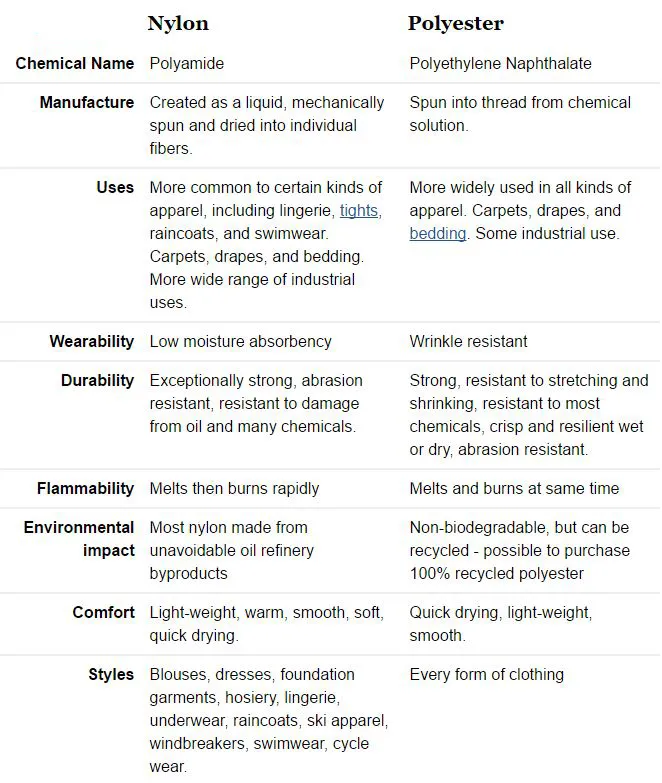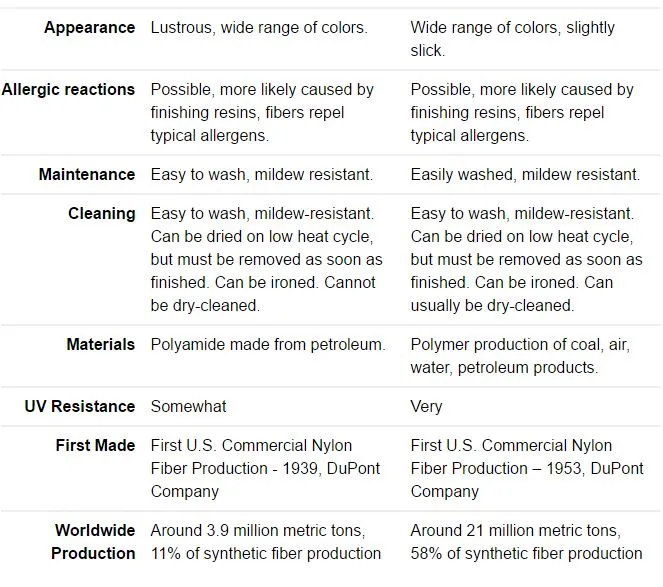
Nylon and polyester are broad synthetic-fiber families used in bag fabrics. A useful comparison must go beyond the fiber name. The selected yarn, weave, fabric weight, thickness, coating, finish and bag construction determine whether a material direction is suitable for a particular project.
Direct answer: Nylon is often considered when a project values a particular hand, flexibility or abrasion direction, while polyester is widely considered for stable, versatile woven bag fabrics and colour-led sourcing. Neither fiber is automatically stronger, lighter, more durable, more waterproof or more sustainable. Compare complete fabric specifications, controlled swatches and representative finished bags against the actual use case.
Nylon vs polyester for bags at a glance
| Decision point | Nylon direction | Polyester direction | What must be verified |
|---|---|---|---|
| Fiber family | Polyamide family with multiple grades and yarn directions | Polyester family with multiple grades and yarn directions | Exact supplier material and composition |
| Hand and drape | Can be developed from soft and flexible to structured | Can also range from soft lining to structured shell fabric | Finished weave, backing and physical swatch |
| Appearance | Can be matte, lustrous, textured, printed or solution-coloured | Can be matte, lustrous, textured, printed or solution-coloured | Colour, gloss, texture and approved physical reference |
| Water exposure | Fiber, weave and finish all affect moisture behaviour | Fiber, weave and finish all affect moisture behaviour | Coating, seam and finished-product test scope |
| Abrasion and tear | Depends on yarn, weave, weight, finish and method | Depends on yarn, weave, weight, finish and method | Comparable test method on exact fabrics |
| Stretch and dimensional behaviour | Depends on yarn and fabric construction | Depends on yarn and fabric construction | Bias, load, heat, moisture and care conditions |
| Recycled direction | Recycled nylon may be considered with exact evidence | Recycled polyester may be considered with exact evidence | Composition, percentage, source and claim documents |
| Commercial direction | Availability and minimums depend on grade, colour and finish | Availability and minimums depend on grade, colour and finish | Current supplier and order confirmation |
This table describes development questions, not universal rankings. Two polyester fabrics can differ more from each other than one selected polyester fabric differs from one selected nylon fabric.
Polyamide vs polyester: clarify the material name first
Buyers may see polyamide on a composition label and nylon in a bag quotation. Nylon belongs to the synthetic polyamide family, but neither term identifies the exact fibre grade or finished fabric. Ask the supplier to connect the composition label, material code and physical swatch to the quoted bag. Then compare that identified polyamide fabric with a specified polyester fabric using the same intended construction and relevant tests. A generic “polyamide versus polyester” claim cannot establish which finished bag will perform better.
Fiber name is only the first layer of a fabric specification
A buyer who requests only “nylon” or “polyester” leaves major decisions unresolved. A usable bag-fabric specification may identify:
- fiber family and composition direction;
- supplier, mill, article or material code;
- virgin or recycled-content direction and evidence;
- yarn denier and filament or textured-yarn direction;
- yarn form, twist or high-tenacity direction where relevant;
- weave, knit or nonwoven construction;
- ends/picks, density or another construction control where available;
- finished fabric weight and test method;
- thickness and measurement method;
- usable width and roll direction;
- colour standard, dye or print direction and finish;
- face and back identification;
- coating, lamination or membrane type and application side;
- water, colour, abrasion, tear or other required evidence;
- lot, shade, substitution and change-control rules.
Without these fields, quotations may compare different materials under the same generic name.
What nylon means in a bag project
Nylon refers to a polyamide fiber family. Bag fabrics described as nylon can include light lining fabrics, woven shell materials, ripstop constructions, textured surfaces and coated laminates.
When considering nylon, review:
- exact nylon or polyamide grade and composition;
- yarn and weave construction;
- hand, drape, surface and desired visual character;
- behaviour after folding, flexing and abrasion;
- colour target and colourfastness requirements;
- coating or backing adhesion;
- moisture, temperature and care conditions;
- required documentation and claim scope;
- current colour, quantity and supplier availability.
The label “ballistic nylon” or “high-tenacity nylon” is not a finished performance result. Define the construction and test evidence needed for the intended bag.
What polyester means in a bag project
Polyester is also a broad fiber family. It appears in lightweight linings, oxford and ripstop shells, printed promotional fabrics, structured luggage directions, mesh and many coated constructions.
When considering polyester, review:
- polymer and composition direction where material identity matters;
- yarn denier, form and weave;
- finished weight and thickness;
- texture, print and colour requirements;
- coating, lamination and backing;
- fold, flex and seam behaviour;
- intended water and care requirements;
- recycled-content documentation where applicable;
- availability by colour and finish.
“Polyester 600D” is not a complete material specification. The 600D versus 900D guide explains why denier must be separated from fabric weight, thickness and finished performance.
Denier does not make nylon and polyester equivalent
Denier expresses the linear density of a yarn. It does not directly state finished fabric weight, thickness, weave density, coating amount, strength or durability.
For example, two fabrics described as 420D can differ in:
- fiber family and yarn grade;
- filament count and yarn texture;
- weave and thread density;
- finished grams per square metre;
- thickness and surface texture;
- coating or lamination;
- tensile, tear and abrasion results;
- colour and finishing process;
- usable width and yield.
Compare denier only as one field within a complete specification.
Measure weight and thickness separately
Fabric weight and thickness can influence hand, bulk, sewing behaviour and packing volume, but neither field proves strength or durability by itself.
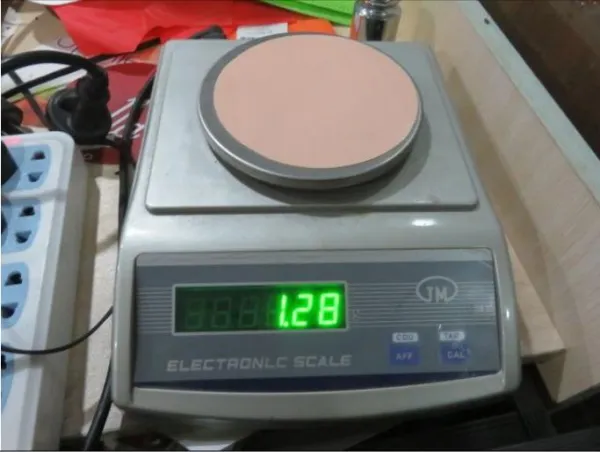
Record the conditioned sample, cut area, method, units and tolerance when checking fabric mass. A displayed reading does not represent every nylon or polyester fabric.
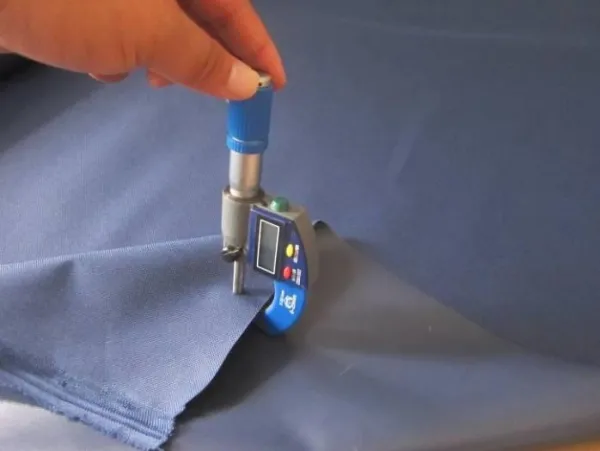
Thickness comparisons need the same tool, pressure, locations, conditioning and rounding method. Coating texture and compression can affect the reading.
Approve production ranges for the exact fabric rather than copying a generic value from another material.
Weave and yarn construction change performance
The fiber family supplies the raw polymer direction; the fabric construction determines how yarns work together.
Common bag-fabric directions can include:
- plain or oxford weave: selected in many general bag shells, with appearance and density controlled by the exact article;
- ripstop direction: includes a reinforcing grid, but the grid name alone does not prove tear resistance;
- twill direction: creates a diagonal structure and distinct hand or appearance;
- textured yarn: can alter surface, bulk and visual character;
- multifilament or monofilament direction: affects hand, surface and construction;
- mesh: requires separate opening, stability, snag and load-path review;
- lining weave: often lighter and should be specified separately from the shell.
Yarn orientation, bias stretch, fraying, needle selection, seam allowance and binding should be reviewed during pattern and sample development.
Coatings and laminations can outweigh the fiber difference
A coating or laminate can change water behaviour, stiffness, appearance, thickness, sewing, adhesion and care. Common project directions may include PU, PVC, TPU or other systems, but each name covers multiple formulations and constructions.
Specify:
- coating or membrane family and supplier code;
- application side and layer construction;
- colour, gloss and surface finish;
- nominal amount, thickness or other controlled field;
- hydrostatic, spray or other water requirement where relevant;
- adhesion, flex, aging and temperature needs;
- seam and needle-hole treatment;
- print, heat-transfer or adhesive compatibility;
- target-market composition or chemical evidence;
- care and storage limitations.
The face fiber does not prove the type, quality or continuity of the backing.
Water-resistant, water-repellent and waterproof are different
Neither nylon nor polyester is automatically a waterproof bag. Separate these layers of the requirement:
- Fiber and yarn: the base material direction.
- Fabric construction: weave density and openings.
- Surface finish: a water-repellent treatment can affect droplet behaviour.
- Coating or membrane: can provide a controlled barrier direction.
- Seams and needle holes: may create paths through an otherwise resistant fabric.
- Zippers and openings: affect ingress during rain, spray or immersion.
- Finished bag geometry: fold, flap, lid and orientation influence exposure.
- Test method: spray, hydrostatic pressure and immersion answer different questions.
Use the water-resistant, water-repellent and waterproof guide to define the claim before selecting the material.
Strength and durability require named tests
“Strong” can refer to different failure modes:
- yarn or strip tensile strength;
- tear resistance after a cut or notch;
- abrasion of the face or coating;
- seam slippage or seam strength;
- puncture or snag resistance;
- flex cracking or delamination;
- handle, strap or attachment load behaviour;
- whole-bag performance with representative contents.
No single result proves all of these. The material test and finished-bag test should match the likely use and load path. Stitch count or reinforcement name also does not compensate for an unsuitable material or geometry; see the stitch and seam guide.
Colour, UV and appearance need exact-sample review
Nylon and polyester can respond differently to specific dyes, pigments, finishes and exposure conditions, but broad statements about “better colour” or “better UV resistance” are not enough for procurement.
Control:
- named physical or instrumental colour target;
- light source and viewing conditions;
- face/back and roll direction;
- lot and shade-band rules;
- rubbing, washing, perspiration or light exposure method where relevant;
- print or sublimation compatibility where required;
- coating yellowing, migration or surface change;
- approval of production-lot swatches.
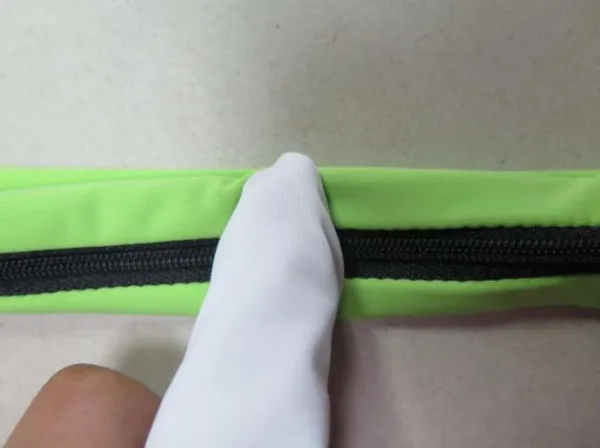
A rubbing check supports one defined colour-transfer question. Record the sample, method, cycles, pressure, assessment scale and acceptance rule.
Hand, noise, drape and user experience
Material selection also affects how a bag feels and behaves:
- surface smoothness or texture;
- stiffness and shape recovery;
- rustle or movement noise;
- fold memory and crease appearance;
- grip against clothing or equipment;
- perceived quality and visual depth;
- cold- or warm-condition hand;
- interaction with foam, lining and support layers.
These are difficult to approve from a material name or photograph. Use physical swatches and a representative sample built with the intended backing and seams.
Recycled nylon and recycled polyester claims
Recycled directions require the same product controls as virgin materials plus claim evidence. Ask for:
- exact fiber and material composition;
- claimed recycled-content percentage and calculation basis;
- pre-consumer or post-consumer direction where relevant;
- supplier and chain-of-custody records;
- certification scope, site, product and transaction evidence where required;
- colour, performance and processing differences;
- substitution and lot-change controls;
- target-market wording and buyer approval.
RPET, recycled polyester, recycled nylon and certified recycled content are not interchangeable claims. Do not infer environmental benefit, traceability or certification from a material name alone.
Choose by application, then verify the construction
| Product question | Material decision to explore | Evidence or sample review |
|---|---|---|
| Lightweight packable bag | Fabric mass, hand, fold volume and crease behaviour | Swatch, fold cycle and finished pack size |
| Outdoor or travel bag | Abrasion, tear, water, colour and repair priorities | Relevant fabric tests and representative-use sample |
| Structured business bag | Hand, backing, support layers and shape recovery | Layer stack and finished empty/loaded shape |
| Printed promotional bag | Print method, colour, heat and coating compatibility | Strike-off, adhesion and care trial |
| Medical or equipment organizer | Contents, cleaning, access and evidence needs | Exact use brief, care protocol and controlled sample |
| Repeated-load sport bag | Base, handles, strap anchors and seam load paths | Representative load and attachment checks |
These examples do not assign one fiber automatically. The full specification and intended use decide the development direction.
Build a controlled swatch comparison
To compare nylon and polyester fairly, prepare a matrix with clearly identified candidates. Where practical, keep other variables close enough that the comparison answers the intended question.
Record for every swatch:
- supplier and article code;
- composition and recycled-content direction;
- denier, yarn and weave;
- finished weight and thickness;
- colour and finish;
- coating or lamination;
- test reports and sample scope;
- order minimum, colour minimum and availability;
- intended bag layer and application.
Then compare only the requirements that matter: hand, colour, printing, cutting, sewing, abrasion, tear, water, cleaning, aging or other project-specific needs.
Approve the finished bag, not only the fabric
A useful development sequence is:
- approve controlled material swatches;
- trial decoration and adhesive processes on the exact fabric;
- review cutting, fraying, seam and binding behaviour;
- build a representative sample with intended foam, lining and hardware;
- measure dimensions and review access, shape and carrying system;
- run relevant material and finished-product checks;
- record every approved change in the specification and BOM;
- retain a pre-production reference for bulk comparison.
If coating, supplier, colour process or backing changes, reassess whether earlier approvals remain applicable.
Incoming and production quality controls
For a controlled nylon or polyester fabric, inspection points may include:
- supplier and article identity;
- roll, lot, dye-lot and colour status;
- face/back and direction;
- usable width, defects and surface condition;
- weight and thickness under agreed methods;
- coating, backing and adhesion appearance;
- print or decoration result;
- fraying, needle and seam behaviour;
- shade continuity across panels;
- project-specific water, colour or other checks;
- authorization of substitutions or deviations.
The custom bag quality-control guide explains how incoming, first-piece, in-line and pre-shipment stages work together.
Nylon or polyester bag fabric RFQ checklist
Provide:
- bag type, target user and intended use;
- contents, representative load and environment;
- preferred fiber direction, if already decided;
- denier, weave, weight, thickness and width requirements;
- face texture, hand and physical colour reference;
- coating, lamination, backing and water requirement;
- print, transfer, embroidery or other decoration;
- shell, lining, reinforcement and support-layer roles;
- named tests, methods, sample scope and acceptance rules;
- recycled-content, composition or compliance evidence;
- sample and production-lot approval requirements;
- quantity by colour and variant;
- packaging, destination and target timing.
MOQ, cost and timing depend on the exact mill article, finish, colour, available stock, custom treatment, test scope, quantity and production plan. Confirm them for the controlled project.
Select the complete fabric, not the generic fiber
Benshine can review intended use, reference products, material directions, colour, construction, decoration, evidence and test requirements for a custom bag. The final nylon or polyester direction should be approved through identified swatches and a representative finished sample.
Send your material and bag specification or review the custom bag manufacturing workflow before requesting a project-specific quotation.
Quick answers
Is nylon or polyester better for bags?
Neither is universally better. The appropriate fabric depends on yarn and grade, denier, weave, fabric weight, coating or lamination, colour requirements, bag construction, use environment, care method, evidence needs and cost direction. Compare controlled swatches and representative samples for the actual project.
Is nylon always stronger than polyester?
No. Fiber family alone does not establish tensile, tear, abrasion, seam or finished-bag strength. Yarn type, denier, weave density, finishing, coating, aging and construction all affect results. Define the relevant method and acceptance requirement for the exact fabric and bag.
Is polyester more waterproof than nylon?
Not by fiber name alone. Finished water behaviour depends on weave, coating or membrane, seam and needle holes, zipper and opening design, hydrostatic or spray requirement, aging and construction. Water-resistant, water-repellent and waterproof should be specified separately.
Does 600D nylon equal 600D polyester?
No. The same denier is only a yarn linear-density direction. It does not make two fabrics equal in weight, thickness, weave, strength, abrasion, stretch, hand, coating or water performance. Compare a complete fabric specification and physical samples.
Can recycled nylon or recycled polyester be specified for a bag?
They can be considered when an identified supply is available, but recycled-content percentage, chain of custody, certification, composition and environmental claims require project-specific documents for the exact material and order. The word recycled alone is not sufficient evidence.
How should nylon and polyester bag fabrics be compared?
Use supplier-identified swatches with the same intended construction where practical, record denier, weave, weight, thickness, finish and backing, then apply relevant colour, abrasion, tear, tensile, seam, water, temperature, care and finished-sample checks under written methods.
Does polyamide mean nylon when comparing bag fabrics?
Nylon is a common synthetic polyamide family, but 'polyamide' alone does not identify a particular grade, yarn, weave or finish. Ask the supplier for the exact fibre composition and fabric article before comparing it with a polyester option.