
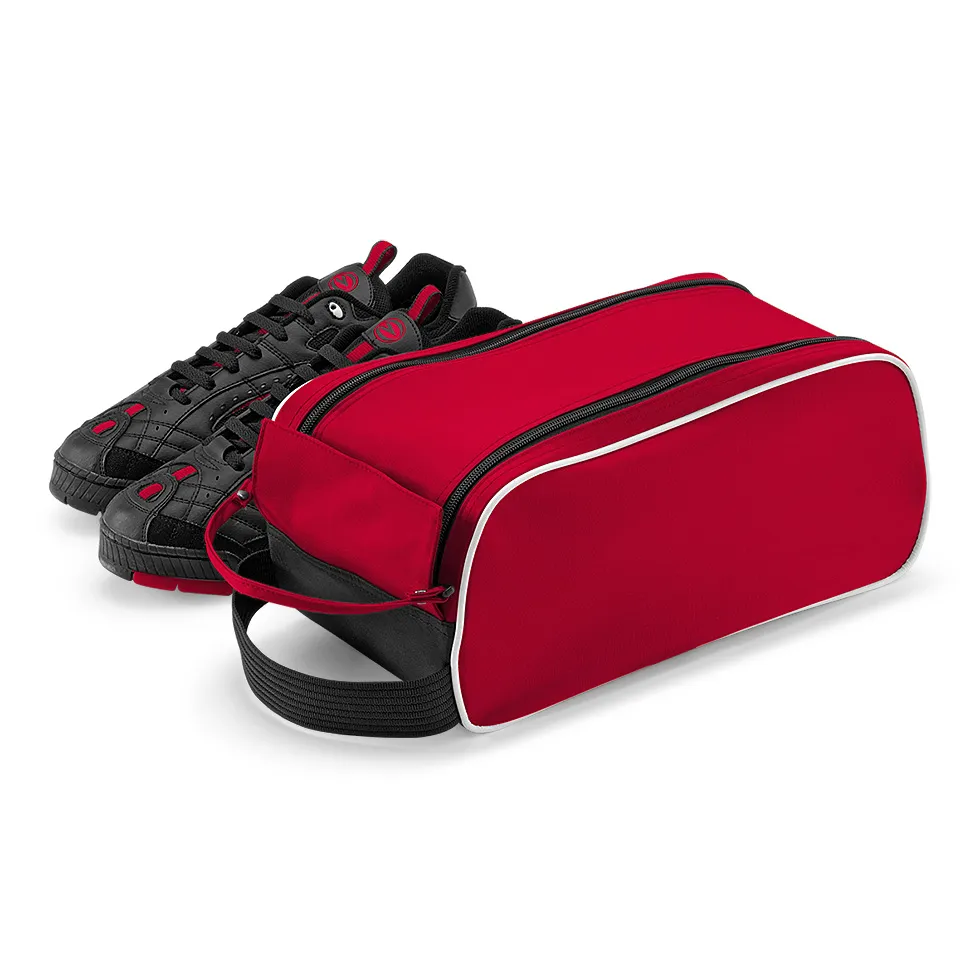
A shoe bag may be a light drawstring pouch, a structured zippered carrier, a pair organizer or a compartment inside a sports bag. These formats serve different footwear, handling and cleaning needs. Nominal shoe size alone is not enough to define fit because sole width, heel, toe volume and boot height vary.
Direct answer: Start a shoe bag design with the actual footwear pair, maximum three-dimensional envelope, orientation and user workflow. Define separation, opening, ventilation direction, material layers, soil handling, cleaning, carrying and packaging around that content. “Shoe bag” does not automatically prove fit, dust protection, moisture control, odour reduction, hygiene, washability, durability or load capacity.
Shoe bag specification at a glance
| Decision | Buyer input | What not to assume |
|---|---|---|
| Footwear envelope | Length, width, height, heel, sole and boot shaft | That one nominal shoe size defines every pair |
| Pair arrangement | Side by side, stacked, opposing, divided or individual | That both shoes fit without rubbing or compression |
| Opening | Drawstring, zipper, flap or other access | Easy insertion from external bag dimensions alone |
| Ventilation | Air-path objective, mesh area and position | Odour, hygiene or drying performance from visible mesh |
| Materials | Exact shell, mesh, lining, backing and reinforcement | Fibre identity, washability or barrier performance from a name |
| Structure | Soft, padded, supported or integrated compartment | Protection or shape retention from appearance |
| Carrying | Handle, hanging loop, luggage placement or no carry feature | Safe load from webbing or handle width alone |
| Evidence | Named method, conditions, sample revision and pass rule | Universal protection, sustainability or commercial terms |
Use representative footwear at every sample stage. Empty-bag measurements and photographs cannot reveal insertion clearance, sole contact, mesh obstruction, zipper interference or how the product behaves when packed in luggage.
Measure the real footwear pair
Record maximum dimensions under the intended packing arrangement:
- outsole length and widest point;
- maximum height at heel, collar or upper;
- heel projection and toe-box volume;
- boot-shaft height, opening and stiffness where relevant;
- sole texture, cleats or protrusions;
- pair count and left/right orientation;
- largest and smallest size in the proposed range;
- accessories such as shoe trees, bags, laces or care items;
- whether retail packaging remains with the footwear.
Provide a physical sample or a controlled three-dimensional model when fit is critical. Trainers, dress shoes, high heels, work boots and cleated footwear can occupy different envelopes at the same labelled size. Confirm the approved size range explicitly rather than describing a bag as one-size-fits-all.
Choose a pair orientation before sizing
Two shoes can sit sole to sole, side by side, stacked, opposing heel to toe or in separate sleeves. Each arrangement changes length, width, height, contact points and user effort. A compact orientation may press one upper against the other sole; a low-friction layout may require more volume.
Define which surfaces may touch. If soil transfer or finish damage is a concern, consider a divider, separate sleeves or controlled orientation. Test insertion and removal without excessive bending. State whether the user must follow a packing diagram and whether that instruction belongs on a label or insert.
Distinguish finished dimensions from usable fit
External length, width and height do not equal usable internal space. Seam allowances, piping, zipper tape, foam, lining, dividers and curved corners reduce capacity. Soft panels also deform around the pair.
Create an annotated drawing with measurement points and bag condition. Record the clear opening separately from the largest internal dimensions. A shoe may fit inside the body but fail to pass through the opening. Measure both empty and representative loaded states where needed.
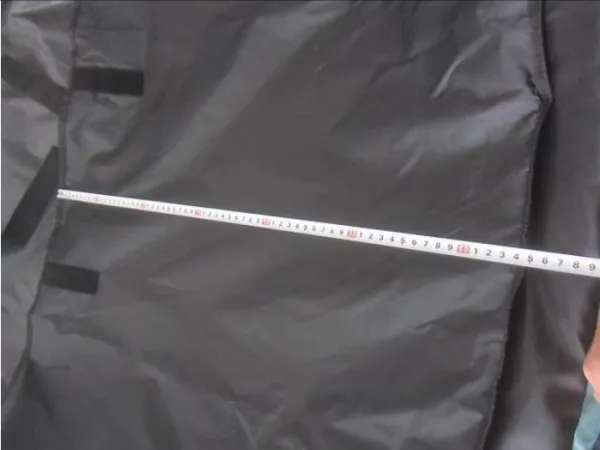
Flexible-bag dimensions need consistent reference points and conditions. Fit is confirmed with the intended footwear, not by external measurements alone.
Soft pouches and structured carriers solve different problems
A drawstring or light zip pouch can minimize packed volume and suit simple organization. A structured carrier can provide a defined shape, wider opening or separate zones, but adds material, bulk and construction. A padded direction may separate contact points without proving impact protection.
The selection should follow footwear value, surface sensitivity, packing pressure, retail presentation and carrying workflow. Define which panels need body, whether the product must stand, and how it collapses when empty. Support materials, foam and piping should appear in the bill of materials and sample approval.
This source image illustrates a shaped carrier with perimeter zipper and handle. It is a format reference, not proof of fit, protection, material identity or load performance.
Separation is an organization feature, not a hygiene claim
A divider or separate compartment can reduce direct contact between footwear and other items. It does not sterilize contents, prevent all contamination or establish antimicrobial performance. Dirt and moisture can still transfer through openings, handling or shared surfaces.
Define what must be separated: left and right shoes, clean and used footwear, soles and uppers, or footwear and clothing. Specify divider coverage, attachment, cleanability and whether it is removable. Review gaps after loading because a soft divider can move or collapse.
If the project has a hygiene or antimicrobial requirement, name the organism, method, test material or finished product, treatment, durability condition and pass criterion. Do not infer it from a material label or additive marketing name.
Ventilation needs a clear purpose
Mesh panels, eyelets or openings can create air paths, but visible ventilation does not prove odour reduction, moisture removal or drying time. Performance depends on open area, placement, obstruction by footwear, other materials, ambient airflow, humidity, temperature, initial moisture and storage duration.
Define why ventilation is requested. A retail display may prioritize visibility, a sports workflow may prioritize post-use air exchange, and luggage storage may prioritize separation. These can lead to different panel positions and sizes.
Test with representative footwear and realistic conditions if a performance statement is required. Avoid “breathable,” “odour resistant” or “quick drying” as unsupported blanket claims.
Mesh changes visibility, containment and snag risk
Mesh can reveal colour or contents and reduce solid-panel area. Specify fibre, construction, weight, hole size or approved visual reference, stretch, colour and edge treatment. Different mesh constructions can have very different hand and snag behaviour.
Review whether laces, hooks, cleats or sharp sole features can catch the mesh. Check seam stability and zipper clearance. If fine debris containment matters, define the particle or soil condition and acceptable leakage; an open mesh is a deliberate path, not a sealed barrier.
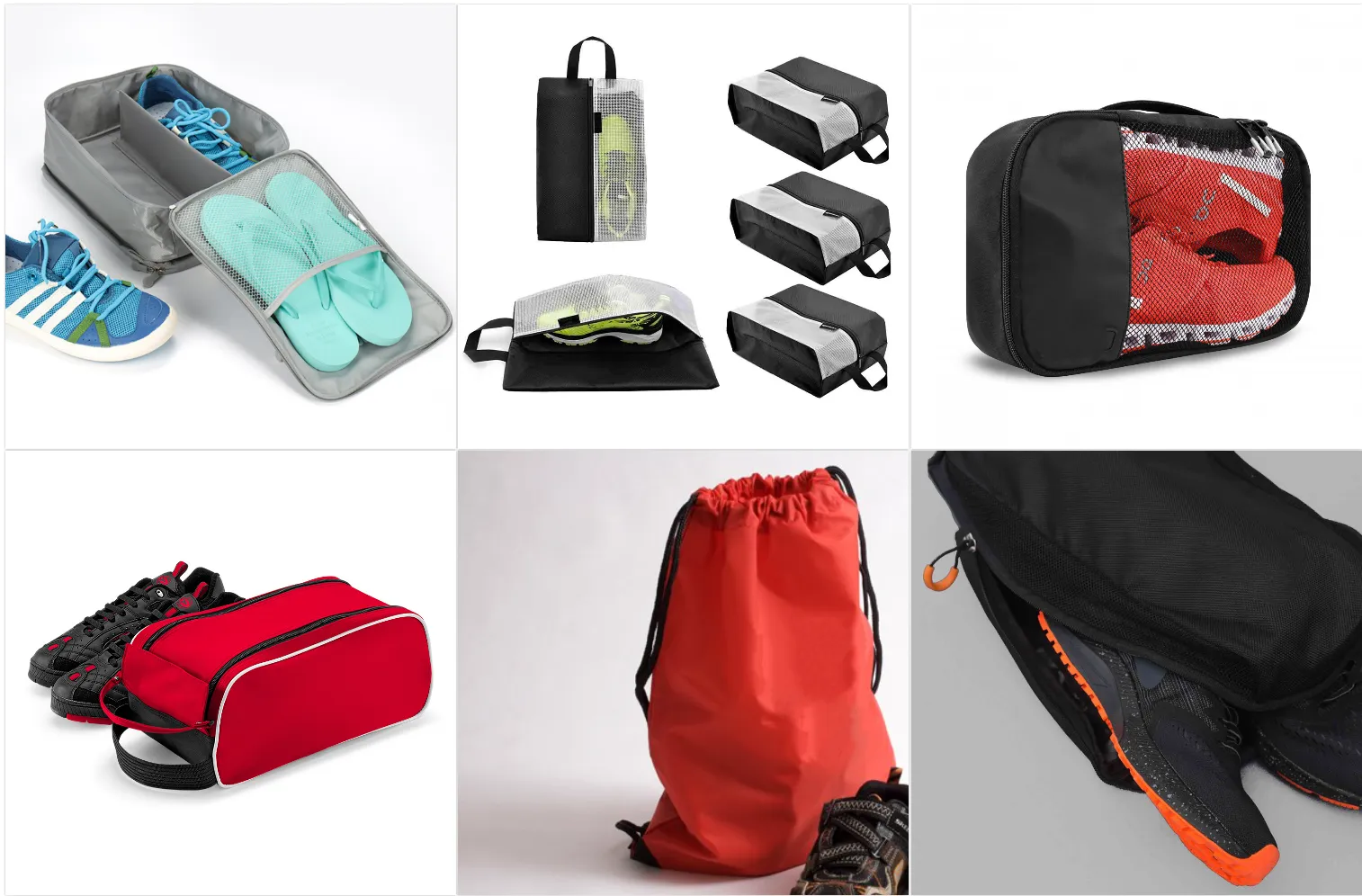
The source collage below illustrates several directions—shared compartments, dividers, mesh windows, handles and drawstring formats—without implying one universal construction.
Select shell and lining by exposure and care
Possible material directions include woven polyester or nylon, non-woven fabric, mesh, canvas-like fabric, film, coated textile and laminated constructions. Each generic term covers multiple grades. Specify exact composition, yarn or construction where relevant, weight or thickness, colour, finish, coating, backing and supplier reference.
The inside surface may contact damp soles, coloured uppers, polish, soil or rubber compounds. Define whether a lining is needed, which side faces the footwear and how seams or bindings are finished. If wipe-clean or wash care is required, state the exact method, detergent or chemical, temperature, cycles, drying and acceptance rules.
Material identity alone does not establish chemical compatibility, colourfastness, cleanability or service life. Validate the finished construction under the project’s exposure.
Water and soil boundaries must be explicit
A coated shell can change liquid behaviour, but the finished bag still includes seams, mesh, zipper, drawstring channel, handle joins and other openings. “Water-resistant” and “waterproof” require defined exposure and protected zones.
For used footwear, decide whether the goal is to contain loose soil, isolate damp soles or protect footwear from external splash. These are different directions. Name the orientation, duration, liquid or soil, closure state and acceptable result. Test the complete loaded bag.
Use the water-resistant versus waterproof bag guide to define a finished-product claim rather than relying on a coated-fabric name.
Drawstring closures trade speed for opening control
A drawstring pouch can be simple to load and compact to pack. Define cord material, diameter, channel, number of cords, exit points, knots or end parts and required opening. The gathered top may leave a central gap and should not be described as sealed.
Review pull force, cord length, entanglement risk and user age or market requirements where relevant. Check whether the packed shoes interfere with full gathering. Reinforce exit points if the construction needs it and define the closure position in the packed sample.
Zipper openings need footwear clearance
Top, U-shaped, clamshell and perimeter zippers create different access. Define chain, slider, tape, puller, start and stop positions, opening direction and clear opening. Check that soles and laces do not catch during closing.
A full clamshell opening can improve visibility but adds a long installed zipper and corner transitions. A short top zipper may be compact but require more manipulation of the pair. Test repeated insertion and removal with the largest approved footwear.
The zipper, webbing and hardware guide explains component compatibility, clear opening and installation controls.
Handles and loops need a complete load path
A shoe-bag handle may support hand carry, retrieval from luggage or hanging. Specify material, width, length, position, reinforcement and attachment pattern. Review balance with the actual pair; an off-centre handle can rotate a shaped bag or press footwear against the opening.
The panel and reinforcement around the attachment are part of the load path. A strong webbing does not prove a strong finished handle. Where load performance matters, define packed mass, orientation, static duration or cycles and pass criteria for the complete bag.
Integrated shoe compartments affect the whole bag
A shoe tunnel inside a sports or travel bag occupies space and changes the main compartment. Define the maximum footwear envelope, divider coverage, access opening, ventilation path, cleaning route and how the tunnel behaves when empty.
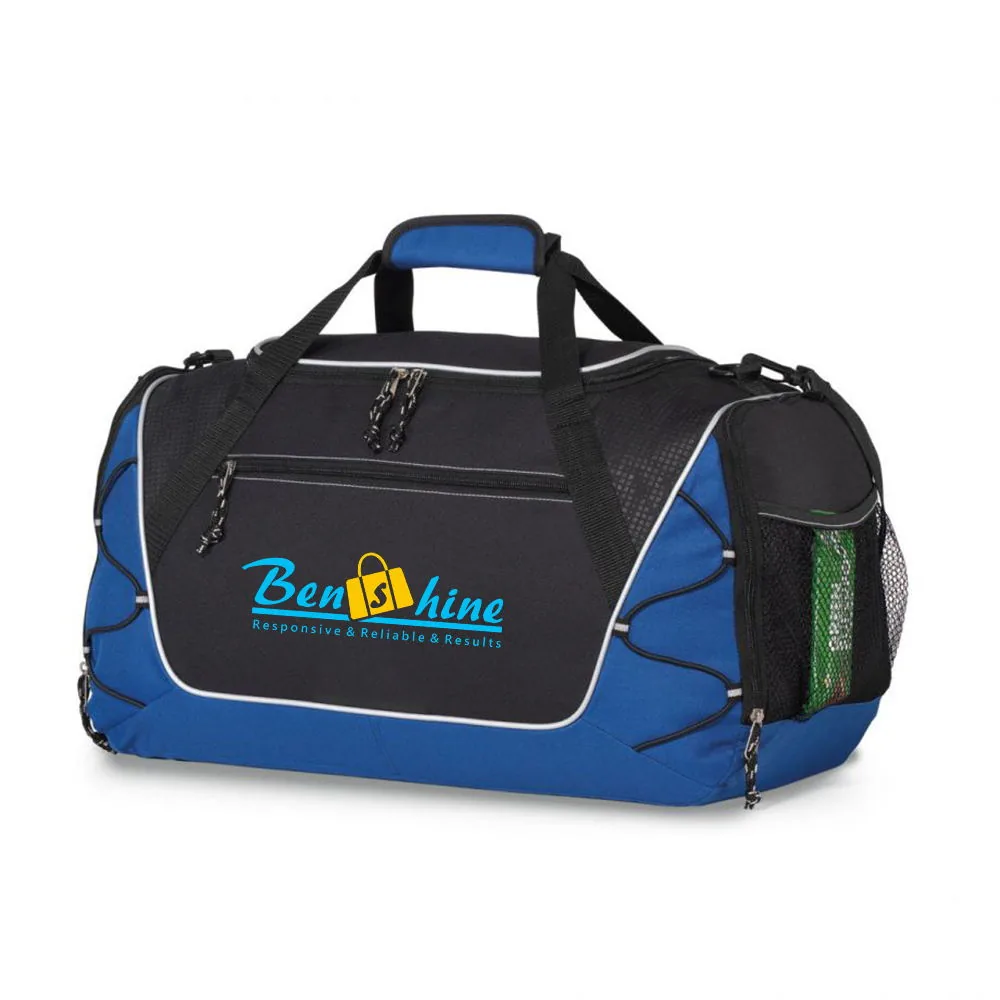
SB12 provides a first-party format reference for discussing separate footwear access within a larger sports bag. The exact compartment, capacity and performance require project confirmation.
Test both zones together. Footwear can intrude into clothing space, change the center of gravity or block another pocket. Load the main cargo and shoes at the same time, then review closure, carrying, shape and access. The empty bag alone does not establish usable capacity.
Boots and specialty footwear need dedicated geometry
Boots introduce shaft height, stiffness, heel shape and larger soil-contact surfaces. Cleated footwear, skates or protective shoes may include hard protrusions and concentrated points. A standard low-shoe pouch may not be suitable.
Define whether shafts remain upright, fold or lie alongside each other. Map hard contact points and consider local reinforcement or a removable insert where required. If the bag must hold wet, sharp or chemically exposed work footwear, specify the exposure and compatibility evidence rather than using a generic boot-bag label.
Sewing and edge treatment follow the material stack
Thread, needle, stitch type, stitch spacing, seam allowance and tension interact with shell, mesh, lining, foam and binding. Multi-layer corners and zipper ends can become bulky. Open mesh may need stabilized seam capture, while some non-wovens respond differently to dense perforation.
Create a seam map for panel joins, mesh, divider, zipper, drawstring channel, handle anchors and base. Define edge coverage, face and reverse appearance, start and end treatment and repair rules. Use the bag stitch-length guide to set measurable criteria.
Branding must suit the exact surface
Logo method depends on shell composition, texture, coating, mesh, colour and structure. Printing, transfer, embroidery, labels and patches have different coverage, heat, needle and stiffness effects. A logo on a soft pouch also distorts differently when the drawstring gathers.
Provide vector artwork, dimensions, colour target, placement and orientation. Approve a strike-off on the exact material and production colour. Review opacity, edge detail, registration, hand, fold location and the required rubbing, cleaning or ageing protocol. Compare processes in the branding-method guide.
Sustainability claims need component-level evidence
RPET, recycled content, reusable and eco-friendly are not interchangeable claims. If a project uses recycled fibre, identify the exact component, percentage, calculation method, standard or chain-of-custody scope and current evidence. A recycled shell does not mean the zipper, mesh, lining, thread, ink or whole bag has the same attribute.
Also consider material quantity, production yield, mixed-material construction, care, expected use and realistic end-of-life options. Do not call a shoe bag recyclable, biodegradable or environmentally preferable without a defined basis appropriate to the destination market.
Cleaning and odour criteria must be testable
Define whether users wipe, hand wash, machine wash, rinse or air the product. State detergent or chemical, temperature, cycle, drying and acceptance for dimension, colour, coating, mesh, zipper, print and odour. A material described as washable does not prove that the complete assembled bag tolerates the process.
If odour matters, define footwear condition, exposure time, bag closure, conditioning, assessment method and acceptance reference. Ventilation and cleaning may support a workflow, but neither should be presented as guaranteed odour elimination without evidence.
Packaging can affect shape and presentation
Soft pouches may be folded compactly; structured carriers, piping and clear panels may need controlled folds or supports. Define fold sequence, insert, individual packaging, carton quantity and orientation. Avoid placing hard pullers or handles where they imprint visible panels.
Run a pack-out trial with production-intent materials. After the defined storage or transit simulation, review creases, deformation, surface transfer, zipper operation, print appearance and recovery. Packaging approval belongs with the product sample, not as an afterthought.
Approve shoe bags in controlled stages
- Footwear brief: pair type, size range, dimensions, orientation and workflow.
- Material swatches: shell, mesh, lining, backing, reinforcement and evidence.
- Fit mock-up: usable space, opening, divider and insertion path.
- Construction sample: closures, seams, ventilation, handle and branding.
- Loaded-use review: packing, removal, separation, luggage fit and carrying.
- Project tests: named colour, cleaning, load, water, mesh, zipper or packaging protocols.
- Pre-production sample: freeze pattern, bill of materials, workmanship, artwork and pack-out.
A substitution in shell, mesh, coating, zipper, cord, lining, support, ink or packaging can affect earlier results. Use documented change control and repeat relevant approvals.
Production quality-control points
Order-specific inspection can include:
- shell, mesh, lining, backing and reinforcement identity;
- material weight, thickness, colour and surface condition;
- finished external and usable internal dimensions;
- clear opening and largest-footwear fit;
- divider coverage and attachment;
- mesh location, orientation, edge capture and damage;
- zipper, drawstring, puller and closure function;
- seams, binding, piping, corners and stitch condition;
- handles, loops, hardware and anchor reinforcement;
- lining cleanliness and exposed interior parts;
- artwork size, colour, position and workmanship;
- representative-pair packing and removal;
- folded dimensions, pack-out and carton presentation;
- project-specific tests and traceability;
- conformity to approved sample and revision.
Sampling does not prove every unit. Connect incoming material checks, first-piece approval, in-line controls and pre-shipment review using the custom bag quality-control guide.
Custom shoe bag RFQ checklist
Send the manufacturer:
- footwear type, size range and representative samples;
- maximum pair length, width, height and special geometry;
- pair count, orientation and allowed surface contact;
- retail, travel, sport, uniform or storage workflow;
- finished external dimensions and usable fit;
- soft pouch, structured carrier or integrated compartment;
- separation, divider or individual-sleeve direction;
- ventilation objective, mesh area and position;
- zipper, drawstring, flap or other opening;
- exact shell, mesh, lining, backing and reinforcement;
- material composition, weight, thickness, colour and finish;
- handle, loop, strap, hardware and load direction;
- artwork, branding process, dimensions and placement;
- soil, moisture, cleaning, odour and storage conditions;
- fit, closure, seam, load, water, cleaning or packaging protocols;
- target-market labels and evidence scope;
- approved swatch, sample and change-control requirements;
- quantity by size, colour and version;
- folding, packaging, carton and delivery requirements.
MOQ, price, feasibility and timing depend on materials, size range, structure, mesh, closures, separation, branding, testing, quantity and packaging. Request current project confirmation after the specification is reviewed.
Develop around the footwear and packing route
Benshine can review shoe pouches, structured carriers, boot-bag directions and integrated footwear compartments around the actual pair, orientation, access, separation, ventilation, materials, care, branding, tests and quality controls. Source imagery and SB12 provide format references; exact performance, evidence and commercial terms remain project-specific.
Explore custom shoe bags, review the SB12 sports-bag reference with shoe compartment, or send your footwear-bag specification.
Quick answers
What measurements are needed for a custom shoe bag?
Measure the actual pair at maximum length, width and stacked or side-by-side height. Record sole shape, heel, toe volume, boot shaft, pair orientation, shoe size range and whether boxes or accessories remain. Confirm fit with representative footwear in a finished sample.
Should shoes be stored together or separately?
That depends on surface sensitivity, soil transfer, bag size and user workflow. Options include one shared compartment, a soft divider, individual sleeves or separate compartments. Define the contact risk and test packing and removal with the intended pair.
Does mesh make a shoe bag breathable or odour resistant?
Mesh can provide an air path, but the result depends on mesh area and location, the rest of the construction, footwear moisture, storage environment and time. It does not prove odour control, hygiene, antimicrobial performance or drying speed.
Which material is best for a shoe bag?
No material is best for every use. Woven textile, non-woven fabric, mesh, film and laminated constructions differ in identity, hand, opacity, soil handling, sewing and care. Select an exact construction after defining footwear, exposure, cleaning, structure and required tests.
Can a shoe compartment be integrated into a sports or travel bag?
Yes, as a design direction. Define the footwear envelope, divider, access, ventilation path, intrusion into the main compartment, packed load and cleaning method. Test the complete bag with footwear and main-cargo contents together.
What belongs in a custom shoe bag RFQ?
Include footwear type and maximum dimensions, pair count and orientation, use workflow, finished dimensions, separation, ventilation, opening, materials, lining, structure, handles, branding, care, tests, evidence requirements, quantity, packaging and delivery requirements.