
Evidence-led OEM backpack development for emergency and organized equipment carrying

Tactical Backpack Manufacturer in China

Direct answer: Benshine has published backpack reference AB060 whose original record identifies it as a tactical first-aid and emergency medical backpack, together with rescue-backpack reference AB063. An OEM tactical backpack project begins with the buyer's controlled equipment list, access workflow, compartment map, carrying system, materials, identification, destination-market requirements and acceptance tests.

Emergency, first-aid and rescue equipment brandsMedical supply and organized-kit distributorsIndustrial equipment and field-service product teamsPrivate-label and OEM sourcing teams
Discuss on WhatsAppEmail Sales

Define tactical by the job, not by appearance

A tactical backpack manufacturer enquiry becomes actionable when the intended equipment and workflow are documented. Colour, webbing or a rugged visual style cannot define load suitability, access, retention or field performance. Begin with the items, their priority, total mass, user, environment and sequence of use.

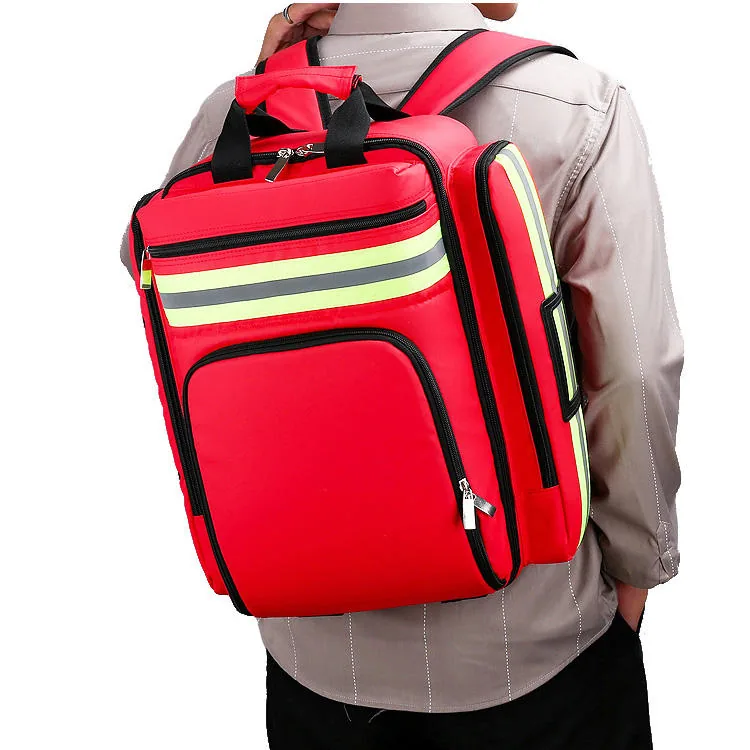
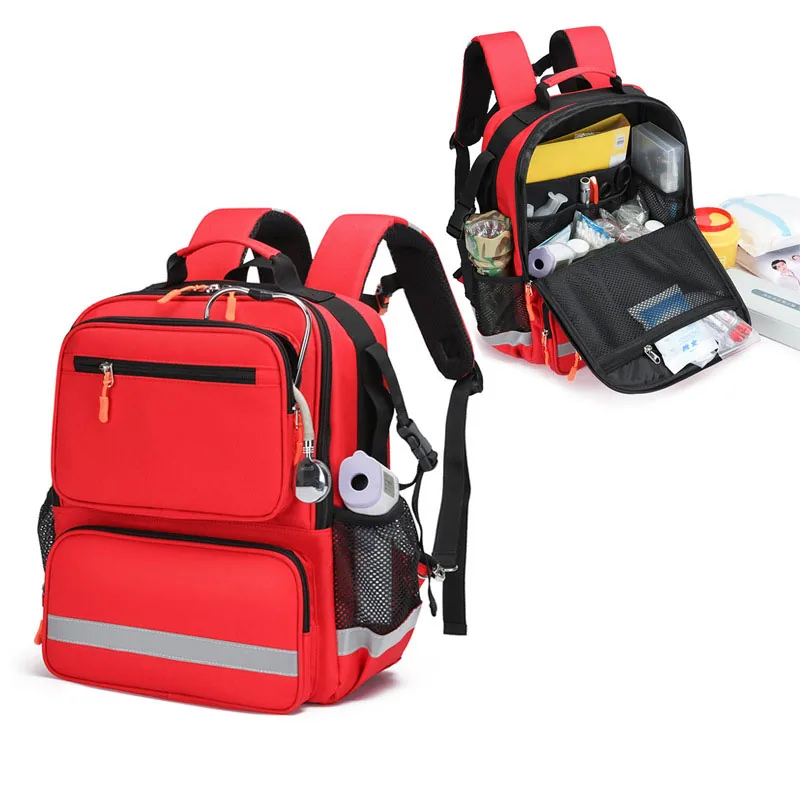
AB060 is relevant evidence because its original product record expressly identifies a tactical first-aid and emergency medical backpack. AB063 adds a rescue-backpack organization direction. These references support design discussion; they do not establish universal military, clinical, waterproof or durability claims.

Turn the equipment list into an access map

Group contents by task, urgency and replenishment method. Decide which items must be visible immediately, which require retention and which can sit in the main cavity. Then define the opening angle, pocket dimensions, divider system, removable modules, labels and external access points.

The sample should be assessed with the buyer’s actual equipment or accurate dimensional substitutes. This reveals interference between pockets, closure pressure, unused volume and the effect of an open panel on the working area—questions that an empty-bag image cannot answer.

Engineer the carrying system around the loaded sample

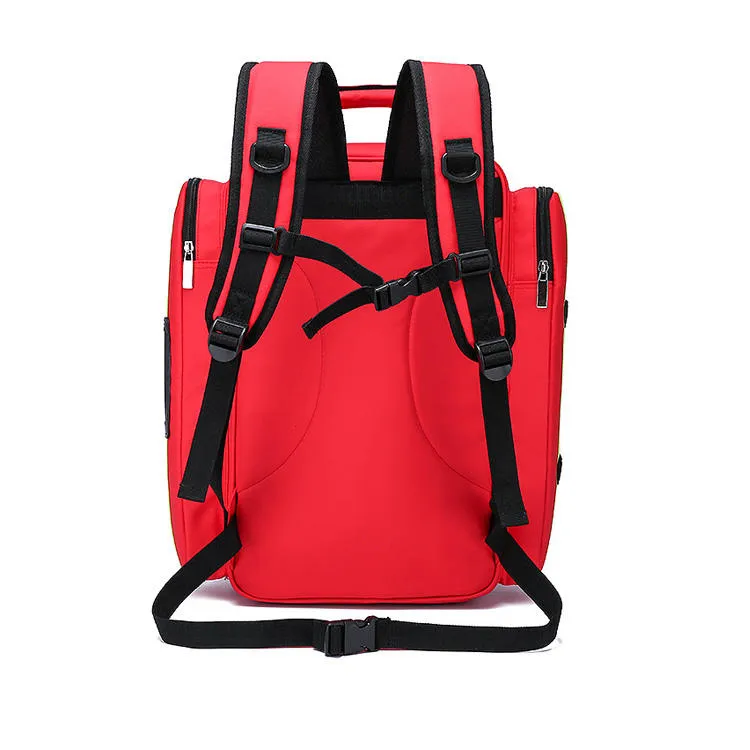
Back length, shoulder-strap geometry, padding, stabilization, grab handles and bag balance should follow the planned load and carry duration. AB060 imagery provides a two-strap backpack reference with an adjustable chest strap; it is not evidence of a stated comfort duration or load rating.

Loaded evaluation should cover lifting, donning, walking, opening, setting the bag down and returning equipment. If the project has a load, drop, abrasion, rain-exposure or cleaning claim, the buyer should define a repeatable test and acceptance criteria for the approved construction.

Separate OEM responsibility from product performance

For an OEM tactical backpack factory project, the buyer normally supplies or approves the controlled design and requirements; Benshine reviews manufacturability, sampling and production controls against that brief. Ownership of artwork, specifications, regulatory decisions, claims and approval evidence should be recorded rather than assumed from the term OEM.

Materials, dimensions, MOQ, sample timing, production timing and packaging are reviewed after the specification is understood. This page does not publish a universal commercial promise because construction complexity, evidence requirements and order conditions vary by project.

Approve evidence before approving claims

“Tactical,” “emergency,” “medical” and “waterproof” can carry different expectations across buyers and markets. Treat each as a claim-control question. Confirm the intended use, destination-market rules, labels, testing responsibilities and documentary evidence for the exact sample and production specification.

This page does not claim ballistic protection, military qualification, medical-device status, kit completeness, clinical suitability, universal waterproofness or a rated carrying load. Those conclusions require applicable requirements and project-specific proof.

Application-led design

Choose the construction by how the bag will be used

An application is a starting point for specification—not a substitute for dimensions, materials, components and measurable requirements.

Emergency medical backpacks

Plan access and organization around a buyer-controlled first-aid or emergency equipment list without implying kit completeness or clinical suitability.

Rescue organizer backpacks

Map visibility, item groups, opening sequence and handoff around the intended responder workflow and environment.

Field-service equipment packs

Translate a documented tool or equipment set into zones, retainers, pockets and carrying features, then verify the loaded sample.

OEM and private-label programmes

Control design ownership, specification responsibility, branding, approvals, packaging and change management before production.

Benshine product references

Explore tactical backpacks construction options

Select a reference to review the available source details, then identify what must change for your product.

Red AB060 tactical emergency medical backpack reference

Reference AB060

Tactical Emergency Medical Backpack AB060

A published backpack reference explicitly identified in its original record as a tactical first-aid and emergency medical backpack.

View reference →
Red AB063 rescue backpack with organized interior

Reference AB063

Medical Organizer Rescue Backpack AB063

A published rescue-backpack direction for discussing compartment access, visibility, carrying and responder workflow.

View reference →

RFQ specification checklist

Decisions to control before sampling

A complete brief helps Benshine review feasibility and gives buyers a clearer basis for comparing quotations and samples.

DecisionInformation to provideWhy it matters
Equipment load and use sequenceItem list, quantities, dimensions, mass, priority, replenishment method, user role and use environmentThe real load determines volume, pocket geometry, opening order, balance and the evidence needed for approval.
Organization and accessMain opening, removable modules, dividers, elastic retention, transparent or mesh zones, external pockets and identification logicA tactical appearance does not prove that users can find, retain or replenish the intended equipment correctly.
Carrying systemExpected loaded mass, carry duration, shoulder straps, back panel, chest or waist stabilization, grab handles and donning workflowComfort, stability and load suitability must be assessed with a representative load and defined users.
Materials and exposureExterior, lining, reinforcement, zippers, binding, cleaning method, abrasion points, rain exposure and requested test methodsMaterial names and source descriptions do not by themselves prove waterproofness, durability, cleanability or service life.
Visibility, branding and evidenceColours, reflective placement, labels, artwork, market requirements, inspection plan, test protocol and acceptance criteriaVisibility, compliance and performance claims require requirements and evidence for the exact production specification.

From reference to production brief

A controlled sourcing path

01

Submit the controlled pack-out

Provide the equipment list, sample items or dimensions, total mass, access priorities, intended users, environment and destination market.

02

Approve the compartment and carrying concept

Review bag dimensions, opening pattern, pocket map, retention, labels, shoulder system, handles and loaded balance.

03

Build and test a representative sample

Pack the real or dimensionally representative equipment and evaluate access, retention, carrying, cleaning and any requested performance method.

04

Freeze OEM controls before production

Approve materials, measurements, artwork, evidence, inspection points, packaging, change control and project-specific commercial terms.

Buyer questions

Frequently asked questions about tactical backpacks

Does Benshine manufacture tactical backpacks?

Benshine has a published AB060 reference whose original record explicitly describes a tactical first-aid and emergency medical backpack, plus AB063 for rescue-backpack organization. A new project is reviewed against the buyer's equipment, construction, carrying, evidence and market requirements.

What does an OEM tactical backpack factory need from the buyer?

Provide design ownership and responsibility, an equipment list, dimensions, loaded mass, access workflow, compartment map, materials, carrying requirements, branding, packaging, destination market, tests and acceptance criteria. Commercial terms are then reviewed for that specification.

Does tactical mean military-grade or ballistic?

No. On this page, tactical describes an organized equipment-carrying direction supported by the AB060 source wording. It does not prove military qualification, ballistic protection, camouflage performance, duty suitability or compliance with any procurement standard.

Can AB060 carry first-aid or emergency supplies?

Its original record identifies first-aid, emergency and medical-backpack uses. Suitability for a particular kit, user or clinical workflow still depends on the controlled pack-out, access study, materials, labels, cleaning method and required evidence.

Is the tactical medical backpack waterproof?

The historical AB060 source uses waterproof wording, but that wording alone is not a verified performance result. Define rain or water exposure, seams and closures, test method, duration, acceptance criteria and representative load before making a project claim.

Can compartments, colours, reflective details and logos be customized?

These can be evaluated as specification options. Final feasibility depends on equipment geometry, construction, material availability, artwork, visibility requirements, sample approval and production controls.

EmailWhatsApp