
A reliable bag manufacturer in China is not identified by one promise, a polished photograph or the lowest quotation. B2B buyers should compare business identity, relevant product construction, manufacturing responsibility, specification discipline, sample records, quality controls and communication as one connected system.
Direct answer: Shortlist a China bag manufacturer only after its legal identity, production role, relevant product evidence, sample-control process and quality records fit the bag you intend to source. Give every candidate the same written RFQ, then compare like with like. Treat capacity, MOQ, price, timing, certification and performance as project-specific facts that require current confirmation.
Start with a controlled shortlist
Choose a small group whose visible evidence is relevant to the proposed construction. A broad catalogue can show range, but it does not prove that every material, machine, process or capacity is available for a new order.
Use this first-pass matrix before requesting detailed commercial terms:
| Selection area | Evidence to request | What the evidence does not prove by itself |
|---|---|---|
| Business identity | Legal company name, factory address and direct contact details | Ownership of every process or current commercial standing |
| Relevant product work | Comparable bag references, construction details and first-party media | Identical materials, performance or availability for your project |
| Manufacturing scope | Process map showing in-house and approved external operations | Available capacity, allocation or lead time for the proposed order |
| Specification control | Written RFQ, revision history and open-question list | That an unstated assumption is included in the quotation |
| Sample approval | Annotated sample record, measurements and approved changes | Consistency of future production without defined controls |
| Quality planning | Checkpoints, methods, tolerances and acceptance criteria | Universal quality or zero-defect production |
| Tests and documents | Reports whose sample, method, date and conclusion match the requirement | Factory-wide or all-product compliance |
| Communication | Named responsibilities, written decisions and change records | Technical feasibility until the responsible team confirms it |
1. Verify the legal entity and factory location
Record the supplier’s legal name, business address, factory address, website domain, telephone and payment beneficiary. Differences are not automatically a problem, but they should be explained before onboarding or payment.
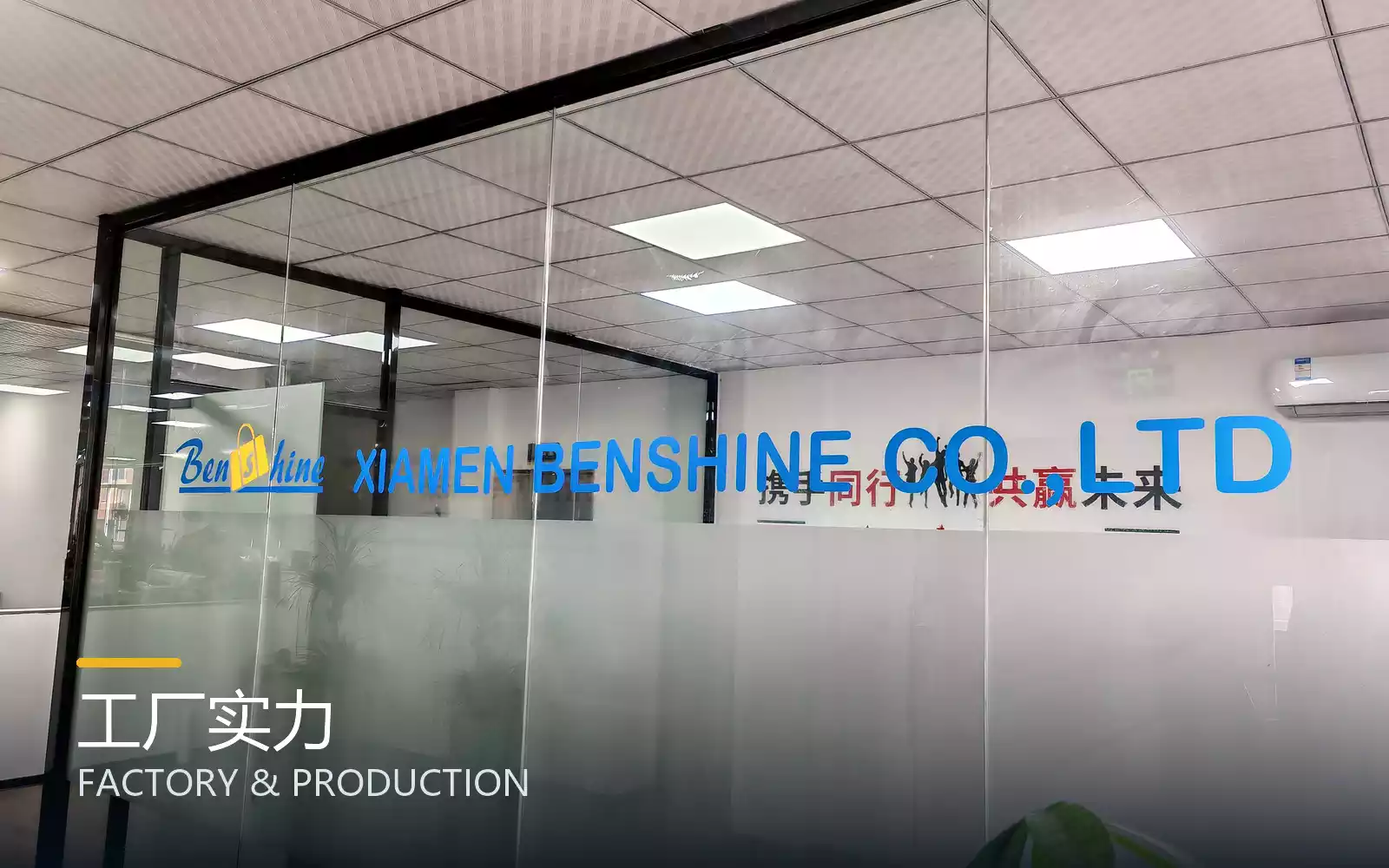
For Benshine, the published legal entity is Xiamen Benshine Co.,Ltd, and the published factory address is 3rd Floor, Building 1, No. 17 Jinfu 2nd Road, Tong’an District, Xiamen, 361000, China. Buyers should still apply their own onboarding, sanctions, credit and payment checks.
Review Benshine’s verified company and factory information or view the factory evidence page.
2. Clarify factory, trading and outsourcing roles
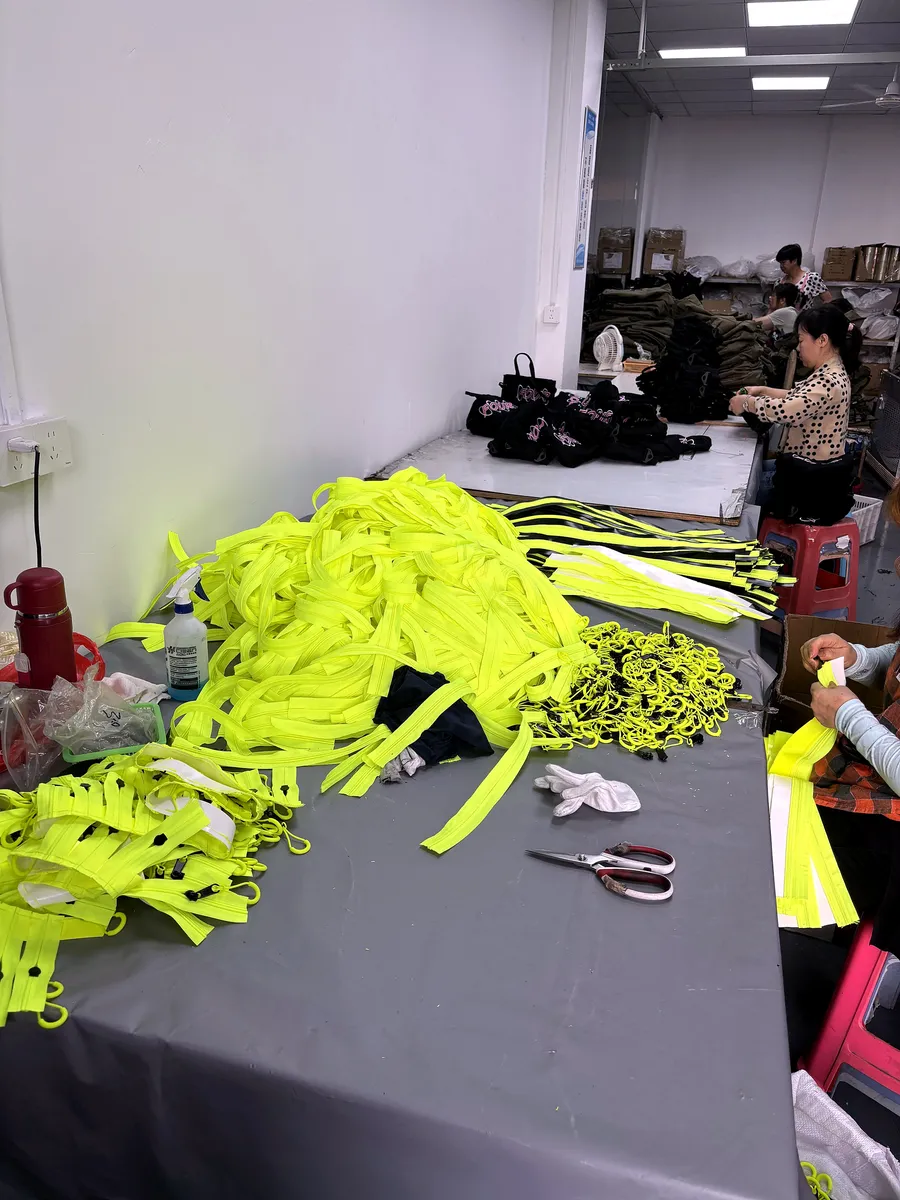
“Factory” and “supplier” are not complete process descriptions. Ask who handles pattern development, material purchasing, spreading, cutting, printing or decoration, sewing, assembly, inspection and packing. Record any approved external process and who is responsible for its quality and traceability.
A trading company is not automatically unsuitable, and a factory is not automatically reliable. The sourcing decision depends on transparency, relevant control and whether the operating model fits the buyer’s risk, volume, product complexity and evidence requirements.
3. Match evidence to the proposed bag construction
Do not shortlist only by a broad category name. Compare the construction that drives manufacturing risk:
- A cooler bag may require a controlled liner, insulation build, closure and loaded thermal validation.
- A tool backpack may require pocket retention, reinforced load paths, hardware selection and loaded-sample review.
- A printed tote may depend more on fabric composition, colour, print method, artwork control and seam strength.
- A medical organizer may require workflow-specific layout, cleaning decisions, labelling and carefully scoped regulatory evidence.
Existing product images or SKUs are useful design references, not ready-made specifications. Record every change required for the new project.
Browse Benshine product categories and review the visual product catalogue.
4. Send every candidate the same RFQ
Quotations are comparable only when their assumptions are comparable. A useful custom bag RFQ should state:
- intended contents, user and handling environment;
- finished dimensions and acceptable tolerances;
- outer, lining, padding, reinforcement and coating directions;
- zipper, buckle, webbing, handle and other component requirements;
- pocket plan, opening, carrying system and load expectations;
- logo artwork, colour standard, decoration method and placement;
- labels, individual packaging, carton and shipping-mark requirements;
- estimated order quantity and any planned variants;
- destination market and buyer-defined evidence requirements;
- required sample, inspection and testing stages;
- target timing, delivery term and quotation validity questions.
Where a decision is still open, label it as an open question. Do not let each supplier silently choose a different material, quality level or packaging assumption.
5. Separate feasibility, MOQ, cost and timing
Ask the supplier to distinguish what is technically feasible from what is commercially available for the proposed quantity and schedule. MOQ, price and lead time may change with materials, colour minimums, custom hardware, printing setup, testing, packaging and current allocation.
Do not treat a general website statement as the final commercial commitment. The quotation and order documents should identify the specification version, inclusions, exclusions, payment terms, delivery term and validity period.
Review the custom bag MOQ and cost-factor guide.
6. Approve a representative sample against a record
A sample is most useful when it represents the intended materials, construction, branding and packaging closely enough for the agreed decision. Record:
- the sample or revision identifier;
- measured dimensions and tolerances;
- materials, colours and components;
- construction, stitching and reinforcement points;
- fit with the intended contents and loaded handling;
- branding, labels and packaging;
- accepted deviations and required corrections;
- the approver and approval date.
Photographs help communicate changes, but they do not replace a controlled specification or physical reference where one is required.
7. Build the quality plan around actual risks
Define quality checks from the intended use and construction rather than copying a generic checklist. Depending on the project, review incoming materials, cutting, colour, printing, stitching, dimensions, closures, hardware, loaded function, appearance, packing and pre-shipment sampling.
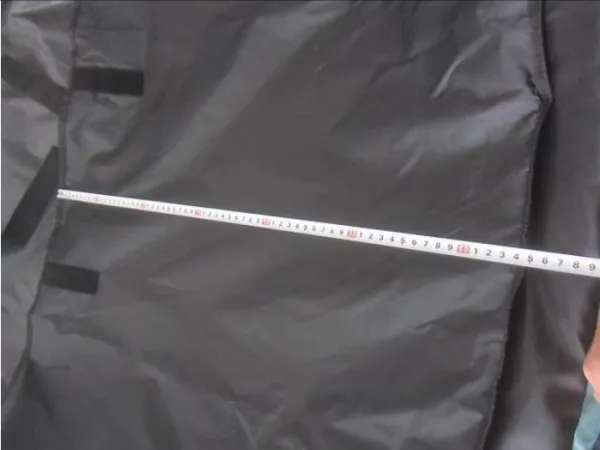
The buyer and supplier should agree who checks what, at which stage, using which method, against which tolerance or acceptance rule, and what record will be retained. Inspection activity is not a promise that every listed check applies to every order.
Review Benshine’s custom bag quality-control framework.
8. Read certificates, audits and tests by scope
Check the exact entity, factory site, issuing or auditing body, document number, date, validity, standard and stated scope. For a test report, also check the submitted sample, method, measured items, result and conclusion.
A factory audit cannot establish finished-product compliance. A material report cannot automatically cover a different colour, coating, component or later production lot. Ask how the proposed order will be linked to the applicable approved material and document.
Read the certification and audit verification guide and review Benshine’s scoped test documents.
9. Evaluate communication and change control
Useful supplier communication makes uncertainty visible. Look for written confirmation of open questions, named responsibilities, revision control, approval status and the effect of a change on price, timing or evidence.
Warning signs include:
- a quotation issued without enough product detail to identify its assumptions;
- refusal to explain the named manufacturing site or external processes;
- unrelated product photos presented as evidence of relevant experience;
- certificates or reports supplied without readable scope, dates or identifiers;
- pressure to approve changes only through chat without updating the specification;
- inconsistent legal, payment or contact details without a documented explanation;
- guaranteed performance, compliance or delivery claims without a matching method and record.
One warning sign may have a reasonable explanation. The important question is whether the supplier resolves it with specific, verifiable information.
10. Record the final sourcing decision
Before placing an order, keep a decision file containing the selected supplier identity, controlled specification, approved sample, quotation assumptions, quality plan, applicable evidence, packaging requirements, delivery terms and approved changes. This turns supplier selection from an impression into a traceable commercial decision.
A practical supplier-review sequence
- Establish legal identity and the named manufacturing site.
- Match product and process evidence to the proposed construction.
- Issue one controlled RFQ to every shortlisted supplier.
- Resolve technical and commercial assumptions in writing.
- Review a representative sample against a revision-controlled record.
- Agree project-specific inspections, tests and acceptance criteria.
- Confirm report, audit and certificate scope where applicable.
- Compare total project risk and value—not only the headline unit price.
Continue the sourcing review
- Compare OEM, ODM, private-label and contract bag manufacturing
- Understand custom bag MOQ and manufacturing cost factors
- Review Benshine’s custom bag manufacturing workflow
- Browse first-party factory photos and videos
- Contact Benshine with a controlled project brief
Quick answers
How do I find a reliable bag manufacturer in China?
Compare the legal entity and factory location, relevant product and process evidence, written specifications, sample approval records, quality checkpoints and communication discipline. Send every shortlisted supplier the same RFQ before comparing price or timing.
How can I tell a bag factory from a trading company?
Ask which cutting, sewing, printing, finishing, inspection and packing steps are performed at the named site, which steps use approved external processors and who controls the specification and quality records. Verify those answers with current media, documents or an audit appropriate to your risk.
Is a trading company always a poor choice for custom bags?
No. The important issue is role transparency and control. A trading or sourcing partner may suit some projects, but the buyer should know who manufactures the product, who owns approvals and records, and how changes and nonconformities are controlled.
What should I send to a China bag manufacturer for a comparable quotation?
Send the intended use, dimensions, construction, material and component directions, logo artwork, packaging, estimated quantity, destination market, required evidence, inspection expectations and target timing. Mark unknown items as open questions rather than allowing silent assumptions.
Does a factory certificate prove that my bag will comply?
No. A factory certificate, audit or material test document has its own entity, site, sample, method, date and scope. Finished-product compliance depends on the controlled specification, applicable market requirements and evidence that matches the proposed product and production.
Should I choose the lowest bag-manufacturing quotation?
Not until the quotations use the same specification, quality plan, packaging, evidence and commercial assumptions. A lower figure may reflect omitted materials, processes, tests, packaging or services rather than equivalent value.