Water-resistant, water-repellent and waterproof are useful starting terms for bags, but none is a complete engineering specification. The same outer fabric can perform differently after it is cut, stitched, welded, fitted with a zipper and assembled into a finished backpack, pouch or dry bag.
Direct answer: Water-resistant usually means a bag or material can limit water entry under a defined light or short exposure. Water-repellent usually refers to a surface that reduces wetting and encourages droplets to bead or roll away. Waterproof is the strongest claim and should be tied to a stated exposure and finished-product test. There is no useful claim without duration, construction, acceptable ingress, test method and an exact approved sample.
Water-resistant vs water-repellent vs waterproof at a glance
| Term | Practical sourcing meaning | What it does not prove | What to specify |
|---|---|---|---|
| Water-resistant | Limited resistance under an agreed rain, spray or contact condition | Zero ingress, prolonged rain, pressure or submersion | Exposure, duration, orientation, acceptable ingress and test |
| Water-repellent | Reduced surface wetting or visible beading on a defined face | Waterproof seams, permanent finish or dry contents | Finish, initial test, conditioning and retest requirement |
| Waterproof | A high-level claim for a defined material or finished construction | Suitability for every depth, pressure, duration or opening | Product boundary, complete construction, protocol and pass rule |
| Leak-resistant or leakproof | Usually concerns liquid moving from inside to outside | Protection from external rain or immersion | Liquid, fill level, orientation, movement, duration and allowed loss |
These terms are often used differently by brands, suppliers and markets. Do not assume that one seller’s “water-resistant” result is directly comparable with another seller’s “waterproof” label. Compare the underlying conditions and evidence.
Begin with the real exposure, not the marketing word
A buyer can turn a vague request into a controlled requirement by describing what actually happens to the bag:
- light drizzle during a short commute;
- repeated outdoor rain with changing orientation;
- road spray on a bicycle or motorcycle bag;
- splashes around a boat, pool or wet work area;
- a wet base placed on the ground;
- condensation or small spills inside a cooler bag;
- temporary contact with water;
- full or partial submersion, if genuinely required;
- cleaning by wiping, rinsing or another approved method.
Record the expected duration, water direction, pressure where relevant, bag orientation, carried contents and acceptable result. “Keep electronics dry” is a different risk statement from “outer fabric should bead light rain.”
If a severe condition is not required, avoid specifying it by habit. More demanding construction can affect hand, weight, folding, repair, appearance, manufacturing method and cost.
A fabric claim and a finished-bag claim are different
A coated textile or film can resist water through its flat face while the finished bag still has entry paths. The complete bag includes:
- shell panels and any coating or laminate;
- seams, welds, bindings and folded edges;
- zipper chains, sliders, flaps and roll-top closures;
- webbing, handles, shoulder straps and reinforcement stitching;
- pockets, eyelets, valves, cable ports or drainage details;
- logo applications, labels and other penetrations;
- lining, support layers and internal seam paths;
- workmanship and the user’s closing procedure.
Specify whether the claim applies only to the material, one compartment or the complete finished product. A material report should not be presented as proof of the whole bag.
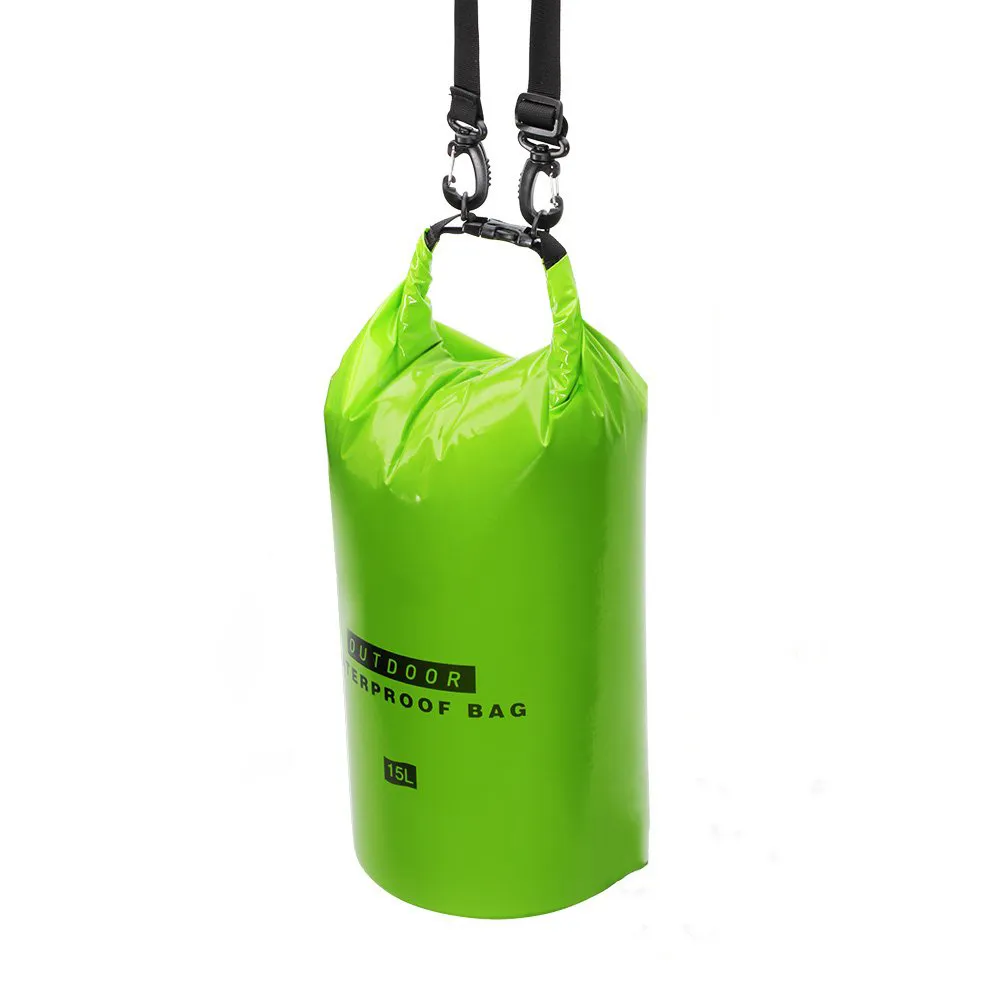
The WB01 reference uses a 300D PVC tarpaulin direction and roll-top form. Its material name and silhouette are development references, not proof of a universal exposure rating. See the WB01 product reference.
Water-repellent describes surface behaviour
A water-repellent surface may make droplets bead rather than spread immediately. That behaviour can come from a finish, coating, laminate surface, material chemistry or a combination of factors.
Control at least:
- which face is treated;
- finish or supplier material code;
- base textile, weave and colour;
- coating or laminate construction;
- initial surface-beading expectation;
- conditioning before testing;
- allowed change after flexing, abrasion or cleaning;
- lot approval and substitution control.
Visible beading does not establish how the fabric behaves under water pressure. It also does not establish seam or zipper performance. A finish that looks effective on a new swatch may change after handling, so define whether an initial-only result or a retained result is required.
Coatings and laminations control the material direction
Nylon, polyester and other textiles are only the base layer. Water penetration through a panel can be influenced by weave, coating type, laminate, thickness, adhesion, pinholes, flex cracking, edge exposure and surface damage.
For a controlled material specification, record:
- fiber and base-fabric construction;
- yarn direction and nominal fabric weight;
- coating or laminate identity and which side it is on;
- total thickness and relevant tolerances;
- colour, texture, gloss and hand;
- backing, scrim or film layers;
- supplier and material code;
- joining compatibility;
- conditioning and test method;
- evidence for the exact colour and construction when relevant.
Use the nylon versus polyester guide to compare base fibers, and the 600D versus 900D guide to separate denier from weight, thickness and performance.
Seams and joins can become the weak path
Traditional sewing creates needle holes. Water may also follow thread, seam allowance, binding or a layered capillary path. A seam treatment must be compatible with the exact material and geometry.
Possible development directions include:
- stitched seams with no additional treatment;
- seam tape or a compatible covering treatment;
- coated seam areas;
- welded or bonded joins;
- folded or overlapped constructions;
- separate liners or compartment-specific barriers.
No method is automatically waterproof. Tape can lift, a weld can be incomplete, a coating can crack, and a folded corner can create an unsealed path. Inspect straight seams, curved areas, corners, intersections and transitions around hardware.
Use the bag stitch and seam guide to define the structural seam separately from the water-protection treatment.
Closures and openings need their own requirement
A bag body can resist water while the opening remains vulnerable.
Roll-top closure
Define the number and quality of folds, buckle engagement, loading limit near the opening and user instructions. Underfilled, overfilled or incorrectly rolled samples can behave differently. A roll-top label does not establish immersion suitability.
Zipper closure
A standard coil zipper, covered zipper, coated zipper and sealed zipper are different construction directions. Review chain, slider, end stops, stitching, garage or flap, curvature and the points where the zipper meets the bag body.
Flap, drawcord and hook-and-loop closure
These can help shield an opening from one direction but may not create a sealed compartment. Define the likely rain direction, movement and intended claim.
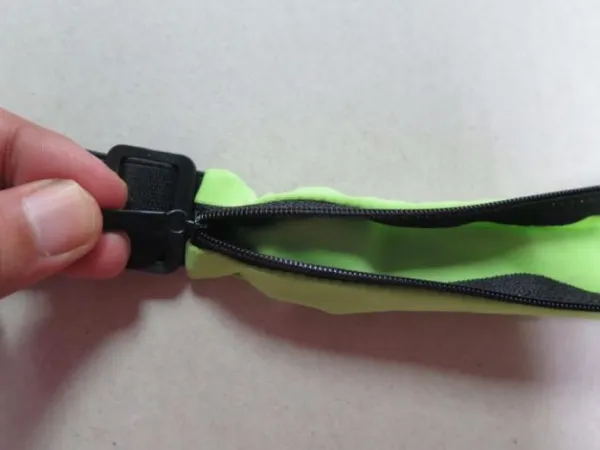
A zipper function check confirms operation under the defined inspection method; it is not a water-ingress test. Closure operation and water protection require separate acceptance criteria.
Pockets, straps and branding can introduce entry points
Every added feature should be reviewed against the water-control boundary:
- stitched front and side pockets;
- shoulder-strap and handle anchors;
- daisy chains and accessory loops;
- compression straps;
- reinforcement patches;
- rivets, eyelets and feet;
- embroidery and stitched labels;
- cable ports, valves and vents;
- drainage holes intended to release water.
Mark the protected compartment on the drawing. A wet external pocket may be acceptable while the main compartment has a stricter requirement. This is more precise than applying one broad word to the entire product.
Match the construction to the use case
| Use case | Typical question | Development focus |
|---|---|---|
| Commuter backpack | Can the main compartment limit rain exposure during a defined journey? | Top opening, zipper path, back panel, base and strap penetrations |
| Outdoor dry bag | What water contact and closing procedure must the bag handle? | Panel material, joins, roll top, loading and finished-product protocol |
| Bicycle or motorcycle bag | Which faces receive driven spray and for how long? | Orientation, attachment points, opening, abrasion and movement |
| Cooler or lunch bag | Is the need external rain protection, internal spill containment or both? | Shell, liner, seams, zipper and cleaning path |
| Medical or equipment bag | Which contents are moisture-sensitive and what access is required? | Protected zones, opening time, organization and evidence boundaries |
| Collapsible container | Must it retain water, resist splashes or simply tolerate wet handling? | Join method, base, handle loads, stability and internal-pressure condition |
Category names do not replace a risk assessment. Start with contents and workflow, then select the protection boundary.
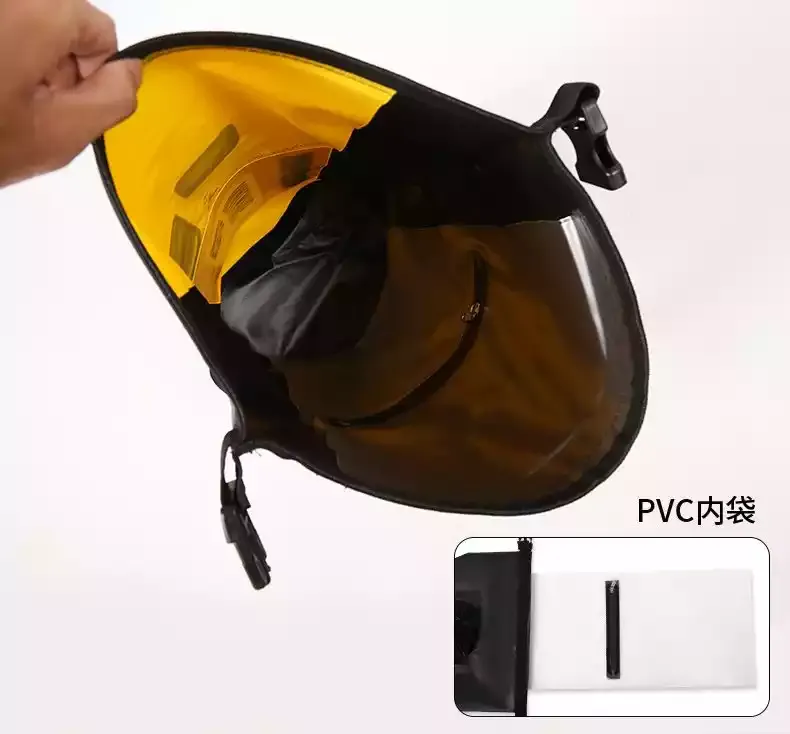
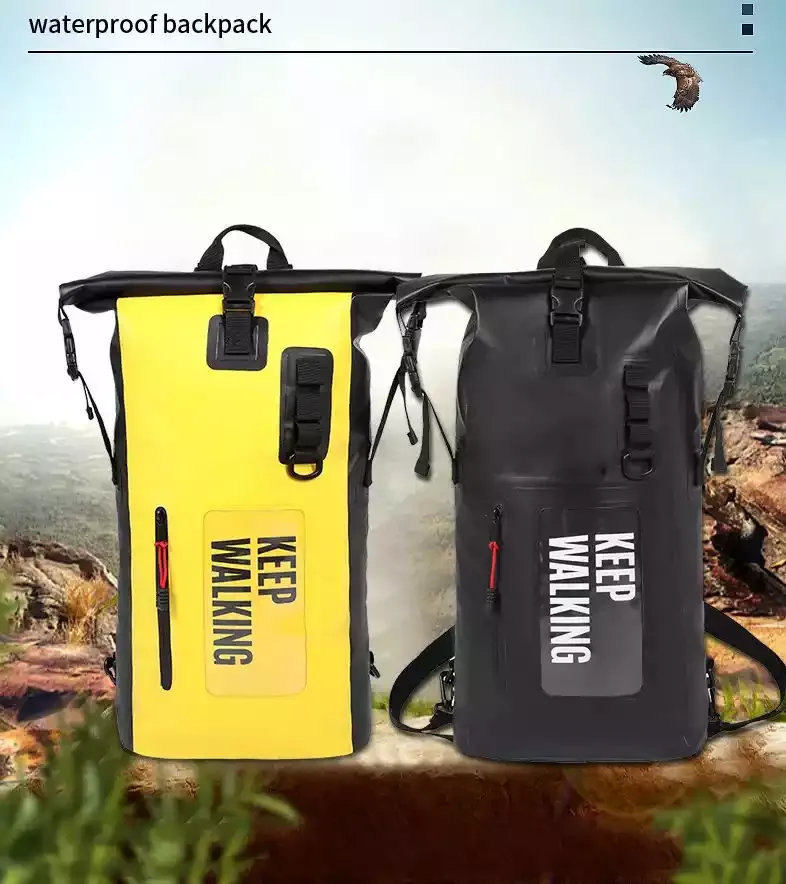
A multi-feature backpack must be evaluated as a complete system. Visible material and a roll-top silhouette do not prove the performance of seams, pockets, strap anchors or the closing procedure.
Build a repeatable test protocol
A useful protocol allows two samples or two production lots to be compared. Include:
- product code, sample revision and bill-of-material version;
- preconditioning and any ageing, cleaning or flex cycles;
- bag load, fill level and representative contents;
- closure procedure and user steps;
- exposure type, direction, delivery rate or pressure where relevant;
- duration and any intervals;
- orientation, rotation and movement;
- absorbent indicators, internal inspection areas or mass-change method;
- treatment of water retained in external pockets or folds;
- maximum acceptable ingress and location;
- sample quantity and reporting photographs;
- retest rule after a failure or construction change.
For a flat material, a surface-spray evaluation and a water-pressure penetration evaluation answer different questions. For a finished bag, a rain, spray, fill, leakage or immersion protocol must reflect the exact claim. Agree the recognized laboratory or buyer method where formal evidence is required.
Do not create an implied IP rating unless the complete product has been assessed under the applicable rating system and scope. A bag product, its closure and user operation may not map cleanly to a rating intended for another enclosure type.
Test after relevant conditioning, not only when new
If the claim must continue after use or care, consider representative conditioning such as:
- repeated opening and closing;
- folding and rolling;
- flexing at corners and seams;
- abrasion at the base and contact points;
- specified cleaning or wiping cycles;
- exposure to an agreed temperature range;
- loaded movement and strap use;
- controlled ageing when required.
Repeat the agreed material or finished-bag test after conditioning. The conditioning method and number of cycles must be stated; “durable waterproof” without them is not measurable.
Cleaning instructions must match the construction
Heat, detergent, solvent, scrubbing, machine agitation and drying can affect finishes, coatings, adhesive layers, prints and seam treatments. Do not publish generic washing advice for all coated bags.
Approve care wording from the exact product and intended use. Define whether the bag should be wiped, spot-cleaned, rinsed or washed; which products and temperatures are allowed; how closures should be handled; and how the bag should dry. If re-treatment is relevant, state the supported procedure and product scope rather than promising permanent repellency.
Approve the claim through staged samples
- Material swatches: confirm identity, colour, surface, coating or laminate and initial tests.
- Joined panels: evaluate representative seams, welds, folds and corners.
- Closure mock-up: review zipper, roll top, flap or other opening in the intended geometry.
- Finished prototype: include pockets, attachments, logos and linings.
- Conditioned test sample: apply agreed flex, abrasion, cleaning or use cycles where relevant.
- Pre-production reference: freeze the material codes, patterns, settings, workmanship and pass criteria.
Any change to material supplier, coating, thickness, seam treatment, zipper, closure geometry, logo method or attachment can affect earlier results and should trigger a documented review.
Production quality-control points
Order-specific controls may include:
- incoming material identity, face direction and visible defects;
- coating or laminate appearance and agreed measurements;
- cut-part orientation and edge condition;
- seam, tape, weld or bond continuity;
- corner and seam-intersection workmanship;
- zipper, buckle and roll-top operation;
- pocket, strap, label and artwork penetrations;
- cleanliness and damage before packing;
- a defined in-line or finished-product water check;
- traceability of tested samples to the production lot;
- nonconformity containment, repair limits and re-inspection.
Sampling does not prove every unit. Use the custom bag quality-control guide to set defect rules, inspection stages and release evidence.
Waterproof or water-resistant bag RFQ checklist
Send the manufacturer:
- intended bag type, contents and target market;
- protected compartment or exact claim boundary;
- rain, spray, splash, leakage or immersion scenario;
- duration, orientation, pressure and movement where relevant;
- allowable ingress and inspection method;
- preferred shell, coating or laminate construction;
- seam, weld, tape or joining direction;
- zipper, roll-top, flap and user-closing procedure;
- pockets, straps, hardware, vents, drains and attachments;
- logo, label and decoration method;
- cleaning, folding, abrasion and conditioning requirements;
- written test protocol, sample quantity and evidence needed;
- approved sample and change-control requirements;
- quantity by colour and version;
- packaging and delivery requirements.
MOQ, cost, feasibility and timing depend on the controlled material, joining method, closure, tooling, tests, quantity and current sourcing conditions. Request project-specific confirmation.
Turn the water claim into evidence
Benshine’s waterproof-bag references can support a discussion about dry-bag, backpack and collapsible-container directions. The correct construction and claim depend on the actual exposure and approved evidence, not the category label.
Explore custom waterproof bags, review how custom bags are made, or send your specification for project review.
Quick answers
What is the difference between water-resistant, water-repellent and waterproof bags?
The words indicate different water-protection intentions, but they are not complete specifications. Water-resistant commonly describes limited resistance, water-repellent commonly describes surface beading or reduced wetting, and waterproof is the strongest claim. For any of them, define exposure, duration, acceptable ingress, complete construction, test method and acceptance rule.
Does waterproof fabric make a finished bag waterproof?
No. Water can enter through stitched seams, zippers, closures, pockets, attachment points, valves or openings even when the main panel material resists penetration. A finished-bag claim requires testing of the approved complete construction.
Is a water-repellent coating permanent?
Not automatically. Surface behaviour can change with abrasion, folding, contamination, cleaning, heat, ageing and the exact finish. If performance after use or cleaning matters, specify conditioning and repeat the agreed test on representative samples.
Can a dry bag be assumed safe for submersion?
No. A dry-bag name or roll-top appearance does not prove submersion, depth, pressure or duration performance. Those conditions and the closing procedure must be written into the specification and verified with a suitable finished-product protocol.
How should a custom bag water claim be tested?
Use a written protocol that identifies the sample revision, exposure direction, water delivery or pressure, duration, closure procedure, contents or absorbent indicators, conditioning, acceptable ingress and reporting method. Match the protocol to realistic use rather than relying on an undefined pass or fail statement.
What should be included in a waterproof bag RFQ?
Describe the contents, exposure, duration, orientation, acceptable ingress, material construction, seam or joining method, closure, pockets, attachments, branding, user instructions, test protocol, evidence requirements, quantity, packaging and target market.