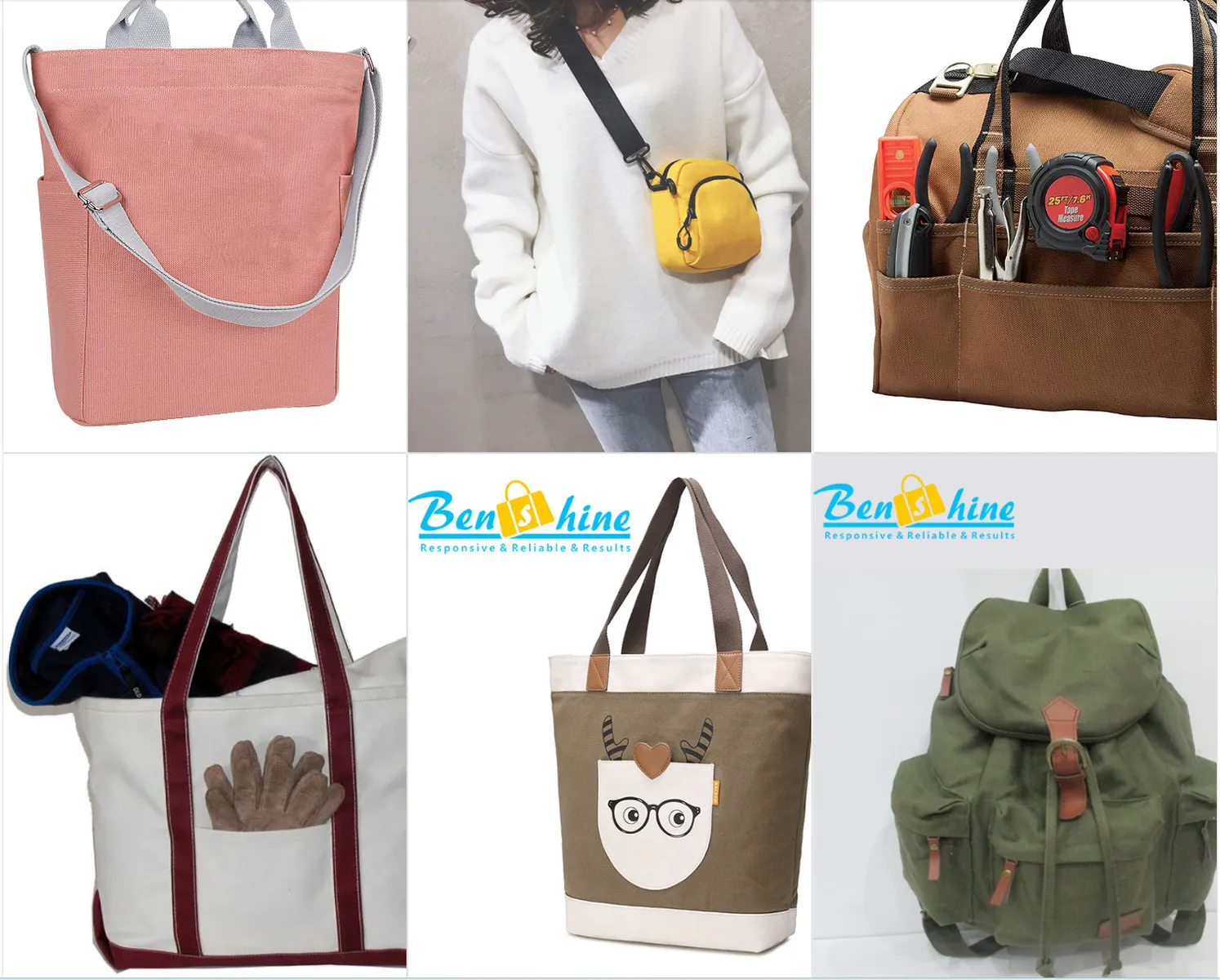
Canvas can support many bag formats, from an unlined promotional tote to a structured shoulder carrier, but “canvas” is only the beginning of the material brief. Bags with a similar visual texture can use different fibres, yarns, weights, weave densities, dyes, washes, coatings and backing constructions.
Direct answer: Specify canvas fabric for bags by fibre composition, fabric weight, yarn and weave construction, colour, finish, usable width and approved reference. Then connect that material to the bag’s size, contents, seams, handles, lining, reinforcement, branding and care. Canvas does not automatically mean cotton, heavy duty, waterproof, recyclable, sustainable or suitable for a stated load.
Canvas fabric for bags at a glance
| Decision | What the buyer should define | What the word “canvas” does not prove |
|---|---|---|
| Fibre | Exact composition and required evidence | Cotton content or recycled content |
| Construction | Yarn direction, weave, density and visual reference | Strength, durability or dimensional stability |
| Weight | Controlled unit, test method, condition and tolerance | Finished-bag structure or load capacity |
| Colour and finish | Dye route, shade reference, wash, coating or backing | Colourfastness, water protection or care result |
| Product structure | Lining, interfacing, base, reinforcement and edge finish | That one fabric suits every bag format |
| Carrying | Handle material, dimensions, routing and attachment | Safe load from a fabric swatch alone |
| Branding | Process, artwork, placement and strike-off | Print quality on every canvas surface |
| Evidence | Exact material, market, method, date and result | Universal compliance or environmental benefit |
The practical sequence is use case first, candidate fabric second and finished-product validation third. A heavier number cannot compensate automatically for a weak handle joint, unsuitable seam, unstable dye or poor pattern geometry.
Canvas describes a construction, not one fibre
Canvas is commonly recognized by a firm woven appearance, but the commercial name does not establish what the yarn is made from. Buyers can encounter cotton canvas, polyester canvas, blends and other project-specific constructions. Even two fabrics declared as the same fibre can differ in yarn size, twist, weave density, weight, finishing and behaviour.
Ask for the supplier or mill reference, declared composition, yarn and construction description, production colour and finish. If fibre composition matters for labelling, restricted substances, recycled-content wording or another market requirement, define the evidence for the exact production material. Do not use touch, natural colour or visible texture as proof.
Cotton canvas needs its own controlled specification
“Cotton canvas” still leaves important questions open. The fabric can be natural, bleached, piece dyed, yarn dyed, printed, washed or treated. It can use different yarn constructions and weights. Colour, shrinkage, hand, lint, creasing and surface variation can change with the finishing route.
For a natural-looking bag, approve what variation is acceptable rather than assuming every roll will match a screen image. If a buyer requires a composition percentage, organic claim or chain-of-custody statement, connect the wording to current documents for the exact material and order. Natural appearance alone proves none of those claims.
Polyester and blended canvas are separate options
Polyester or blended canvas may be considered where the brief calls for a particular colour, surface, processing route or care direction. This does not make one fibre universally better. Fibre choice interacts with yarn, weave, finish, coating, print process and the complete bag construction.
Compare candidate fabrics using the same relevant tests and finished sample. Do not infer abrasion, tear, fade, water or environmental performance from the fibre name. The nylon versus polyester guide shows why fibre family is only one part of a fabric specification.
Fabric weight needs a controlled measurement
Canvas weight may be stated in grams per square metre (GSM or g/m²) or ounces per square yard (oz/yd²). The mathematical conversion is approximately:
1 oz/yd² = 33.906 g/m²
Conversion does not resolve differences in sampling, conditioning, coating, washing or test method. State which unit controls acceptance. Clarify whether the value refers to greige fabric, dyed and finished fabric, or a coated or laminated construction. Define the test method, specimen locations, conditioning and tolerance.
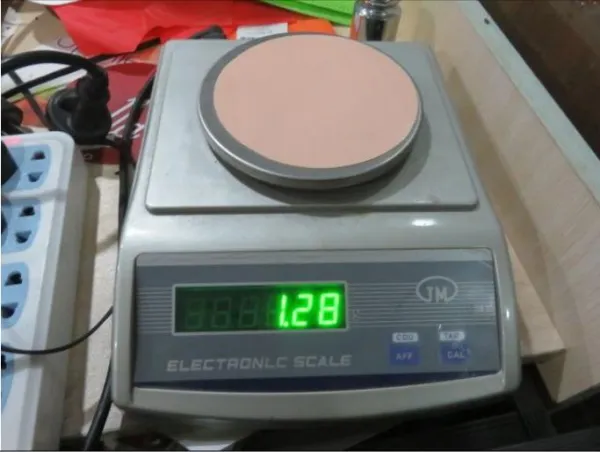
A fabric-weight reading becomes useful when the specimen area, conditioning, material stage, method and acceptance tolerance are controlled.
Weight alone is not a finished-bag performance claim. Two fabrics at a similar GSM can have different yarns, densities, finishes and tear behaviour. A lined or reinforced bag may also feel more substantial than an unlined bag made from a heavier shell.
Yarn and weave affect hand and appearance
Record enough construction detail to distinguish the approved fabric from a similar-looking substitute. Depending on the project, this can include yarn count or size, single or plied yarn direction, warp and weft density, weave description, usable width and roll presentation.
Review both face and reverse. Look for slubs, neps, missing yarns, bars, bowing, skew, holes, stains and unacceptable variation. Some visual character may be intentional; the specification should separate an approved aesthetic from a defect. Keep a sealed or signed reference swatch under agreed viewing conditions.
Colour approval needs more than a digital reference
Provide a physical colour standard or an agreed colour target where colour is important. Approve lab dips or strike-offs on the exact fibre and finish. The same colour formula can appear different across cotton, polyester, textured surfaces and coated fabrics.
Define the viewing light, allowed difference and treatment of lot-to-lot or roll-to-roll variation. Also review colour at folds, seams and tensioned areas. A finished bag can reveal shade differences that are difficult to see in small swatches.
Dry and wet rubbing, washing, light or water exposure may matter depending on use. Name the method, grade or result required and the exact colour tested. Dark and highly saturated colours can behave differently from light colours, so one report should not be assumed to cover every version.
Finishes and coatings change the base fabric
Washing, softening, calendaring, brushing, wax-style finishes, coatings, laminations and other treatments can change hand, colour, weight, sewability, adhesion and care. Record the finished construction rather than specifying only the base canvas.
A treatment can also affect printing or embroidery. Coating may reduce ink adhesion or change needle penetration; washing after decoration can alter colour and dimensions. Establish the order of operations and approve a sample that follows the intended production sequence.
If a water-protection finish is proposed, define the claim and evidence. A surface treatment does not automatically make seams, zippers, openings or attachments waterproof.
Shrinkage and dimensional stability affect the pattern
Natural-fibre and washed constructions may change dimension or appearance after moisture, heat or cleaning. The relevant question is not only whether the fabric shrinks, but whether the finished product remains within its required size, shape and function.
Define the care method and dimensional-stability protocol before finalizing the pattern. Measure in named warp and weft directions and record the material condition. Where washing is part of production, distinguish production-wash change from consumer-care change. Recheck zipper alignment, lining fit, pocket position and handle symmetry on the finished sample.
Bag structure comes from the whole material stack
Canvas can be used unlined, but many formats add lining, foam, interfacing, board, binding or reinforcement. Each layer changes body, drape, seam bulk, usable space and care. A structured crossbody bag needs different development work from a flat tote.
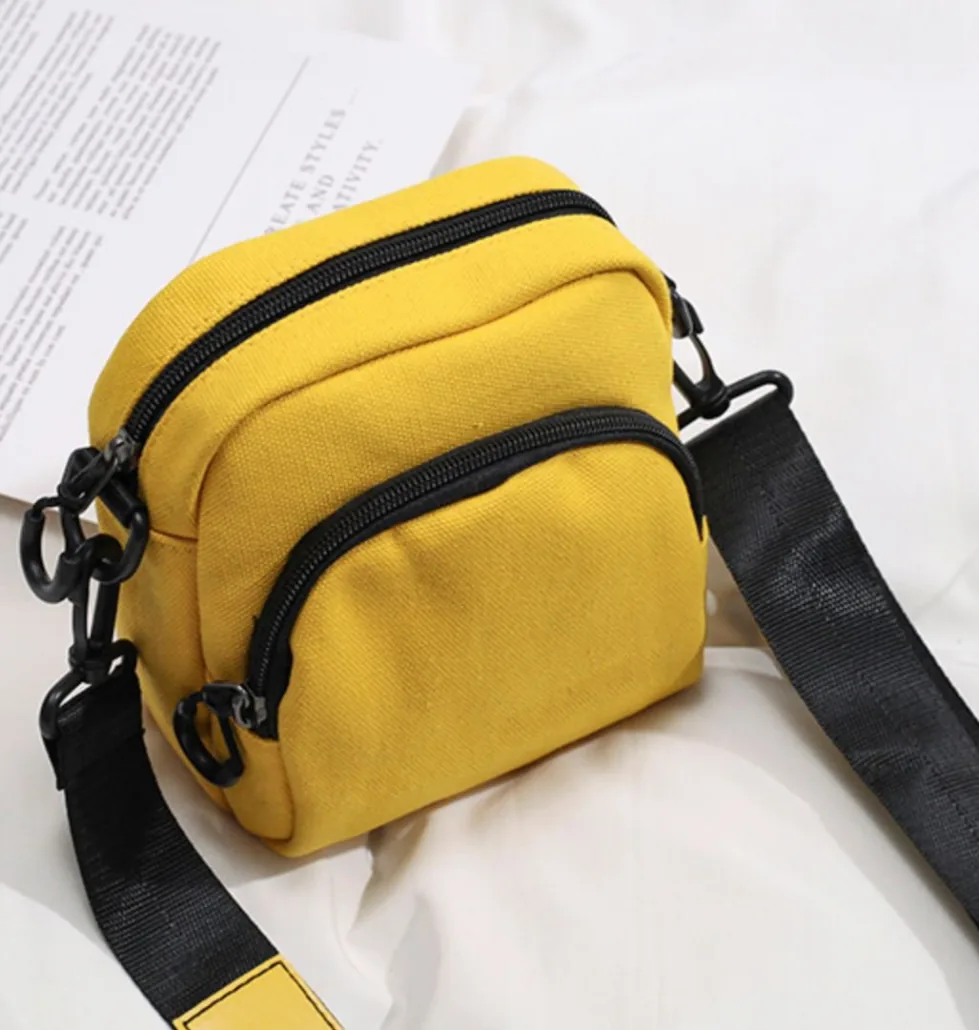
CB11 illustrates how shell fabric, lining or support, curved panels, zippers, pocket volume, webbing and hardware work as one system. Exact materials and performance require project confirmation.
Map each layer by panel and state whether it is fused, laminated, quilted, floating or captured in a seam. Check stiffness at curves and multi-layer intersections. A substitution in backing or support can alter the product even when the visible canvas remains unchanged.
Gussets, bases and corners control usable volume
A canvas tote can be flat, bottom-gusseted, side-gusseted or fully boxed. The same outside width and height can produce different openings, base footprints and usable space. Thick seams and folded corners consume internal dimensions.
Define external and usable dimensions, gusset depth, opening, closure and base construction using an annotated drawing. Test the representative contents rather than estimating capacity from a flat panel. The tote-bag gusset guide explains how folds, boxed corners and finished depth differ.
Handles and load paths need explicit reinforcement
Handle performance depends on handle material, width, drop, routing, attachment area, seam pattern, reinforcement, panel material and packed-load direction. A heavy canvas shell does not guarantee that the handle joint will perform.
Decide whether handles stop near the upper edge, extend down the panel or wrap beneath the bag. Define reinforcement dimensions and location. Review comfort and access using representative contents. For a shoulder format, assess hardware, webbing, anchor tabs and the body panel together.
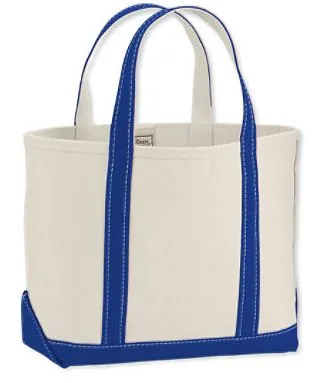
CB1 provides a visual reference for full-height handle routing, a contrasting base and an open tote format. It is not evidence for a universal load rating.
Use a written load or cycle protocol where required: sample revision, content or test mass, distribution, lifting direction, duration or cycle count and pass criteria. Inspect fabric, stitching, reinforcement and permanent deformation after the test.
Sewing must match the exact fabric stack
Thread, needle, stitch type, stitch spacing, seam allowance and tension should be developed together with the canvas, lining and reinforcement. Dense fabric can create needle heat or penetration issues; thick intersections can change stitch formation; loose or open constructions can fray at cut edges.
Create a seam map for panel joins, hems, corners, bindings, zipper attachments, pockets and handle anchors. Define edge control, backtack or locking, thread colour and repair rules. More stitches per inch do not automatically create a stronger joint. Use the bag stitch-length guide to build measurable seam criteria.
Printing and embroidery depend on the surface
Canvas often provides a visible branding surface, but weave texture, absorbency, coating, colour and seams influence the result. Large solid areas can reveal texture or coverage variation. Fine artwork may lose detail. Printing across a fold, pocket or multi-layer junction can create distortion.
For screen printing, heat transfer, embroidery, patches or labels, specify artwork version, dimensions, placement, colour target and orientation. Approve a strike-off on the exact production material and colour. Review opacity, edge definition, registration, hand and the project’s rubbing, flexing, washing or ageing method.
Embroidery adds needle penetrations, thread and reverse-side construction. Confirm backing, density, puckering, interior appearance and interaction with a lining. Compare options in the screen printing, heat transfer and embroidery guide.
Water-resistant and waterproof claims are different
Untreated canvas may wet and transmit water. A treatment, coating or laminate can change surface behaviour, but the finished bag still includes cut edges, needle holes, seams, zippers, closures, pockets and attachments.
Define the expected exposure: incidental splash, rain, spray, standing water and immersion are not interchangeable. State the protected compartment, closure procedure, duration and acceptable ingress. Test the complete bag, including preconditioning or flexing if relevant. Use the water-resistant versus waterproof bag guide to write the claim and protocol.
Strength and durability require named tests
Words such as “heavy duty,” “premium” and “durable” do not identify a test. Translate the intended use into specific questions: can the seam hold the packed load, will the handle attachment resist the defined cycles, will the base tolerate its abrasion exposure, and will the closure continue to function?
Material-level tensile, tear, abrasion or seam tests answer different questions and must use named methods and conditions. Finished-product load, lift, drop or cycle tests include the pattern and attachments. Select only tests relevant to the identified risks, then define sample quantity, conditioning and pass criteria.
Environmental claims must be precise
Canvas is not automatically eco-friendly, recyclable or lower impact. A product’s evidence can involve fibre source, recycled-content percentage, dyeing and finishing, production waste, packaging, durability, care and realistic end-of-life routes. Mixed fibres, coatings, laminations, inks, zippers and reinforcements can affect recyclability.
If the brief includes organic cotton, recycled fibre, certified content or another environmental attribute, identify the exact component, percentage, standard, chain-of-custody scope and approved market wording. “Reusable” describes a use model, not a complete environmental comparison. Avoid broad green claims without defined and current support.
Approve canvas bags in controlled stages
- Use brief: define format, contents, load, environment, care and branding.
- Identified fabric swatches: compare composition, weight, construction, colour, finish and documents.
- Branding trial: apply the selected process to the exact fabric and colour.
- Construction mock-up: review seams, edges, handles, reinforcement and thick intersections.
- Finished sample: check dimensions, usable space, loaded shape, closure and carrying.
- Project tests: run the named colour, dimensional, seam, load, water, print or care protocols.
- Pre-production sample: freeze pattern, bill of materials, workmanship, artwork and packing.
Use change control for a new mill, fibre, yarn, weight, colour, finish, coating, backing or branding process. A visually similar replacement may require renewed approval or testing.
Production quality-control points
Order-specific inspection can include:
- supplier, mill, roll and approved material identity;
- composition documentation where required;
- fabric weight under the agreed method;
- weave, usable width, colour, hand and finish;
- shade grouping and roll-to-roll variation;
- surface defects, stains, holes, bowing and skew;
- coating or backing appearance and adhesion criteria;
- pattern orientation and cut-part condition;
- finished dimensions and representative-item fit;
- seams, hems, edges, corners and thread condition;
- handles, anchors, reinforcement, straps and hardware;
- lining, pockets, base and support placement;
- artwork size, position, colour and workmanship;
- closure and functional checks;
- project-specific tests, cleanliness, packing and traceability;
- conformity to the approved sample and revision.
Sampling does not prove every unit. Connect incoming material review, first-piece approval, in-line control and pre-shipment inspection using the custom bag quality-control guide.
Custom canvas bag RFQ checklist
Send the manufacturer:
- intended bag format, sales channel and use scenario;
- contents, dimensions, packed mass and load direction;
- finished external and usable internal dimensions;
- gusset, opening, base, pockets and closure;
- exact fibre composition and evidence requirement;
- fabric weight, controlled unit, method and tolerance;
- yarn, weave, usable width and approved surface reference;
- natural, bleached, dyed, washed, coated or other finish;
- colour standard, allowed variation and colourfastness protocol;
- lining, backing, interfacing, padding and base support;
- handle or strap material, width, drop, routing and reinforcement;
- seams, edge finishes, thread and workmanship criteria;
- artwork, branding method, dimensions, placement and colour;
- care, water exposure and other use conditions;
- material and finished-product test protocols;
- target-market labels, documents and evidence scope;
- approved swatch, sample and change-control requirements;
- quantity by colour, size and version;
- packaging, carton, delivery and inspection requirements.
MOQ, price, feasibility and timing depend on fabric commitments, custom dyeing or finishing, bag complexity, branding, tests, quantity and packaging. Request current project confirmation after the specification is reviewed.
Develop the fabric and finished bag as one system
Benshine can review canvas tote, shoulder, pouch and utility-bag projects around the intended contents, fabric specification, structure, seams, carrying, branding, tests and quality controls. Existing product records provide visual construction directions; the exact material, performance, evidence and commercial terms remain project-specific.
Explore custom canvas bags, review the CB1 tote reference and CB11 shoulder-bag reference, or send your canvas bag specification.
Quick answers
What is canvas fabric for bags?
Canvas is a woven fabric construction used for totes, pouches, shoulder bags and utility products. The word canvas does not identify fibre composition, weight, yarn, weave density, colour, finish or performance, so each project needs a complete material specification and approved reference.
Is canvas fabric always cotton?
No. Canvas may be cotton, polyester, another fibre or a blend. Confirm the exact fibre composition of the proposed production fabric and the evidence needed for the destination market rather than inferring cotton content from appearance or the word canvas.
What canvas weight is best for a bag?
There is no universal best weight. Select a candidate after defining bag size, contents, packed load, desired hand, lining, structure, seams, handles, branding and care. Then compare identified swatches and validate the complete finished sample under the project's tests.
How should canvas fabric weight be specified?
State the unit, whether the value applies before or after dyeing and finishing, the conditioning and test method, sample locations, tolerance and approved reference. If converting between ounces per square yard and grams per square metre, keep the original controlled unit and use the same test method for acceptance.
Is a canvas bag waterproof?
Not automatically. An uncoated canvas can absorb or transmit water, while coated or laminated constructions still have seams, openings, zippers and attachments that affect ingress. Define the exposure and protected zone, then test the complete closed bag.
What should a custom canvas bag RFQ include?
Include intended use, contents and load, dimensions, exact fibre and fabric construction, weight, colour and finish, lining and reinforcement, handles, closures, branding, care, tests, evidence requirements, quantity by version, packaging and delivery requirements.