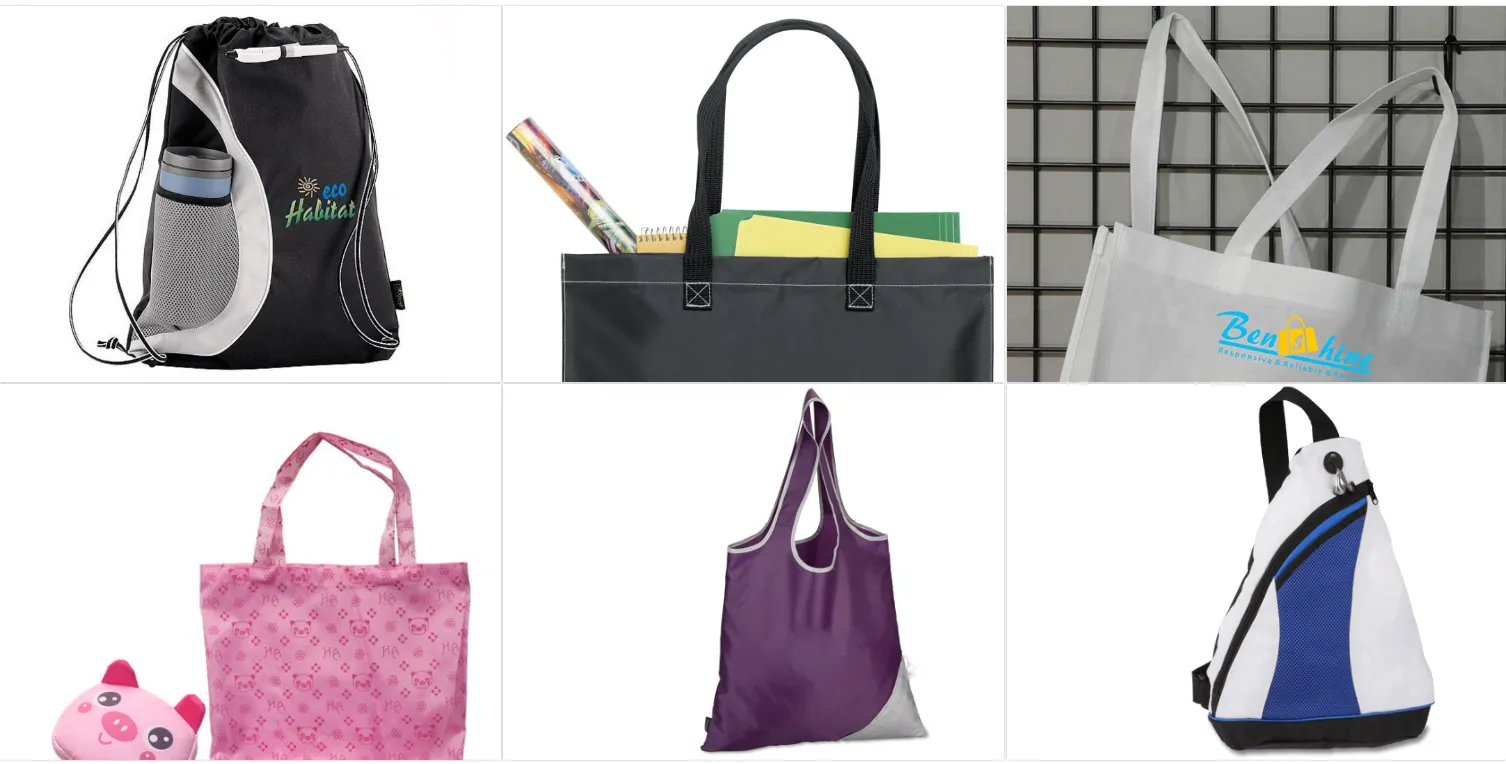
A promotional bag is a product and a campaign-delivery component. Its design should begin with the audience, distributed contents and handout workflow—not a logo placed on a generic bag. A conference kit, retail gift, corporate programme and outdoor activation can require different formats, artwork controls, packaging and evidence.
Direct answer: Define promotional bag design from campaign objective, audience, real contents, distribution method and intended use after handout. Control usable dimensions, carrying, material construction, artwork, colour, labels, packing and inspection as one programme. A low unit target, recycled-looking fabric or large print area does not automatically prove value, sustainability, durability, colour accuracy or delivery feasibility.
Promotional bag specification at a glance
| Decision | Buyer input | What not to assume |
|---|---|---|
| Campaign | Objective, audience, channel, venue and distribution date | One bag direction suits every promotion |
| Contents | Item list, dimensions, mass and packing order | Fit from a nominal bag size alone |
| Format | Tote, drawstring, pouch, cooler or structured direction | Usefulness or reuse from category name |
| Artwork | Final files, size, colour, method and placement | Accurate colour from a screen image |
| Claims | Exact wording, market, evidence owner and approval | Sustainability from material appearance |
| Pack-out | Folding, inserts, bundles, cartons and venue workflow | Delivery readiness from finished bags alone |
This guide covers campaign and specification intent. Commercial sourcing terms remain on the promotional bag manufacturer category, while the custom bag manufacturing page explains the wider development process.
Define the campaign objective and audience
State what the bag must accomplish: distribute a kit, package a purchase, identify participants, support a loyalty programme or remain useful after an event. Define recipient group, use environment, destination market, distribution date and who approves product and artwork.
Avoid treating impressions or brand exposure as guaranteed product outcomes. Marketing performance depends on campaign context, recipient behaviour and measurement method. The product specification can control appearance, fit and workmanship, not a universal promotional result.
If several channels share one bag, document the contents and pack-out for each. Identify which conditions control size, structure, labelling and carton grouping.
Map the distribution workflow
Follow the bag from factory packing to warehouse, venue, staff station and recipient. Record whether bags are handed out empty, pre-filled, folded on a counter, shipped to branches or combined with third-party items. Note available storage, setup time, staff actions and required grouping.
A format that works well for the recipient can still slow distribution if it needs complex unfolding or filling. Define opening direction, stability during packing and whether the bag should remain open on a table. Test the full workflow with representative quantities rather than reviewing one empty sample.
Build a controlled contents list
List brochures, bottles, garments, devices, samples or gifts with dimensions, mass, orientation and packaging. Identify fragile, sharp, hot, cold, wet or staining items. Create a packing diagram and order so staff can repeat the arrangement.
Specify finished external dimensions, usable internal dimensions and clear opening. Seams, gussets, lining and closures reduce usable space. Confirm fit with all contents loaded together and check that the bag closes without distortion.
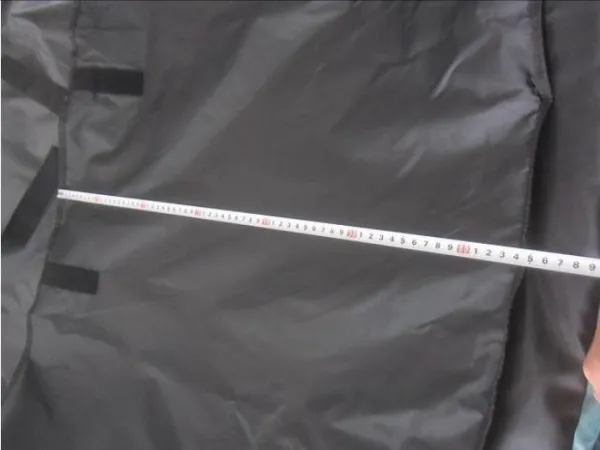
Finished dimensions need named reference points. The campaign kit remains the final fit and access check.
Select the format from function
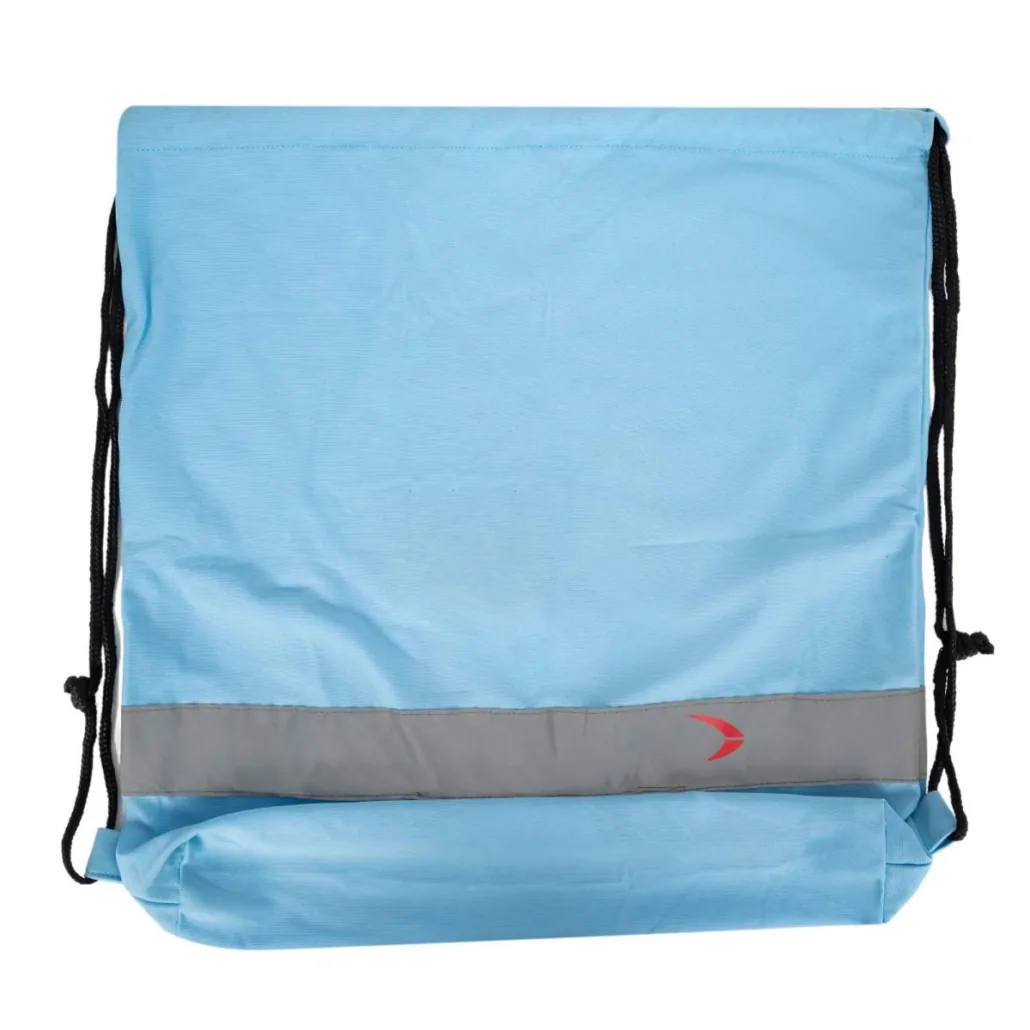
A simple tote supports open access and broad panel artwork. A drawstring bag closes and can be body-carried but cord routing and loaded comfort need review. A flat pouch suits smaller sets. A cooler direction requires a defined thermal system and test, while a structured tote adds organization and presentation at greater complexity and pack-out volume.
No direction is automatically cheapest, most reusable or most visible. Compare contents, carry duration, handout speed, available branding area, folding, packaging and approval risk. If a reference is adapted, document every change rather than assuming the original performance transfers.
BE028 illustrates a lightweight drawstring direction. It does not establish universal capacity, cord comfort, load strength, durability or commercial terms.
Design carrying around the packed load
Handles, cords and shoulder straps transfer the complete campaign kit into panels, seams and reinforcement. Define intended carrying mode, length or drop, hand or body clearance, material, attachment and load path. A wide strap or reinforced-looking stitch does not prove strength or comfort.
Test representative users with the approved packed mass and intended duration. Check cord or edge contact, handle joining, bag angle, adjustment and interference with artwork. Use a written finished-product load method where a load claim matters.
For tote handles, the gusset guide helps coordinate usable space and handle load paths. For drawstring concepts, confirm cord, eyelet or channel construction as one installed system.
Specify materials beyond a generic name
“Polyester,” “nylon,” “canvas,” “nonwoven” and “recycled fabric” are incomplete specifications. Record exact composition, construction, weight or thickness, colour, coating or finish, usable width and supplier reference where controlled. Map reinforcements, lining, foam and boards separately.
Material influences print appearance, folding, seam behaviour and hand. A low fabric weight does not automatically mean low strength, and a natural-looking surface does not prove fibre identity. Use the canvas material guide and nylon versus polyester guide for measurable fields.
Prepare production-ready artwork
Supply final vector artwork where the process requires it, plus fonts converted or packaged, linked images, colour references and a visual layout. Define finished logo dimensions, orientation, placement reference points and clearances from seams, gussets, folds, handles and closures.
Distinguish the artwork canvas from the actual printable area. Curved or flexible panels can change appearance when loaded. Provide separate controlled files for language, sponsor, date or branch variations, using revision names that can be traced to quantities and cartons.
Do not ask production to rebuild low-resolution artwork without a controlled approval step. Artwork ownership, trademarks and permissions remain the buyer’s responsibility unless otherwise agreed.
Choose the decoration process from evidence
Screen printing can support suitable spot-colour artwork and production setups; heat transfer can suit other detail and colour directions; embroidery creates a stitched surface but adds weight and reverse-side construction. Patches and labels separate branding from the main panel but introduce their own attachment controls.
There is no universal best, cheapest or most durable method. Selection depends on artwork, substrate, coating, colour, detail, quantity, hand, reverse side, care and required evidence. Use the screen print, transfer and embroidery comparison to prepare trials.
Approve a decorated strike-off on the exact material construction and colour before freezing the sample.
Control physical colour, not screen appearance
Monitor colours are not reliable production standards. Identify the reference system, approved swatch or physical master, viewing light, background and observer conditions. Define hierarchy if material, print and trim colours use different reference systems.
Substrate colour, texture, coating, ink opacity and process can change the visible result. Review colour on the final production-intent material. For repeat programmes, preserve the approved physical standard and record acceptable comparison conditions.
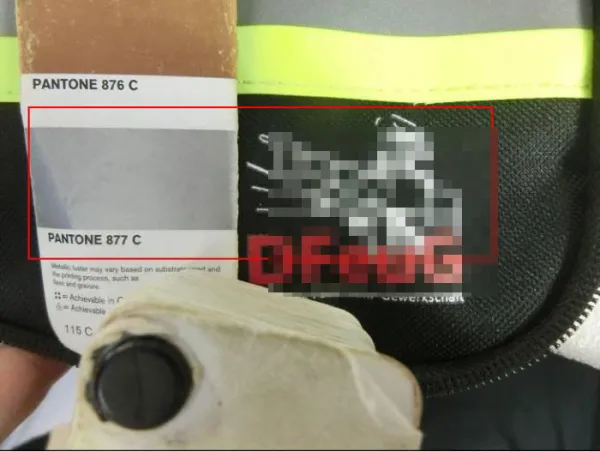
Colour comparison becomes actionable when the physical master, light, substrate and acceptance rule are controlled.
Place artwork for the real product state
Review the logo when the bag is empty, filled, carried and folded. A broad flat panel can curve around contents; handles may cover the artwork; a side gusset may pull the design around an edge. Mark placement from stable finished reference points.
If multiple logos share a panel, define size hierarchy, spacing and orientation. If artwork crosses seams or pockets, approve the expected interruption and registration method. Keep critical text, codes and legal marks within a controlled safe area.
Treat environmental wording as evidence work
Avoid using “eco-friendly,” “green” or “sustainable” as generic descriptions. Write the exact claim and define whether it concerns recycled content, fibre source, reusability, recyclability, packaging or another attribute. Identify the product or material boundary, destination market and evidence owner.
Recycled content does not automatically prove recyclability or lower total impact. A reusable format does not establish how many times recipients will use it. Keep chain-of-custody, test reports, declarations and supplier records linked to the exact approved construction and claim.
If a material or supplier changes, reassess the wording and evidence. The bag image or texture is never proof of environmental performance.
Define labels and mandatory information early
List brand labels, fibre or care information, origin marking, warnings, barcodes, campaign inserts and market-specific information. Define content, language, dimensions, material, placement and attachment. Assign responsibility for legal review to the appropriate party.
Labels can affect seams, print space and packing, so they should not be added after sample approval. Check readability, orientation and visibility in the sold or distributed state. Do not infer universal compliance from a generic label template.
Connect packaging to event execution
Decide whether bags are packed flat, rolled, individually bagged, bundled, pre-filled or separated by branch, colour or artwork. Define inserts, protective layers, bundle quantity, carton marks, carton quantity and sequence needed at the venue.
Folding can crease coatings, distort print, mark trims or change structured panels. Run a pack-out trial using production-intent materials. Inspect the bag after the defined storage or transit simulation and state any allowed recovery period.
For pre-filled kits, define who supplies each item, who assembles them and how missing or incorrect contents are controlled. A finished bag inspection does not verify third-party kit contents unless that work is included in scope.
Plan timing from approvals and dependencies
An event date does not by itself establish feasible delivery. Timing depends on final specifications, artwork, material and component availability, sampling, testing, approvals, quantity, colour or artwork splits, packing and logistics. Record the required arrival condition and work backward with responsible parties.
Avoid unconditional “on-time” promises before dependencies are confirmed. Freeze artwork and product revisions through change control. A late sponsor, language or quantity change can affect screens, transfers, labels, sorting and cartons.
Approve promotional bags in controlled stages
- Campaign brief: objective, audience, contents, distribution and required arrival.
- Format and packing layout: usable dimensions, loading, access and carrying.
- Material swatches: exact shell, trims, colours, finishes and evidence.
- Artwork proof: files, dimensions, placement, variants and physical colour targets.
- Decorated sample: print or embroidery on production-intent material.
- Finished pack-out: loaded bag, labels, folding, bundles and cartons.
- Pre-production approval: freeze product, artwork, BOM, quality points and packing.
Any substitution in material, colour, coating, ink, transfer, thread, trim or packaging can affect earlier approvals. Record changes and repeat relevant checks.
Production quality-control points
Order-specific inspection can include:
- material, colour, coating, trim and reinforcement identity;
- finished external and usable dimensions;
- campaign-content fit and clear opening;
- handle, cord, closure and attachment construction;
- seam, binding, corner and stitch condition;
- artwork revision, size, orientation and placement;
- print opacity, registration, edges and surface condition;
- embroidery, patch or label appearance and attachment;
- physical colour against the approved reference;
- approved rubbing, flexing, washing or load checks where specified;
- label content, language, barcode and placement;
- folding, bundle, assortment, carton marks and counts;
- conformity to the approved sample and revision.
Sampling does not prove every unit. Use the custom bag quality-control guide to link incoming, first-piece, in-line and pre-shipment controls.
Promotional bag RFQ checklist
Send the manufacturer:
- campaign objective, audience, channel and destination market;
- distribution workflow and required arrival condition;
- complete contents list, item dimensions, mass and packing order;
- bag format, external and usable dimensions, opening and carrying;
- exact materials, colours, finishes and reinforcement;
- closures, cords, handles, straps and hardware;
- final artwork files, variants, dimensions and placements;
- physical colour references and viewing conditions;
- decoration method and strike-off requirements;
- environmental or other claim wording and evidence scope;
- labels, inserts, barcodes and language requirements;
- product, artwork, colour, load and care checks;
- quantity by colour, artwork, language and delivery group;
- folding, individual packing, bundles, cartons and inspection.
MOQ, price, feasibility and timing depend on format, materials, colour commitments, artwork methods, version splits, testing, quantity, packing and approval schedule. Request current project confirmation after the specification is reviewed.
Develop the campaign and bag together
Benshine can review drawstring, tote and other campaign-led bag directions around the actual audience, contents, distribution, carrying, artwork, evidence and pack-out. Published references show possible formats; exact claims and commercial terms remain project-specific.
Explore custom promotional bags, review the BE028 drawstring reference, Tote Bag 11 reference and BSTB-07 structured tote, or send your promotional bag brief.
Quick answers
What information is needed to design a promotional bag?
Define the campaign objective, audience, distribution workflow, contents, item dimensions and mass, bag format, usable dimensions, materials, carrying, artwork, colour standards, labels, packaging, destination market and required tests.
Which bag format is best for an event or promotion?
There is no universal best format. Select tote, drawstring, pouch, cooler or structured directions from the actual contents, handout speed, carrying need, branding area, intended reuse, pack-out and project constraints.
Which logo method should be used on a promotional bag?
Screen printing, heat transfer, embroidery, patches and labels suit different artwork, materials, colours, quantities and appearance goals. Trial the proposed method on the exact production-intent material and approve physical colour and workmanship.
Can a promotional bag be called eco-friendly or sustainable?
Not from its format or appearance. Write the exact claim, identify the material or product boundary and collect applicable evidence. Recycled content, reusability, recyclability and lower-impact claims are different and should not be used interchangeably.
How should promotional bag colours be approved?
Define material and artwork colour references, viewing conditions and physical approval hierarchy. Approve production-intent fabric and a decorated strike-off because substrate colour, texture, coating and process can change the visible result.
What belongs in a promotional bag RFQ?
Include campaign and distribution details, contents, dimensions, format, exact materials, carrying and closures, print-ready artwork, colour references, labels, evidence and test scope, quantity by version, packing, carton grouping and required delivery conditions.