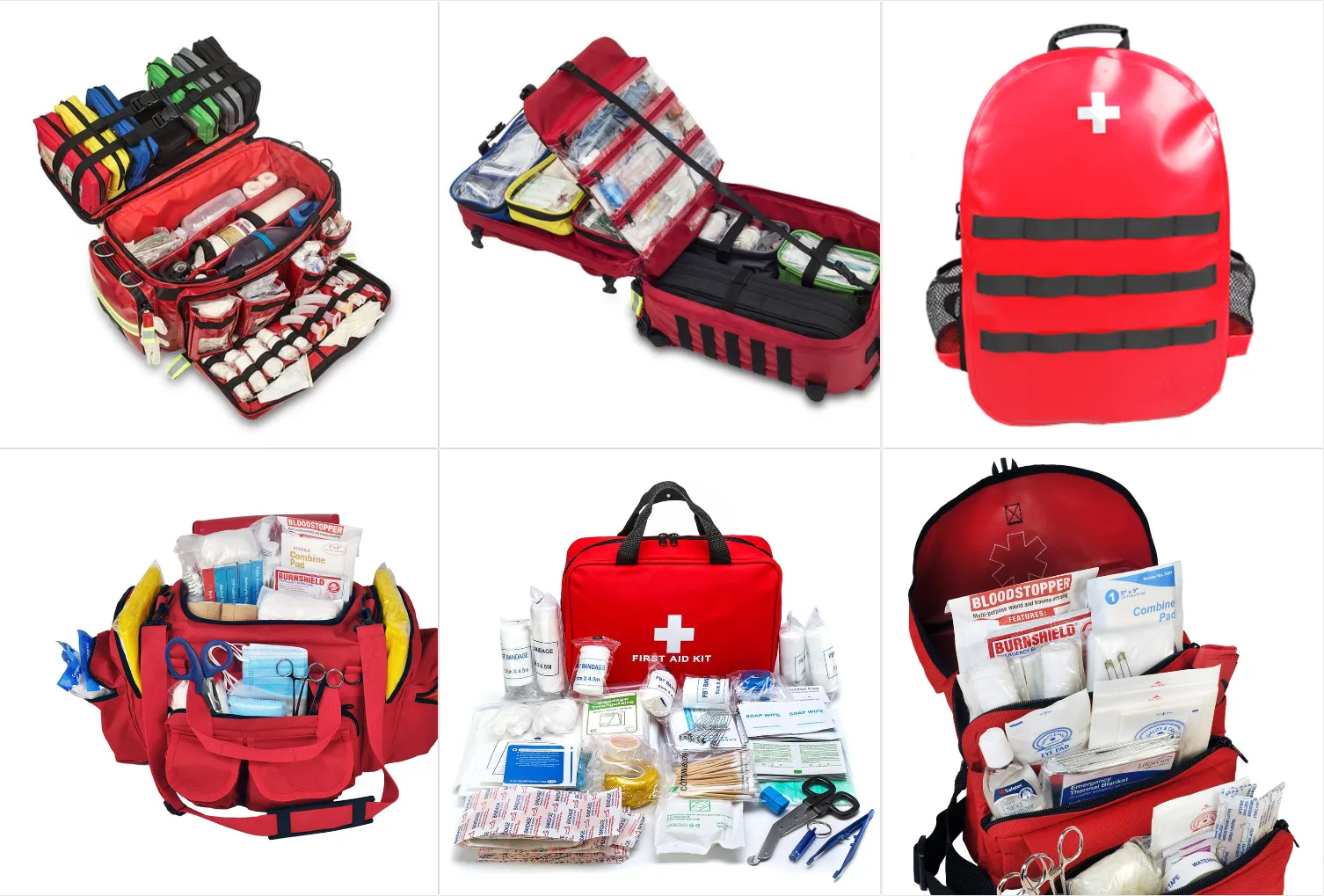
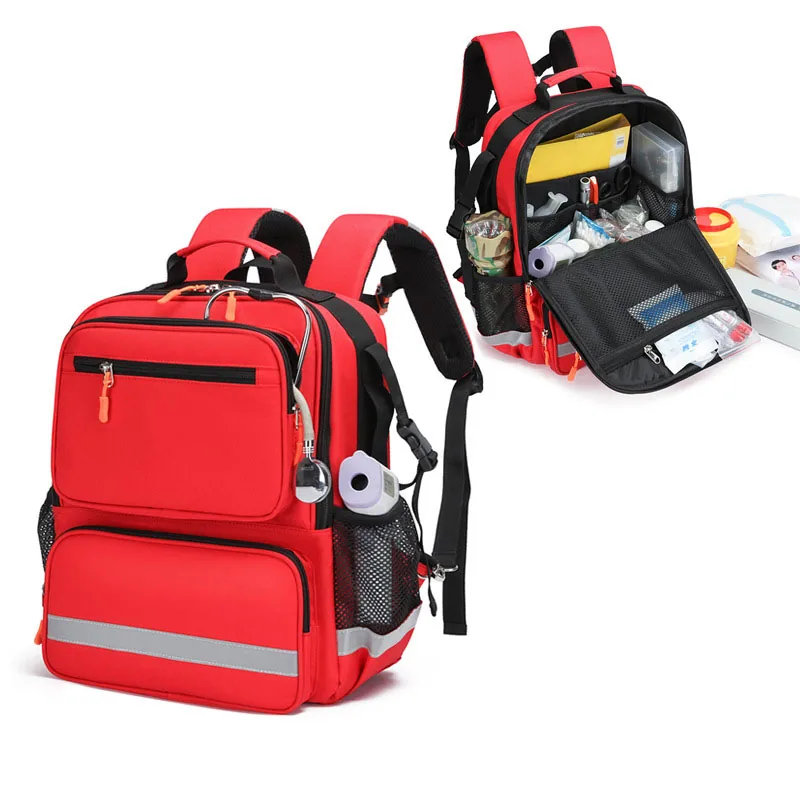
A medical bag is an organizer and carrying system until a controlled project establishes something more specific. Its design should begin with the buyer-defined contents, user workflow, destination market and evidence plan—not a red colour, cross symbol or product-category name. First-aid kits, emergency response organizers, equipment bags and temperature-sensitive systems have different requirements and responsibilities.
Direct answer: Define medical bag design from intended use, controlled contents, access priority, identification, transport, cleaning and applicable market requirements. Validate usable dimensions, organization, material layers, closures, carrying, labels and tests against that scope. “Medical,” “first aid,” “trauma” or “paramedic” does not automatically prove kit completeness, clinical suitability, infection control, regulatory status, temperature performance or compliance.
Medical bag specification at a glance
| Decision | Buyer input | What not to assume |
|---|---|---|
| Intended use | User, workflow, location, market and responsible party | Clinical suitability from the category name |
| Contents | Controlled list, dimensions, mass and access priority | Kit completeness from an empty organizer |
| Organization | Zones, modules, retention, visibility and refill process | Correct workflow from pocket count or colour |
| Materials | Exact shell, lining, foam, supports and contact conditions | Cleanability, barrier or waterproofness from fabric name |
| Identification | Controlled wording, symbols, colours, labels and language | Regulatory meaning from a red bag or cross graphic |
| Evidence | Applicable method, samples, pass rules and document owner | Universal compliance from a generic test report |
This guide covers organization and sourcing specification. Commercial intent remains on the medical bag manufacturer category, while kit-specific sourcing is separated on the first-aid bag category.
Establish intended use and responsibility first
Document who uses the bag, where, for what workflow and under whose procedures. State whether it carries a buyer-controlled first-aid kit, response equipment, general supplies or another defined payload. Identify destination market and the party responsible for regulatory classification, labels, instructions, kit contents and final release.
Do not let a product name make these decisions implicitly. A visual reference can guide pattern and organization, but it cannot establish professional, clinical or regulated-use suitability. Keep product-development approval separate from medical or legal approval.
Where requirements are uncertain, pause claim development until the responsible buyer or qualified specialist defines the applicable framework.
Build a controlled contents register
List every item with identity, dimensions, mass, packaging state, quantity and orientation. Mark fragile, sharp, sterile, liquid, battery-powered, temperature-sensitive or otherwise controlled items. Record whether the bag is supplied empty or assembled with contents by another party.
Create one or more packing layouts and identify the controlling load. Full kits can behave differently as soft packages are consumed, refilled or replaced. A general compartment volume does not prove fit for a named item.
The bag manufacturer should not select treatment contents or claim kit completeness unless explicitly qualified and authorized for that responsibility. The contents register remains buyer controlled.
Map access priority and workflow
Rank contents by retrieval priority and describe how the bag is opened, positioned, handed off, used and refilled. Define whether the user works from a table, floor, vehicle, body-carried position or hanging surface. Record gloved-hand or low-light requirements only where the buyer has specified them.
Map zones, pockets, elastic loops, transparent panels, removable modules and closures to named items. Check that high-priority contents remain visible and accessible when every zone is loaded. A pocket count is not an access plan.
AB063 illustrates divided organizer and backpack directions. It does not prove kit completeness, clinical suitability, cleaning performance or compliance.
Separate external dimensions, usable space and item fit
External dimensions include shell, piping, padding, handles and curved panels. Usable space is reduced by lining, dividers, foam, boards, seams and removable modules. Clear opening can be smaller than the main compartment.
Specify measurement reference points and bag condition, then control usable dimensions for critical items and openings. Load representative contents and verify closure, access and module removal. Do not infer capacity from litres or outside dimensions alone.
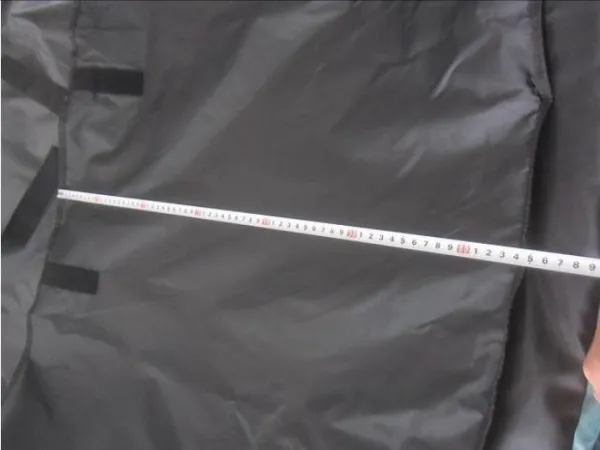
Repeatable measurement controls the product record; the approved loaded layout confirms practical fit.
Design zones for identification without overclaiming
Colour-coded zones, labels and transparent windows can support identification, but their meaning must come from the buyer’s controlled system. Define colour references, wording, language, icons, label material, placement and update responsibility.
A red shell, reflective-looking panel or cross symbol does not establish emergency priority, professional status or regulatory conformity. Symbols and marks may have legal or trademark implications in some markets. The buyer should confirm authorization and intended meaning before artwork approval.
Check labels in the loaded and open states. Identification should not be hidden by flaps, handles or modules, and removable elements need controlled matching if position matters.
Control removable modules and refill processes
Removable pouches or dividers can support handoff and replenishment. Define module dimensions, attachment, orientation, labels and which items belong inside. Hook-and-loop areas, zippers or clips should be specified as complete installed systems.
Test removal and replacement with the bag fully loaded. Confirm modules cannot be installed in the wrong orientation where that matters. If a refill checklist or seal is required, define who supplies it and how it is verified.
Avoid calling a module sterile, tamper-evident or contamination-controlled unless the exact packaging system and evidence support that claim.
Specify shell and lining as complete constructions
“Tarpaulin,” “polyester,” “nylon,” “PVC” and “PU” are incomplete specifications. Record exact composition or polymer, base construction, weight or thickness, coating or lamination, finish, colour, supplier reference and face/reverse orientation. Map lining, foam, boards, transparent films and reinforcement separately.
Material names do not prove water resistance, disinfectant compatibility, cleanability, puncture resistance or durability. Seam, zipper and attachment choices can interrupt material surfaces. Use production-intent swatches and finished samples for the named exposure.
The nylon versus polyester guide supports complete textile fields, while the water claim guide separates shell behaviour from finished-bag performance.
Define cleaning from realistic contamination
State the expected soil or substance, cleaner or disinfectant selected by the responsible party, concentration, contact time, wipe or immersion method, frequency, rinsing and drying. Identify every exposed shell, lining, film, print, label, zipper, foam and hardware component.
“Wipe clean” is not a complete method. Define the cloth, passes and appearance criteria. Inspect colour, gloss, tack, cracking, delamination, swelling, corrosion, label legibility and function after the specified cycles.
Do not use antibacterial, antimicrobial, disinfectable, hygienic or infection-control claims without appropriate, scope-specific evidence. A material compatibility result is not proof of a clinical cleaning protocol.
Keep barrier and leakage claims specific
A coated surface does not make the finished bag waterproof, leakproof or a containment system. Needle holes, seams, zipper tapes, binding, corners and handle anchors can allow transfer. Define whether exposure comes from outside or from a leaking internal item.
State the liquid or surrogate, amount, temperature, location, orientation, closure, duration and acceptable result. If a removable secondary pouch provides containment, specify and test that component separately and within the loaded bag.
Hazardous, infectious, biological, specimen or regulated transport requires packaging and regulatory expertise beyond a generic bag construction. Do not infer suitability from this category or guide.
Define padding and protection from the hazard
Foam, dividers and boards can separate equipment, but padding thickness alone does not prove protection. Identify the exact item, fit, retained orientation and hazard—contact, drop, compression, vibration or puncture. Map coverage, gaps and hard transitions.
If protection is claimed, test the complete packed system using a defined direction, height or force, surface, repetitions, conditioning and pass criteria. Inspect contents or suitable surrogates as well as the bag. Device makers or responsible buyers should define allowable outcomes.
Engineer openings and hardware for access
Specify zipper chain, size direction, tape, sliders, pullers and stops. Define whether one- or two-way access is needed and where pullers rest. Check operation under the approved load and with the intended handling conditions.
Buckles, hooks, rings and adjusters need mating references, webbing width and routing. Generic supplier size names do not guarantee compatibility. Use the zipper, buckle and webbing guide to build installed-system controls.
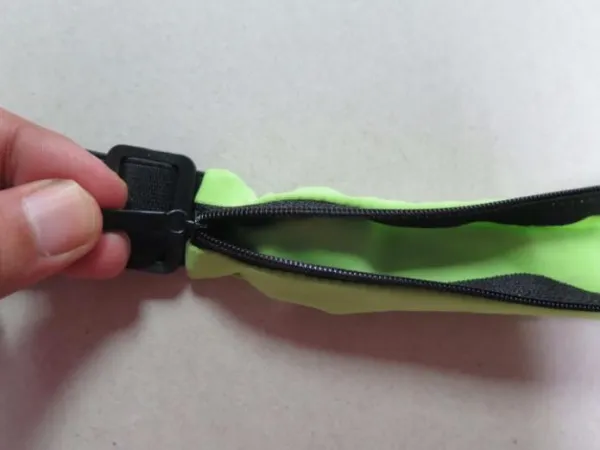
Function checks require the approved component, installed route, loaded condition and acceptance rule.
Build handles and straps as load paths
Define every lift, hand-carry, shoulder-carry or backpack mode. Record handle clearance, strap geometry, adjustment range, padding, webbing, hardware, anchors and reinforcement. Map load through seams into body panels.
Test the complete packed bag with the specified direction, mass or force, duration or cycles and pass criteria. Review deformation, stitch condition, fabric, hardware and function. A reinforced-looking pattern or wide webbing does not prove load rating or comfort.
For body-carried formats, evaluate representative users and realistic clothing under the approved load. Avoid ergonomic or injury-prevention claims without suitable evidence.
Separate visibility features from safety claims
Bright colours and reflective-looking trims may support identification, but appearance under studio light does not prove retroreflective performance or user safety. Define trim identity, placement, viewing geometry, method and pass criteria if visibility performance matters.
Check that loaded pockets, straps and folds do not obscure controlled areas. Review the feature after any required cleaning, flexing or abrasion exposure. Avoid “high visibility” or safety claims based only on colour.
Scope temperature-sensitive projects separately
An insulated-looking bag or silver lining does not prove temperature range or duration. Temperature-controlled projects require payload, initial conditions, target profile, ambient conditions, openings, insulation and coolant arrangement, monitoring locations, test method and acceptance criteria.
Medicine compatibility, clinical suitability and cold-chain compliance are not inferred from thermal performance alone. Use the medical cooler bag category for a controlled project discussion and the insulated bag construction guide for system-level variables.
Specimen, biological or regulated-material transport remains outside the published scope unless the buyer provides applicable packaging requirements and qualified responsibilities.
Control artwork, labels and instructions
Provide authorized artwork, dimensions, colours, placement and method. Separate brand marks, identification, required labels and instructions. Define language versions, revision control and who approves medical or regulatory wording.
Printing, transfer, embroidery, patches and labels interact differently with coated materials and cleaning. Approve production-intent trials and check legibility, adhesion, rubbing and named cleaning exposures. Do not place decoration where it blocks pocket identification or inspection.
Packaging and traceability belong in the specification
Define whether bags ship empty, with dividers installed, modules separated or kits assembled by another party. Control folding, inserts, seals, individual packaging, carton quantity, lot identification and document inclusion.
Packaging can deform foam, boards, transparent panels and labels. Run a pack-out trial and inspect recovery. If traceability is required, define which material, production, artwork, inspection and packing records connect to the shipment and who retains them.
Approve medical organizer bags in controlled stages
- Use and responsibility brief: user, workflow, market and approval ownership.
- Controlled contents register: items, dimensions, mass, priority and packaging state.
- Loaded layout: zones, modules, visibility, access and refill process.
- Material and evidence review: exact stack, cleaning, barrier, labels and tests.
- Finished sample: fit, openings, carrying, identification and packaging.
- Scope-specific protocols: load, cleaning, protection, water, visibility or thermal work where required.
- Pre-production approval: freeze patterns, BOM, artwork, evidence, quality plan and pack-out.
Any substitution in shell, lining, foam, film, zipper, webbing, trim, label or packaging can affect earlier findings. Record the change and repeat relevant approvals.
Production quality-control points
Order-specific inspection can include:
- shell, lining, film, foam, support and reinforcement identity;
- material weight or thickness, colour and surface condition;
- external and usable dimensions plus clear openings;
- controlled-content fit, orientation and loaded closure;
- zone, pocket, loop, divider and removable-module position;
- zipper, buckle, hook, adjuster and retention function;
- handle, strap, anchor and reinforcement construction;
- seam, binding, corner and stitch condition;
- identification colour, artwork, symbols, labels and language;
- approved cleaning, load, water, protection, visibility or thermal checks;
- packaging, assortment, traceability and documents;
- conformity to the approved sample and revision.
Sampling does not prove every unit or establish regulatory suitability. Use the bag quality-control guide to connect incoming, first-piece, in-line and pre-shipment controls.
Medical bag RFQ checklist
Send the manufacturer:
- intended use, user, workflow, destination market and approval owner;
- controlled contents, item dimensions, quantity, mass and packaging state;
- access priority, refill process and loaded layout;
- external dimensions, usable zones and clear openings;
- exact shell, lining, film, foam, support and reinforcement constructions;
- pockets, loops, dividers, removable modules and retention;
- zipper, hardware, handles, straps and load paths;
- cleaning substances, methods, cycles and acceptance criteria;
- identification system, authorized artwork, labels and languages;
- applicable requirements, evidence owner, test methods and pass rules;
- approved samples and change-control requirements;
- quantity by version, colour and language;
- assembly scope, packaging, traceability, inspection and delivery conditions.
MOQ, price, feasibility and timing depend on organization, materials, supports, hardware, labels, test and evidence scope, version splits, quantity and packaging. Request current project confirmation after the controlled specification is reviewed.
Develop the organizer around the controlled workflow
Benshine can review medical, first-aid, emergency and equipment-organizer bag directions around buyer-defined contents, access, identification, materials, cleaning, evidence and quality controls. Published references provide construction directions only; clinical, regulatory and final-use suitability remain project-specific responsibilities.
Explore custom medical bags, review AB063, AB072 and AB091, or send your controlled medical organizer specification.
Quick answers
Does a medical bag product name prove clinical or regulatory suitability?
No. Medical, first-aid, trauma, paramedic and emergency are sourcing labels, not evidence of suitability, completeness, certification or compliance. The buyer must define intended use, market, applicable requirements, contents, materials, labels, tests and approval responsibility.
What information is needed to design a medical organizer bag?
Provide the intended use and user, controlled contents with dimensions and mass, access order, identification, external and usable dimensions, organization, materials, cleaning method, labels, destination market, applicable requirements, tests, packaging and evidence responsibilities.
How should a first-aid bag be organized?
Map the buyer-controlled kit by access priority, item dimensions, visibility, retention, refill and handoff workflow. Approve the loaded layout with representative contents. The bag manufacturer should not infer kit completeness or treatment protocol from the format.
Does tarpaulin or a coated fabric make a medical bag waterproof or easy to disinfect?
No. Finished-bag water behaviour depends on seams, zippers, openings and attachments, while cleaning and disinfectant compatibility depend on the exact material stack and method. Define each exposure and test the complete construction.
Can a medical bag be used for temperature-sensitive medicines?
Only after the complete packaging system, payload, temperature profile, duration, ambient conditions, openings, monitoring and validation responsibility are defined. An insulated appearance or material name does not prove medicine suitability or thermal performance.
What belongs in a medical bag RFQ?
Include intended use, user and market, contents and packed mass, workflow, dimensions, organization, exact material layers, closures and carrying, cleaning, identification and labels, applicable requirements, evidence and test protocols, quantity, packaging and delivery conditions.