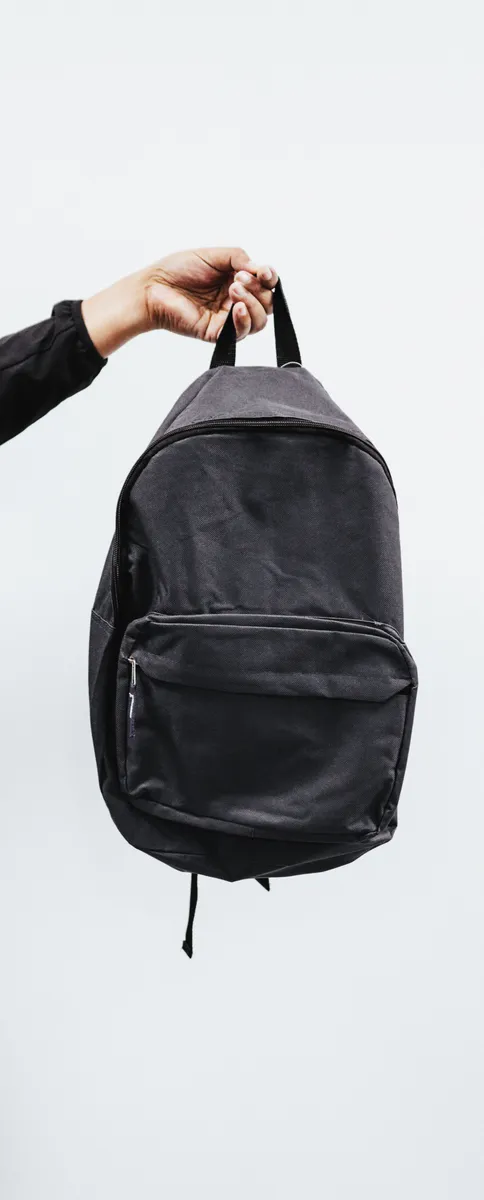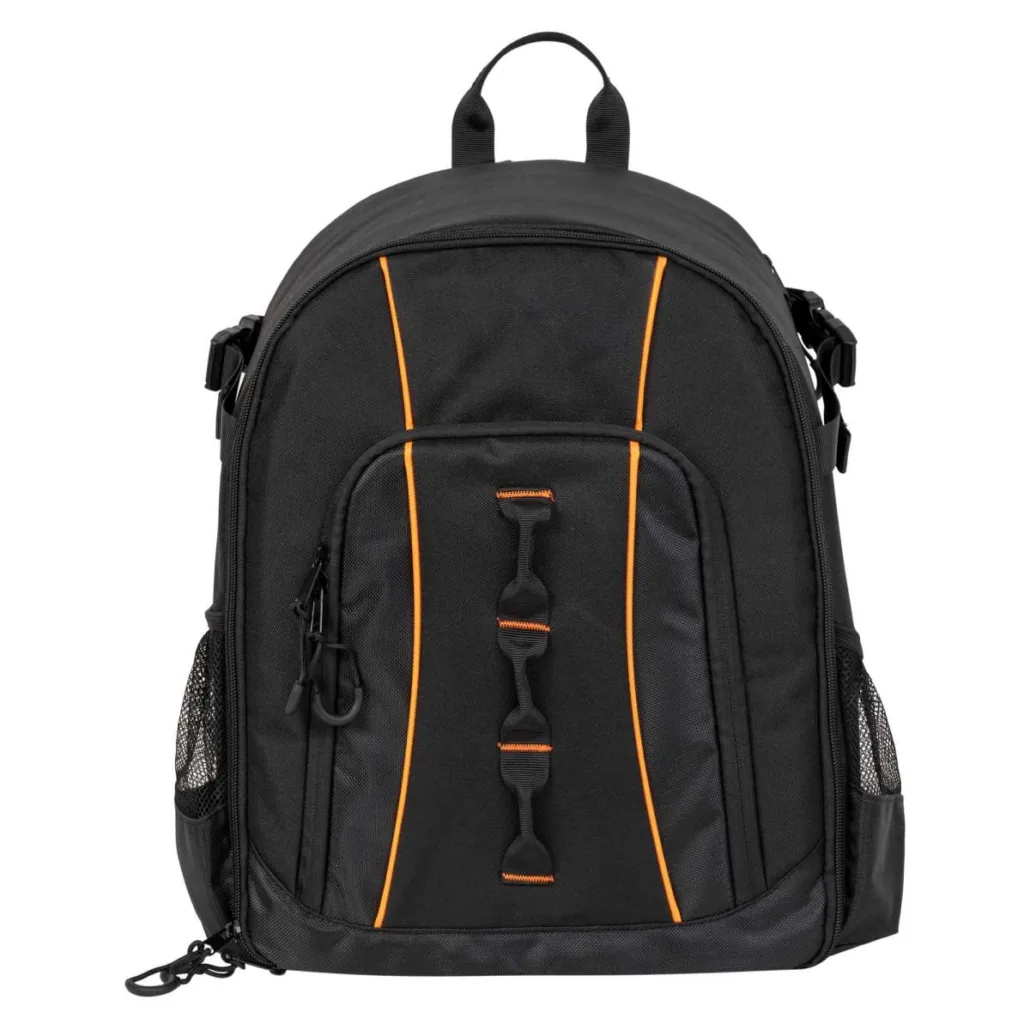
Bag anatomy is the shared vocabulary used to describe a bag’s panels, openings, carrying system, pockets, internal support, seams and hardware. Clear terms help a buyer, designer and manufacturer discuss the same physical feature without relying on phrases such as “make this part wider” or “move the clip.”
Direct answer: The main parts of a bag are its shell panels, gussets or folds, base, opening and closure, handles or straps, pockets, lining and support layers, seams and edge finishes, reinforcements, zippers and hardware. Names alone are not a production specification. Pair each term with a drawing or marked photograph, dimensions, material and colour codes, construction notes and a revision number.
Quick map of common bag parts
| Bag area | Common terms | Questions to define |
|---|---|---|
| Main body | Front panel, back panel, side panel, top panel, base | Finished shape, dimensions, material, grain or orientation |
| Depth and volume | Side gusset, bottom gusset, continuous gusset, box corner, pleat | Finished depth, taper, corner shape, capacity direction |
| Access | Main opening, zipper opening, flap, roll top, drawcord channel | Opening length, access direction, closure sequence |
| Carrying | Carry handle, shoulder strap, backpack strap, haul loop, strap pad | Length, width, adjustment range, attachment and load path |
| Organization | Patch pocket, inset pocket, slip pocket, mesh pocket, divider | Intended contents, usable opening, expansion and retention |
| Interior | Lining, interlining, foam, board, sleeve, organizer panel | Structure, protection, cleanability and access for assembly |
| Edges and seams | Seam allowance, binding, piping, hem, topstitch | Seam type, visible edge, stitch position and finished shape |
| Components | Zipper chain, slider, puller, buckle, adjuster, D-ring, hook | Size, material, finish, orientation, mating parts and evidence |
| Strength zones | Reinforcement patch, bartack, box stitch, backing piece | Expected load, layer stack, dimensions and approval method |
This glossary describes common usage in cut-and-sew bag development. Terminology can vary among teams, so the approved drawing and physical sample should resolve any naming difference.
Shell panels: the visible body of the bag
The shell or outer is the bag’s exterior material system. It may be divided into several pattern pieces rather than one continuous surface.
- Front panel: the outward-facing main body panel. Branding and front pockets often attach here.
- Back panel: the opposite main panel. On a backpack it commonly interfaces with shoulder straps and the wearer.
- Side panel: a separate left or right body piece. It may include a bottle pocket, compression strap or hardware anchor.
- Top panel: a shaped piece across the upper body, sometimes carrying the main opening or handle.
- Bottom panel or base: the lowest exterior piece. It may use a different material or added support, but “reinforced bottom” must state the actual layer and construction.
- Overlay: an additional exterior piece applied over a main panel for styling, reinforcement, pocket construction or material contrast.
- Yoke: a shaped upper panel that joins or supports another part, often seen near backpack strap attachments.
Call out left and right from a defined viewing direction. “Left side” can otherwise mean the user’s left while wearing the bag or the viewer’s left when looking at the front.
Gussets, folds and the parts that create depth
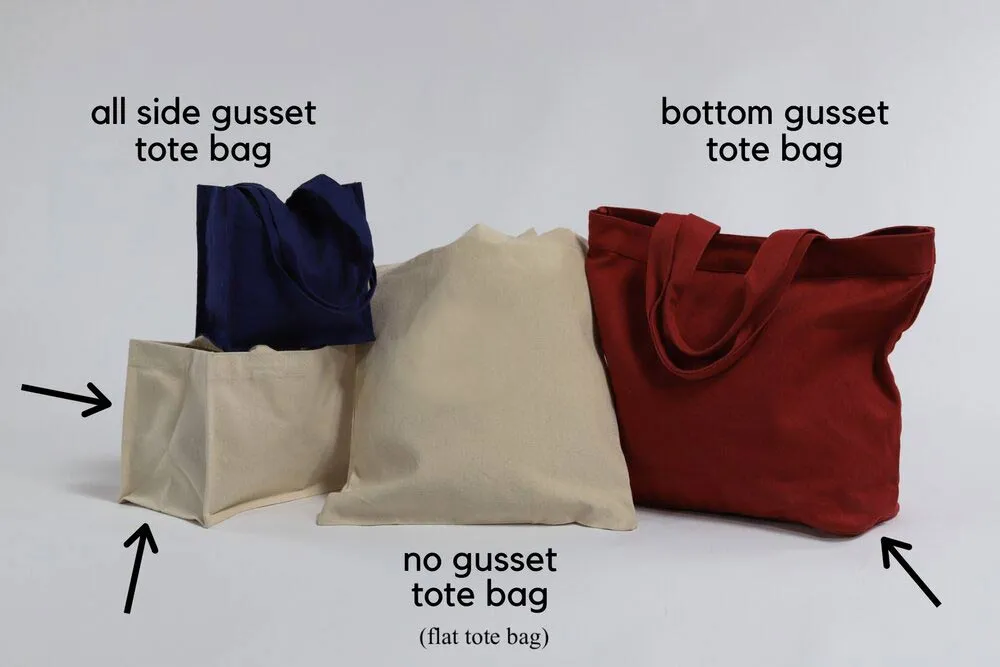
A gusset creates depth between larger faces. It can be a separate pattern piece or a fold formed from the body material.
| Construction | Meaning | Specification points |
|---|---|---|
| Side gusset | Depth panel along one or both sides | Top and bottom depth, taper, seam location |
| Bottom gusset | Separate or folded depth at the base | Finished base width, fold line, corner shape |
| Continuous gusset | One strip joining multiple edges | Strip width, joins, curve control, zipper relationship |
| Box corner | Corner seam or fold that creates a flat base | Finished depth, seam direction, symmetry |
| Pleat | Controlled fold that can add expansion or shape | Fold direction, closed/open state, stitch restraint |
| Bellows construction | Folded sides that expand outward | Expansion limit, layer bulk, closure and contents |
Increasing gusset depth can add geometric volume, but it does not guarantee usable capacity. Opening size, lining, foam, dividers, pocket placement, taper and the shape of the intended contents all affect what fits.
Openings and closures
The main opening is the primary access route into the bag. Its nominal exterior length is not necessarily the same as the usable clear opening after zipper stops, curves, flaps or gussets are assembled.
Common closure terms include:
- zipper opening: access controlled by zipper chain and one or more sliders;
- flap: a panel that folds over an opening and may use buckles, hook-and-loop tape, snaps or magnets;
- drawcord channel: a folded or separate casing through which a cord runs;
- roll top: an extended opening designed to roll or fold before closure;
- hook-and-loop closure: mating hook and loop surfaces;
- snap or press fastener: two mating mechanical parts pressed together;
- buckle closure: male and female components joined mechanically;
- magnetic closure: mating magnetic components whose installation and suitability require project review.
For every closure, specify location, clear opening, direction of operation, mating parts, surrounding reinforcement and expected access workflow. Water resistance, security, child safety and load retention are separate requirements, not implied by the closure name.
Zipper terminology
A zipper system may include:
- chain: the teeth or coil mounted on zipper tape;
- zipper tape: textile strips sewn into the product;
- slider: the moving component that opens or closes the chain;
- puller or pull tab: the part held by the user;
- top and bottom stops: components or treatments limiting slider travel;
- zipper garage: a small cover or pocket around the parked slider;
- zipper flap or storm flap: material covering part of the zipper area;
- single-way or two-way opening: the number and arrangement of sliders.
“Heavy-duty zipper” is too broad for a controlled brief. Record chain type and size direction, tape colour, slider count and orientation, puller form, opening length, installation curve and any performance or supplier requirement.
Handles, straps and load paths
Carrying components transfer the bag and its contents to a hand, shoulder, torso, waist, bicycle, trolley or other support. Their attachment points are part of a load path—the route through which force moves into the bag body.
- Carry handle: a short hand-held loop or grip.
- Haul loop or grab handle: a compact loop used to lift or position a bag.
- Shoulder strap: a longer strap intended to sit on one shoulder, fixed or removable.
- Backpack shoulder strap: one of a pair attached to the back body.
- Strap pad: a wider or cushioned section distributing contact over an area.
- Webbing: a woven narrow fabric used for handles, straps, anchors and adjustment.
- Anchor or attachment point: the region connecting the carrying component to the body.
- Adjuster: hardware used to change the effective strap length.
- Keeper: a loop or component that retains loose webbing.
Define the intended carry mode, contents, representative load, strap width, effective length or adjustment range, hardware, layer stack and attachment geometry. A webbing specification alone does not establish the strength of the assembled handle or strap.
Pocket and compartment names
A compartment is a larger enclosed area; a pocket is usually a smaller storage feature attached to or built into a panel. The same term can describe different constructions, so show a section or sample when the detail matters.
| Term | Typical construction | What to specify |
|---|---|---|
| Patch pocket | Separate piece sewn onto a panel | Finished size, opening, corners, expansion |
| Slip pocket | Open-topped pocket for quick access | Usable depth, retention, contents |
| Inset pocket | Pocket incorporated into a seam or cut opening | Opening size, pocket bag, reinforcement |
| Zipper pocket | Pocket closed by a zipper | Clear access, orientation, internal volume |
| Bellows or pleated pocket | Folded pocket that expands | Closed depth, expanded depth, restraints |
| Mesh pocket | Pocket using mesh in all or part | Stretch direction, edge finish, retention |
| Bottle pocket | Side pocket shaped for a container | Exact container, fit, access and retention |
| Sleeve | Flat or lightly padded holding layer | Item dimensions, clearance, closure, padding |
| Divider | Layer separating a main compartment | Height, attachment, stiffness, access |
| Organizer panel | Group of small pockets, loops or slots | Item map, spacing, order of access |
Specify pockets around named contents. “Laptop pocket,” for example, should be translated into the device dimensions, clearance, opening, padding direction, retention and location within the finished bag.
Lining, interlining, padding and reinforcement
These layers can look similar in a drawing but serve different functions:
- Lining: the visible inner material covering seams or creating the interior surface.
- Pocket bag: the material forming the concealed body of an inset pocket.
- Interlining: an internal support layer between outer and lining materials.
- Foam or padding: a compressible layer used for structure, spacing or protection direction.
- Board or stiffener: a firmer insert used to support shape or a base.
- Backing piece: an internal layer behind an attachment or hardware location.
- Reinforcement patch: an added piece intended to spread load or control deformation.
- Spacer mesh: a dimensional textile used in selected contact or ventilation directions.
The material name does not prove cushioning, protection, ventilation, impact performance, cleanability or load capacity. Define thickness, density or construction where relevant, placement, coverage, edge treatment and the acceptance method for the assembled product.
Seams, seam allowance and edge finishes
A seam is where parts are joined. The seam line is the intended stitch or join position; the seam allowance is material between that line and the cut edge. Finished dimensions and pattern dimensions therefore are not interchangeable.
- Topstitch: a visible stitch line used near an edge, seam or feature.
- Edge stitch: a stitch placed close to a folded or finished edge.
- Bartack: a dense localized stitch pattern used at selected attachment or stress points.
- Box stitch or box-X stitch: a geometric attachment pattern whose dimensions and layers should be defined.
- Binding: a strip wrapping or covering a raw edge or seam allowance.
- Piping: a narrow inserted feature defining a seam or silhouette edge.
- Hem: a turned and secured edge.
- Raw edge: an unfinished cut edge; whether it is acceptable depends on the material and construction.
Stitch appearance alone does not establish seam strength. Thread, needle, stitch type, stitch density, seam allowance, material layers, reinforcement, operator control and representative testing all contribute.
Bag hardware names
Hardware covers functional components that are not the main cut fabric panels. Depending on the bag, it can include:
- side-release buckle: interlocking male and female buckle parts;
- ladder-lock or triglide adjuster: hardware used to adjust or route webbing;
- D-ring or rectangular ring: an anchor or connection component;
- swivel hook or snap hook: a removable strap connector;
- grommet or eyelet: a reinforced opening through material;
- rivet: a mechanical fastener joining selected layers;
- feet or base studs: components fitted to the bottom surface;
- cord lock and cord end: drawcord control and finishing parts;
- magnetic, snap or turn-lock component: mating closure hardware.
For a comparable quotation, state component type, size, material direction, colour or finish, mating part, brand requirement if any, installation location and relevant evidence. “Black metal buckle” does not identify alloy, finish, dimensions, mechanism, surface durability or load suitability.
Dimensions and reference points
A useful bag drawing defines how each measurement is taken.
- Width, height and depth: specify the bag orientation and whether the measurement is finished, external, internal or usable.
- Opening length: distinguish zipper-chain length from clear access.
- Drop length: define whether a handle drop is measured vertically from the opening to the inside or centre of the grip.
- Strap length: state fixed length, effective range and whether hardware is included.
- Pocket position: measure from named seams, edges or centre lines rather than from a movable feature.
- Logo position: define artwork size, orientation and distances from stable reference points.
- Tolerance: apply only where agreed and measurable; it is not a substitute for a clear nominal dimension.
Record whether the bag is empty, filled, flattened or supported during measurement. Soft products can change shape under handling.
Replace ambiguous comments with controlled instructions
| Ambiguous request | More useful specification language |
|---|---|
| “Make the side wider” | Increase finished side-gusset depth from the approved reference point; confirm affected base, zipper and lining pieces |
| “Use a stronger handle” | Define contents and representative load, handle material and width, anchor layers, stitch geometry and validation method |
| “Add a laptop pocket” | State device dimensions, clearance, pocket location, usable opening, padding and retention |
| “Use a better zipper” | State chain direction and size, tape colour, slider and puller arrangement, opening geometry and required evidence |
| “Add waterproof lining” | Define the exact material, seam and finished-product exposure requirement and test method |
| “Move the logo up” | Give a dimension from a fixed seam or finished edge and update the marked artwork view |
| “Reinforce the bottom” | Identify the added material or construction, its coverage, attachment and intended outcome |
This translation step helps prevent different teams from solving different problems under one informal phrase.
Build an annotated bag specification
- Start with front, back, side, top, bottom and interior views.
- Give every important part a stable callout number or name.
- List the material, colour and finish for each callout.
- Add finished dimensions from fixed reference points.
- Show openings, closure direction, pocket access and hardware orientation.
- Identify lining, foam, board and reinforcement coverage with section views where needed.
- Record seam, binding, piping and attachment details at critical locations.
- Map decoration artwork to a physical approval reference.
- Attach a bill of materials, test plan and packaging brief.
- Put a date and revision code on every controlled document and approved sample.
Photographs are useful for communicating appearance, but they do not reveal all hidden layers or measurements. Mark which features are references and which are mandatory requirements.
Sample review with the glossary
During sample review, walk through the approved callouts in a fixed sequence:
- overall silhouette and finished dimensions;
- shell panel identity and orientation;
- gusset, base and corner construction;
- opening geometry and closure operation;
- pockets, compartments and item access;
- lining, padding and internal support;
- handles, straps, anchors and hardware;
- seams, binding, piping and visible stitch details;
- decoration placement and colour;
- loaded behaviour and agreed project-specific checks.
Log each change against a revision. A comment approved on one image should not silently alter unrelated dimensions or components.
RFQ checklist for a custom bag
Send Benshine:
- bag type, user and intended use;
- named contents, item dimensions and representative load;
- finished width, height and depth with measurement state;
- annotated views naming panels, gussets, pockets and closures;
- shell, lining, support, reinforcement and trim directions;
- handle or strap dimensions, adjustment and attachment intent;
- zipper and hardware types, colours and orientations;
- branding method, artwork and placement;
- relevant exposure, care, performance and evidence requirements;
- quantity by colour and variant;
- packaging, destination and delivery terms;
- reference sample or photographs with desired and undesired features marked.
Benshine can help translate an early concept into a controlled custom-bag brief. Feasibility, materials, component availability, performance, MOQ, price, sample timing and production timing require confirmation for the selected construction and order.
Continue your construction research
- Understand bag patterns, gussets and pocket construction
- Compare bag stitch types and seam construction
- Specify zippers, buckles, webbing and hardware
- Choose a bag structure for intended use
- See how custom bags are made
- Browse Benshine product categories
- Send Benshine an annotated custom-bag brief
Quick answers
What are the main parts of a bag called?
Common bag parts include front and back panels, side or bottom gussets, a base, opening and closure, handles or straps, pockets, lining, reinforcement, seams, binding or piping, zippers and hardware. The exact parts depend on the bag format and construction.
What is a gusset on a bag?
A gusset is a panel or fold that creates depth. It may run along the sides, across the bottom or continuously around several edges. Gusset shape and dimensions influence volume, silhouette, opening behaviour and assembly.
What is the difference between lining and interlining?
Lining is the visible interior layer. Interlining is a supporting layer between the exterior shell and lining, such as foam, board or another reinforcement. The two have different appearance, structure and performance roles.
What is binding in bag construction?
Binding is a strip used to cover or finish a raw seam edge. Its material, width, fold, stitch position and corner treatment should be specified because binding can affect appearance, edge protection and finished shape.
What is the difference between piping and binding?
Piping is usually inserted into a seam to define an exterior edge or silhouette, often around a cord or formed strip. Binding wraps over an exposed edge or seam allowance. A product can use both in different locations.
How should bag parts be identified in a custom specification?
Use consistent part names on front, back, side, top, bottom and interior views. Add numbered callouts, dimensions from fixed reference points, material and colour codes, construction notes and revision status. Approve the wording against a physical sample before production.