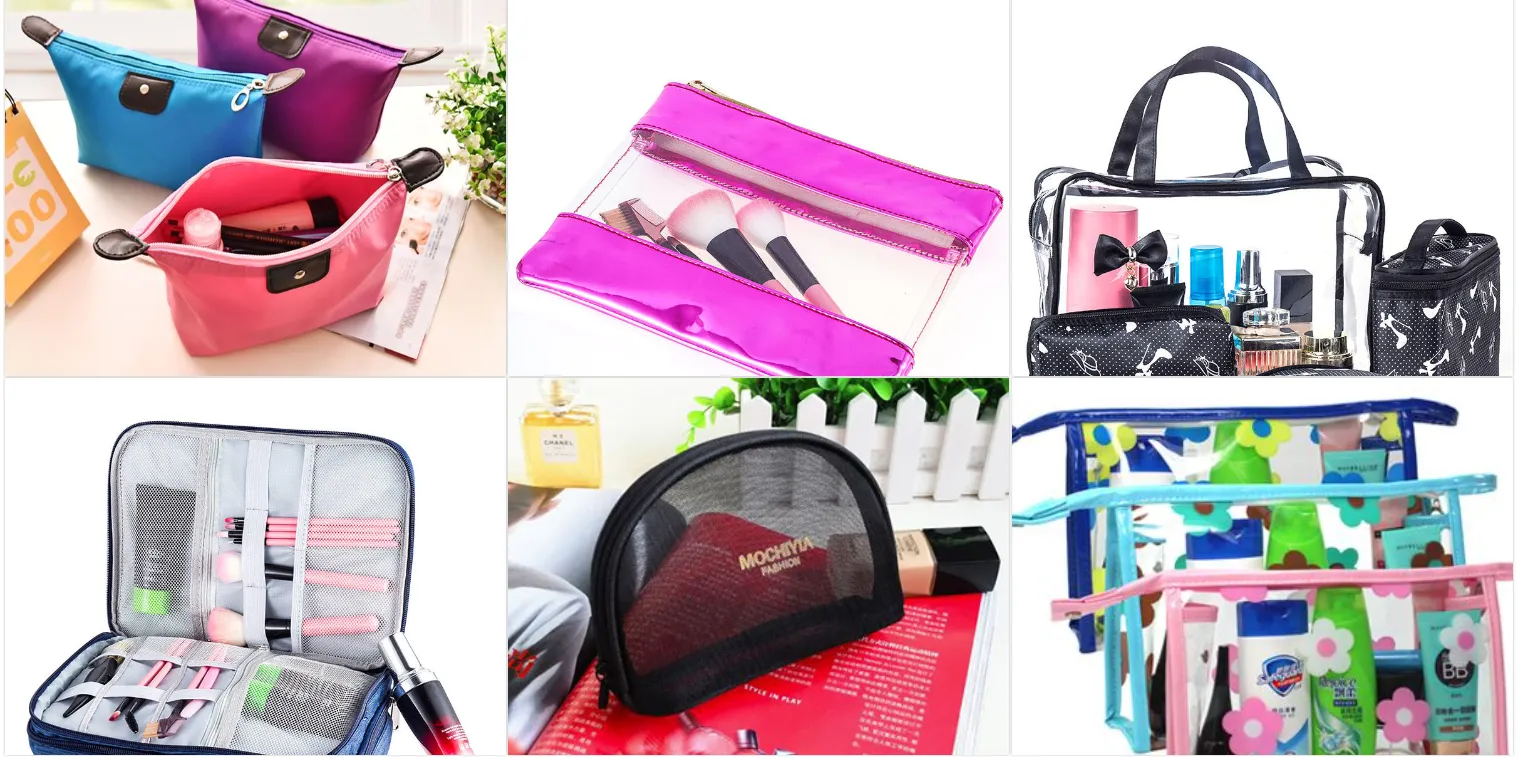
A cosmetic bag is a small-item container, access system and branded surface. Its design should start with the products carried and the user routine—not a generic pouch size or an attractive exterior. A makeup pouch, brush organizer, hanging wash bag, retail gift-set case and structured vanity bag can require different openings, linings, supports and tests.
Direct answer: Define cosmetic bag design from the actual containers, brushes or accessories, their orientation, spill exposure and access sequence. Control usable dimensions, opening, organization, every material layer, seams, hardware, cleaning, branding and packaging. A material name or coated lining does not automatically prove fit, cleanability, chemical compatibility, leakage control, durability or compliance.
Cosmetic bag specification at a glance
| Decision | Buyer input | What not to assume |
|---|---|---|
| Contents | Item list, container dimensions, orientation and fill state | Fit from external bag dimensions alone |
| Workflow | Home, counter, travel, hanging, professional or gift-set use | Useful organization from pocket count |
| Structure | Soft pouch, boxed case, frame, fold-out or hanging organizer | Protection or standing from shape alone |
| Materials | Exact shell, backing, lining, foam and supports | Cleanability or leakage control from a material label |
| Access | Clear opening, zipper route, lid, hook and handle | Easy access from a wide-looking photo |
| Evidence | Named finished-product method and pass criteria | Universal durability, hygiene, compliance or commercial terms |
This guide owns informational design and specification intent. Buyers ready to source can use the cosmetic bag manufacturer category, while the bag structure guide supports broader architecture decisions.
Begin with the real contents
Create an item schedule for bottles, tubes, jars, palettes, brushes, tools and travel accessories. Record length, width, thickness or diameter, mass, cap or pump geometry and whether the item is full, partly used or inside secondary packaging. Identify objects with sharp edges, loose powder, oil, alcohol, fragrance or possible leakage.
Arrange the items in the intended orientation and photograph or draw the layout. Tall bottles may need upright restraint; brushes may need a protected tip zone; palettes may need separation from hard containers. If several assortments share one bag, document every configuration and identify the controlling fit case.
Do not use nominal container volume as a dimensional substitute. Two bottles with the same stated volume can have different bases, shoulders, pumps and caps.
Map the user journey and access sequence
State where the bag is packed, carried, opened and stored. A home-counter pouch, airline toiletry kit, professional makeup organizer and retail gift-set pack create different priorities. Record whether the user works with one hand, needs every item visible, hangs the bag, lays it flat or repeatedly opens it in a confined space.
Rank items by access frequency. Map the retrieval and return sequence. Check whether an open lid blocks the workspace, a full pocket hides another pocket or bottles fall when the bag is hung. Organization is successful only when it supports this sequence with the real load.
Separate external size, usable space and clear opening
Finished outside dimensions include fabric, piping, foam, curves and structure. Usable space is reduced by lining, seam allowances, dividers, pockets and inward-folding zipper panels. The clear opening can be smaller than the main compartment.
Specify length, width and depth at named reference points and in a stated bag condition. Add usable internal dimensions for controlled zones and the clear zipper or frame opening. For flexible bags, define whether measurements are taken flat, shaped, empty or loaded.
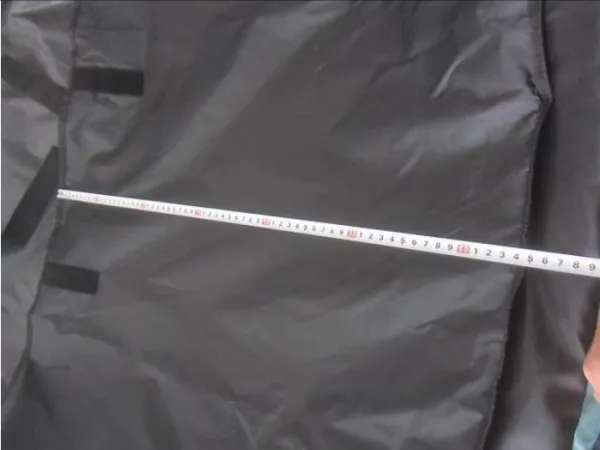
Repeatable reference points make flexible-bag dimensions comparable. Final fit is checked with the intended products and packing orientation.
Choose a format from function
A flat or gusseted pouch is compact in structure but can make small items overlap. A boxed case adds depth and can support upright packing. A clamshell or fold-out organizer exposes more contents but requires longer zipper paths, more panels and space to open. A structured vanity direction can hold shape but adds support layers and pack-out volume.
A hanging toiletry bag needs a defined hook, suspension point, loaded orientation and pocket retention. A framed opening can improve access but changes hardware, sewing and folding. No format is universally better; compare access, usable space, packed volume, cleaning and assembly against the intended routine.
Design pockets around named objects
For every pocket, elastic loop or divider, state the intended item, usable dimensions, entry direction, closure and retention. Elastic may accommodate a size range but can compress soft tubes or lose restraint under the wrong extension. Mesh improves visibility but does not prove ventilation, hygiene or durability.
Check all pockets while the main compartment is fully loaded. A populated lid can fall closed or shift the centre of mass. Thick dividers may protect separation but consume space. Removable inserts can simplify cleaning or reconfiguration, yet need clear attachment and reinstallation rules.
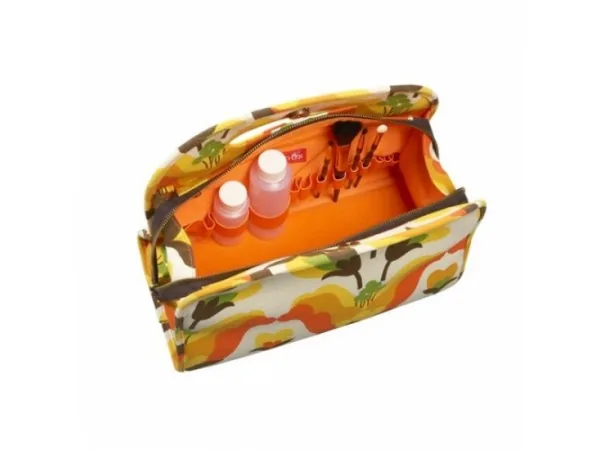
BSWB-07 illustrates an organizer direction. It does not prove universal container fit, leakage control, washability or chemical compatibility.
Specify the shell as a complete construction
“Polyester,” “nylon,” “canvas,” “PVC” and “PU” are incomplete specifications. Record fibre or polymer identity, construction, weight or thickness, coating or lamination, colour, finish, usable width and supplier reference where controlled. Identify face and reverse surfaces and map each material to a panel.
Appearance, hand, body, print compatibility, abrasion and cleaning can change with the full construction. A transparent film may support visibility but needs exact polymer, thickness, clarity and flex expectations where relevant. Do not infer identity or performance from appearance.
Use the nylon versus polyester guide and canvas material guide to build measurable material fields.
Treat lining as part of the finished system
The lining affects visibility, contact, hand, cleaning and assembly. Specify its exact material, backing, colour, surface and attachment. Light colours can reveal contents but may also show stains or colour transfer. Dark colours can conceal marks but reduce visibility of small items.
A coated, laminated or plastic lining does not by itself make the bag leakproof. Needle holes, bound seams, zipper tape, corners and attachments interrupt the surface. Map the protected boundary and decide whether the goal is easier wiping, resistance to a defined spill or containment for a defined time.
If contents can contact the lining, identify realistic oils, alcohols, pigments or cleaners and define a compatibility protocol. Avoid broad chemical-resistant, hygienic or antibacterial claims without scope-specific evidence.
Define spill and water boundaries precisely
Separate external splash exposure from an internal container leak. State the liquid or surrogate, amount, temperature, exposure location, bag orientation, closure condition, duration and acceptable transfer. A wipeable lining and a leak-containing compartment are different requirements.
Zippered openings are common water paths, and internal seams can direct liquid toward another compartment. If a removable leak pouch is the controlled solution, specify its closure, attachment, capacity and test independently.
The water-resistant, water-repellent and waterproof guide explains how to write a finished-product claim instead of relying on shell terminology.
Design for cleaning and drying
Begin with the expected soil: dry powder, foundation, oil, shampoo, toothpaste or general travel dirt. Define whether the user wipes, hand-washes, machine-washes or only spot-cleans the bag. Coordinate accessible corners, removable components, binding, foam, boards, labels, decoration and hardware with that method.
“Wipe clean” needs a stated cloth, cleaner, number of passes and appearance criterion. “Washable” needs water temperature, detergent, cycle or hand method, drying procedure and acceptable dimensional, colour, coating, hardware and artwork changes. A surface that cleans easily may trap moisture behind seams or foam.
Open the finished bag in the intended drying position and inspect hidden folds, pockets and padded zones. Do not claim fast drying, odour control or hygiene without an appropriate protocol.
Coordinate openings, zippers and frames
Define zipper chain and size direction, tape, slider, puller, stops and route. Specify one- or two-way opening, clear access and where pullers rest when closed. Tight corners, thick piping and fully loaded panels can change slider force.
Frame or wire openings can hold a bag open but require exact component geometry, end treatment, retention and exposure requirements where applicable. Check whether the opening can close without catching lining, loops or contents.
Use the zipper, buckle and hardware guide to treat components as installed systems rather than generic names.
Control handles, hooks and hanging load paths
Handles and hooks transfer the complete packed mass into panels, seams and reinforcement. Define intended use, load, attachment position, reinforcement, seam construction and hand clearance. A padded handle changes feel but does not prove installed strength.
For a hanging organizer, state the support geometry, hook material and opening, rotation, storage position and loaded orientation. Populate every pocket and inspect tilt, closure, pocket retention and access. A hook visible in a photo does not prove compatibility with every rail, door or fixture.
Apply a written finished-product load or cycle protocol with direction, mass or force, duration or cycles and pass criteria. Inspect the component, stitching, shell and permanent deformation together.
Plan structure, padding and item contact
Foam, boards, piping and frames can give body, separate items or support shape. Specify material, thickness, density or grade where relevant, coverage and edge treatment. Padding does not automatically protect fragile makeup, mirrors or containers.
Define the hazard—contact, compression, drop or vibration—and the item or surrogate. Test the fully packed finished bag with direction, height or load, repetitions, surface and acceptable result. Check gaps and hard transitions as well as broad padded areas.
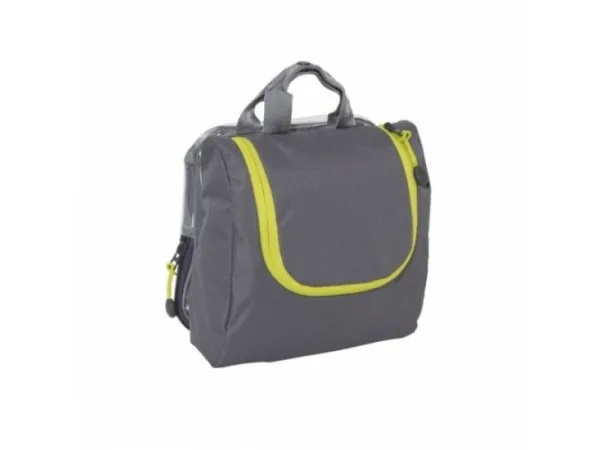
BSWB-05 shows a structured direction. Appearance is not evidence of impact protection, standing stability or capacity.
Engineer seams, binding and thick intersections
Create a seam map covering shell, lining, zipper, pockets, handles and supports. Define seam type, allowance, thread, needle, stitch spacing, tension, binding coverage and face-and-reverse appearance. Corners, zipper ends and intersections with foam or piping can create bulk and skipped-stitch risk.
Dense stitching is not automatically stronger and can perforate films or coatings. Use trials on the exact material stack. The stitch-length guide provides measurement rules, while the seam construction guide supports joint planning.
Place branding around folds and cleaning
Provide artwork, dimensions, colour target, method, location and orientation. Curved panels, gussets, pockets, handles and folded retail presentation can hide or distort a logo. Mark placement from stable finished reference points.
Print, transfer, embroidery, patches, labels and custom pullers interact differently with coatings, films, padding and lining. Approve a strike-off on the exact production material and colour. Review opacity, registration, texture, reverse-side effects and any required rubbing, flexing or cleaning result.
Use the logo-method comparison to select evidence by process rather than promising universal durability.
Treat retail gift sets as one pack-out system
If the bag contains branded products at retail, define who supplies, fills and verifies each item. Control assortment, orientation, inserts, tissue, labels, barcodes, warnings and presentation after transport. Products can mark the lining, deform panels or become loose if pack-out is not tested.
Confirm whether the cosmetic bag is reusable merchandise, primary packaging, secondary packaging or part of a set, because responsibilities and evidence can differ. Avoid stating regulatory or contact suitability from the bag category alone; requirements depend on product, materials, use and destination market.
Packaging can alter shape and surfaces
Flat packing reduces carton volume but may crease films, foam, piping or structured panels. Compression can mark coatings, transfer print or deform frames. Define folding sequence, inserts, protective layers, individual packaging, carton quantity and orientation.
Run a production-intent pack-out trial. After the defined storage or transit simulation, reopen the bag and inspect dimensions, shape recovery, surface marks, zipper function, lining, hardware and artwork. State any allowed recovery period.
Approve cosmetic bags in controlled stages
- Contents and journey brief: items, dimensions, fill state, workflow and exposure.
- Packing layout: orientation, usable zones, clear opening and access sequence.
- Material swatches: shell, lining, transparent parts, foam, supports and evidence.
- Construction mock-up: seams, corners, zipper route, pockets and hanging direction.
- Finished sample: fit, organization, cleaning access, hardware, artwork and packaging.
- Use-specific tests: spill, wipe, wash, load, colour, protection or chemical protocol where required.
- Pre-production sample: freeze patterns, bill of materials, workmanship and pack-out.
A substitution in shell, coating, lining, foam, zipper, elastic, binding, artwork or packaging can affect earlier findings. Record changes and repeat relevant approvals.
Production quality-control points
Order-specific inspection can include:
- shell, lining, film, foam, support and reinforcement identity;
- material weight or thickness, colour and surface condition;
- finished external and usable internal dimensions;
- clear opening and representative-item fit;
- pocket, loop, divider and insert position;
- zipper, puller, frame, hook and handle function;
- lining coverage, seam direction, binding and corners;
- stitch condition, appearance, shape and symmetry;
- artwork size, colour, position and workmanship;
- project-specific spill, wipe, wash, load, colour or compatibility checks;
- gift-set assembly, folding, packaging and carton details;
- traceability and conformity to the approved revision.
Sampling does not prove every unit. The custom bag quality-control guide connects incoming, first-piece, in-line and pre-shipment controls.
Cosmetic bag RFQ checklist
Send the manufacturer:
- intended use, user journey and destination market;
- complete item list, dimensions, mass, fill state and orientation;
- finished external and usable dimensions plus clear opening;
- panel, gusset, lid, pocket, loop and divider drawings;
- exact shell, lining, film, foam, support and reinforcement constructions;
- coating, lamination, colour, finish and controlled supplier references;
- zipper, puller, frame, hook, handle, elastic and hardware details;
- cleaning, drying, spill and realistic chemical exposure;
- artwork files, logo process, labels and placement;
- fit, load, spill, cleaning, colour and protection protocols;
- target-market documents and evidence scope;
- approved swatches, sample and change-control requirements;
- quantity by colour, size, assortment and version;
- gift-set assembly, inserts, packaging, carton and delivery requirements.
MOQ, price, feasibility and timing depend on materials, shape, panel and pocket count, structure, hardware, colour splits, decoration, testing, quantity and packaging. Request current project confirmation after the specification is reviewed.
Develop the bag around the contents
Benshine can review pouch, organizer, hanging toiletry, travel wash-bag, gift-set and structured cosmetic-bag directions around real contents, usable dimensions, organization, materials, cleaning, branding, tests and quality controls. Published references show possible formats; exact materials, claims and commercial terms remain project-specific.
Explore custom cosmetic bags, review the BSWB-05 structured reference and BSWB-07 organizer reference, or send your cosmetic bag specification.
Quick answers
What information is needed to design a custom cosmetic bag?
List the products carried, container dimensions and orientation, user workflow, external and usable dimensions, opening, pocket plan, exterior and lining constructions, cleaning expectation, branding, packaging and required tests. A real packing layout or reference sample helps control the brief.
What is the best material for a cosmetic bag?
There is no universal best material. Selection depends on appearance, structure, abrasion and soil exposure, cleaning method, decoration, contents and target evidence. Specify the exact shell, backing, lining and support layers, then validate the finished sample.
Does a plastic or coated lining make a makeup bag leakproof?
No. Seams, needle holes, binding, zipper openings, corners and attachments can allow liquid to pass. Define the spill exposure, protected boundary, duration, orientation and acceptable result, then test the complete closed bag.
How should cosmetic bag dimensions be specified?
Control finished external dimensions, usable internal dimensions and clear opening at named reference points. Verify them with the intended containers because lining, foam, dividers, curves and seam allowances reduce usable space.
How can a toiletry bag be made easier to clean?
Begin with the expected soil or spill, then coordinate accessible geometry, lining surface, seam and binding details, removable elements, care method and drying position. Wipe-clean or washable claims require a written method and acceptance criteria for the complete bag.
What belongs in a cosmetic bag RFQ?
Include contents and dimensions, use journey, bag and opening dimensions, panel and pocket drawings, exact materials, lining, supports, zippers and hardware, artwork, labels, cleaning and performance protocols, quantity by version, packaging and delivery requirements.