
A special-purpose bag is a fitted product system, not a generic bag with extra pockets. Its design starts with the carried object, user workflow and handling environment. Tool organizers, bottle presentation bags, wheel covers, equipment cases and other functional formats require different geometry, contact materials, retention and evidence.
Direct answer: Define special-purpose bag design from the actual item, accessories, packed mass, access sequence, carrying and exposure. Control fit, retention, material layers, seams, hardware, reinforcement, branding, testing and packaging around that use. A heavy-looking fabric, padding or category name does not automatically prove fit, protection, durability, load strength, waterproofness or suitability.
Special-purpose bag specification at a glance
| Decision | Buyer input | What not to assume |
|---|---|---|
| Item | Drawing, dimensions, mass, geometry and accessories | Fit from a generic bag size |
| Workflow | Loading, access, use, handoff, storage and removal | Useful organization from pocket count |
| Protection | Named hazard, direction, severity and pass rule | Protection from padding alone |
| Retention | Loops, pockets, straps, dividers and closures | Secure contents from a visual layout |
| Carrying | Lift points, handles, straps, load and duration | Strength or comfort from webbing width |
| Evidence | Finished packed-system method and criteria | Universal performance or commercial terms |
This page covers informational design and specification. Commercial tool-bag sourcing remains on the tool bag manufacturer category, while covers, cases and bottle carriers are organized through packing bags.
Document the item before drawing the bag
Collect an item drawing, physical sample or complete measurement sheet. Record length, width, height, diameter, mass, centre of gravity, protrusions, moving parts and accessories. Identify sharp, fragile, hot, wet, finished or easily marked surfaces.
Measure the item in the exact transport or storage state. Folded handles, installed cables, caps, wheels and accessories can change the envelope. If one bag must serve multiple versions, document each and identify a realistic controlling case rather than combining unrelated maximums.
Photographs support orientation, but they do not replace dimensions and reference points. Assign revision identifiers to item drawings so later product changes trigger a fit review.
Map the complete workflow
Describe how the item enters the bag, how often it is accessed, where the bag rests and how it is removed. Note whether the user works from an open organizer, carries a closed kit, installs a cover in place or hands the package to another person.
Rank access frequency and identify which actions require one hand, gloves or a constrained space only when relevant. Check whether a flap blocks the task, a pocket becomes hidden, or the product must be rotated during insertion. Design opening and organization around this sequence.
A format can fit the object but still fail the workflow. Review loading, use and unloading with representative users and the intended environment.
Convert geometry into controlled fit
Separate item dimensions, required clearances, usable internal dimensions and finished external dimensions. Lining, foam, boards, seams, curves and closures reduce internal space. Flexible materials can also change shape under load.
Define measurement points, tolerances and bag condition. For a fitted cover, map circumference, taper, corners and access openings. For a case, control internal length, width, depth and clear opening. Approve fit with the real item, a controlled surrogate or a verified fixture.
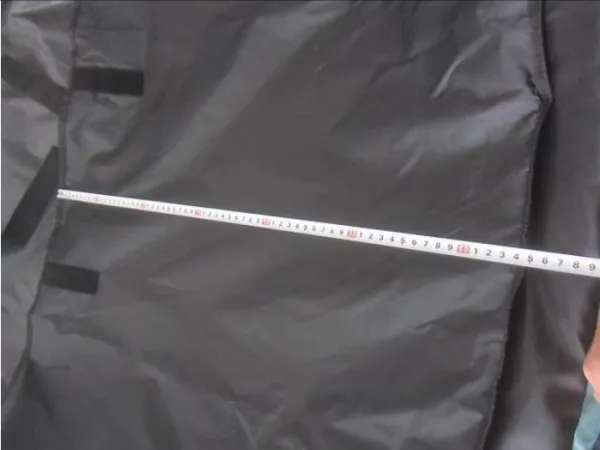
Repeatable finished measurements support production control; the intended item remains the final fit check.
Define access and closure from use
Straight zippers, U-shaped openings, flaps, drawcords, buckles and wraps support different workflows. Define clear opening, operating direction, slider or buckle position and whether the closure remains accessible under load.
Check insertion and removal without scraping or snagging the item. Ensure lining and retention components do not enter zipper paths. If frequent access matters, define a cycle protocol using the production-intent construction.
Use the zipper, buckle and hardware guide to specify components as installed systems rather than generic sizes.
Build organization from named contents
For every pocket, loop, divider or sleeve, identify the item, dimensions, orientation, access direction and retention. Tools, cables, bottle accessories and small parts can require different edge and visibility treatments.
Test all zones simultaneously. A full external pocket can compress the main body; loaded lid storage can make a case fall closed; a tool handle can interfere with another tool. Empty pocket geometry does not establish usable organization.
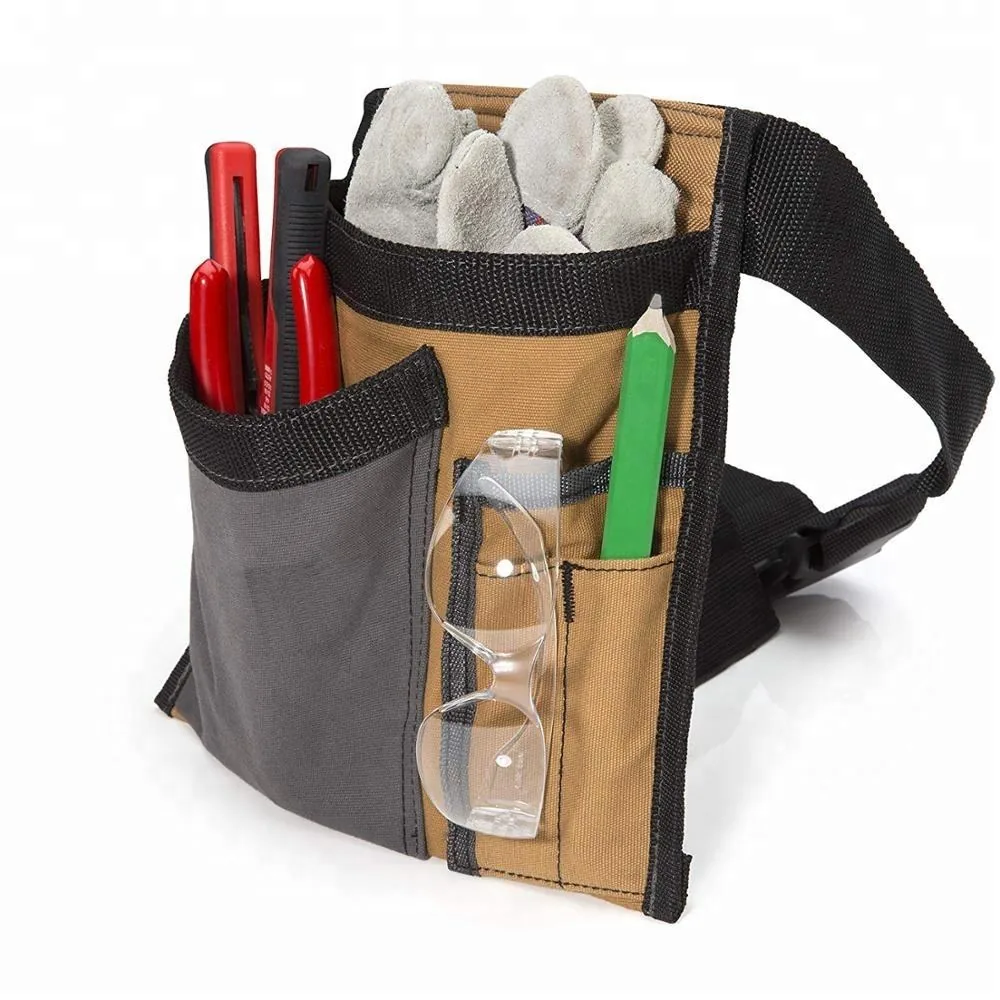
ES0279 illustrates a compact tool-organizer direction. Its appearance does not prove fit for a new tool set, belt compatibility, load, durability or user safety.
Treat retention separately from storage
An item can fit yet move, rotate or leave its intended zone during handling. Define acceptable movement and choose retention such as shaped pockets, elastic, straps, hook-and-loop, dividers or fitted geometry accordingly.
Elastic extension, recovery and contact pressure should be reviewed with the actual item. Hook-and-loop areas need engagement dimensions and cycle expectations. Straps and buckles need routing, adjustment and loose-end control.
Check retention in all intended orientations and after representative carrying. Do not use safety or secure-transport claims without a method that represents the actual risk.
Define protection from a named hazard
“Protective” has no useful meaning without the item and hazard. Identify abrasion, surface marking, dust, splash, compression, drop, impact, vibration, heat or another exposure. State direction, severity, duration or cycles and acceptable item and bag outcomes.
Foam thickness alone does not prove protection. Foam family, density, compression, coverage, seams, gaps, hard supports and item retention matter. Test the complete packed system using an approved item or surrogate.
Avoid transferring results between different sizes or payloads without review. A protective result belongs to the tested construction and protocol.
Specify contact surfaces
The inside surface may contact paint, polish, glass, rubber, leather, metal or printed packaging. Define lining composition, colour, finish and seam orientation around the item. Identify risk of scratching, colour transfer, migration, staining or trapped moisture.
If chemical or temperature compatibility matters, name the material, substance, concentration, temperature, duration and pass criteria. A soft hand or smooth appearance is not evidence of compatibility.
For bottle or gift packaging, determine whether the bag contacts only a closed container or another product surface. Do not infer food-contact or other regulated suitability from the bag format.
Specify the complete material stack
“Nylon,” “polyester,” “canvas,” “leather” and “PVC” are incomplete specifications. Record composition, construction, weight or thickness, coating or lamination, finish, colour and supplier reference where controlled. Map shell, lining, foam, boards, interlining and reinforcement by panel.
Heavy fabric does not automatically create a durable bag. Seams, binding, hardware, pocket geometry, edge exposure and installed load paths can be controlling points. Use the nylon versus polyester guide and canvas material guide for measurable fields.
Map reinforcement to actual forces
Locate lift points, loaded pockets, closure ends, sharp-item zones, base contacts and transitions between stiff and flexible areas. Define reinforcement material, size, orientation, seam and reverse-side construction at each point.
More layers are not automatically better. Added bulk can create sewing difficulty, hard edges or stress concentration. Trial the full stack at corners and intersections using production-intent tools and settings.
The stitch and seam guide explains why reinforcement patterns must be evaluated as complete joints.
Build handles and straps as installed systems
Define every lift and carry mode, packed mass, handle geometry, clearance, strap range, webbing, hardware, anchors and reinforcement. A component rating does not prove the installed bag assembly.
Apply force in realistic directions. A top lift, side pull, shoulder carry and belt-mounted movement load different joints. Record mass or force, duration or cycles, conditioning and acceptance criteria, then inspect stitches, fabric, reinforcement, hardware and permanent deformation.
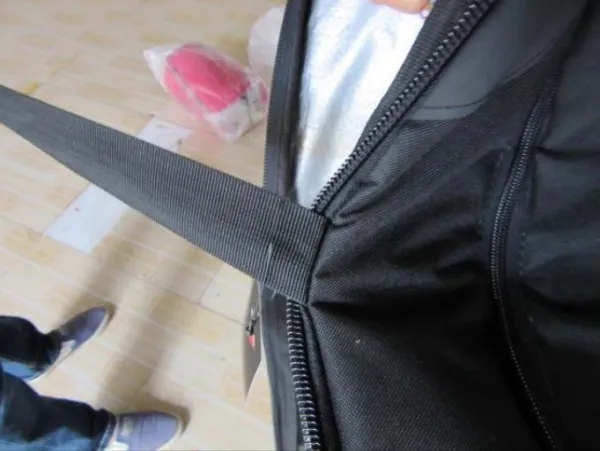
A load check is meaningful only with direction, sample revision, load or force, duration and pass rules.
Keep water and environmental claims scoped
A coated shell does not make a finished special-purpose bag waterproof. Seams, zippers, drawcords, handle anchors and access openings create water paths. Define splash, rain, spray, standing water or immersion separately, plus the protected zone and acceptable ingress.
Dust, UV, heat, cold, oils and chemicals also require exact exposure and criteria. Do not group them under a general “outdoor” or “industrial” claim. Use the water-resistance terminology guide to write a finished-product protocol.
Adapt bottle, wheel and cover formats carefully
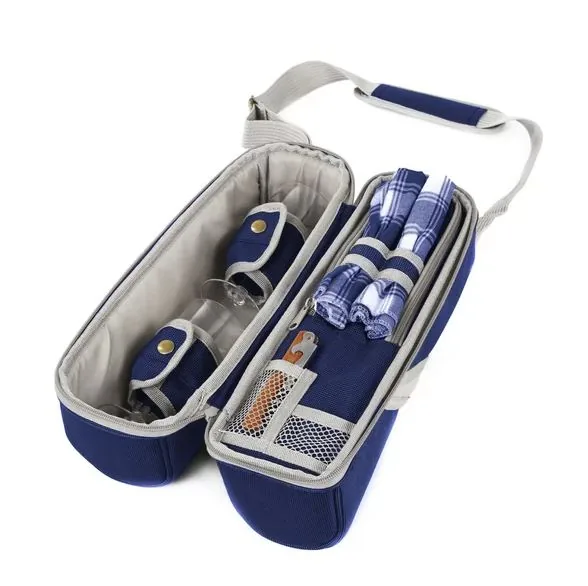
A bottle presentation bag needs the container dimensions, filled mass, base geometry, neck or closure interaction, handle load and presentation state. The Benshine TB002 record provides a wine-bag format reference, not proof of universal bottle fit, load strength, protection or reusability.
Wheel and tyre covers require diameter, width, tread profile, handle location and contact conditions. Fishing-reel, instrument and equipment cases each need their own geometry and hazard review. Do not scale one reference by percentage and assume construction transfers.
Control branding without compromising function
Provide artwork, dimensions, colour target, method, placement and orientation. Curved covers, loaded pockets and fold lines can distort or hide graphics. Keep branding away from critical access, retention and inspection zones unless the interaction is approved.
Approve decoration on the exact production-intent substrate. Review opacity, registration, surface, reverse-side effects and required rubbing, flexing or cleaning. The logo method comparison supports process-specific decisions.
Packaging can change fit and structure
Folding and compression can deform foam, boards, piping and fitted panels. Hardware can mark adjacent surfaces. Define folding sequence, inserts, protective layers, individual pack, carton quantity and orientation.
Run a pack-out and recovery trial. Recheck fit, opening, supports, hardware and artwork after the defined storage or transit simulation. If the bag ships with its item, control insertion, protection, labels and responsibility for final pack verification.
Approve special-purpose bags in stages
- Item and workflow brief: drawing, sample, mass, accessories and use sequence.
- Fit model: clearances, usable dimensions, opening and insertion path.
- Organization mock-up: pockets, retention, access and loaded balance.
- Material and joint trials: shell, lining, padding, supports and reinforcement.
- Finished sample: carrying, closures, branding and packaging.
- Hazard-specific tests: load, abrasion, protection, water or other named protocols.
- Pre-production approval: freeze pattern, BOM, workmanship, tests and pack-out.
If the carried item, material, foam, hardware, pattern or packaging changes, review the effect and repeat relevant approvals.
Production quality-control points
Order-specific inspection can include:
- controlled item and specification revision;
- shell, lining, foam, support and reinforcement identity;
- external and usable dimensions plus clear opening;
- item fit, clearance, insertion and removal;
- pocket, loop, divider and retention placement;
- zipper, buckle, hook, adjuster and closure function;
- handle, strap, belt interface and anchor construction;
- seams, binding, corners and stitch condition;
- surface contact and potential hard points;
- artwork size, colour, position and workmanship;
- project-specific load, cycle, abrasion, water or protection checks;
- packaging, labels, carton and traceability;
- conformity to the approved sample.
Sampling does not prove every unit. The bag quality-control guide connects incoming, first-piece, in-line and pre-shipment controls.
Special-purpose bag RFQ checklist
Send the manufacturer:
- item drawing, dimensions, mass, geometry and revision;
- accessories, packed arrangement and centre of gravity where relevant;
- loading, access, use, storage and removal workflow;
- finished external and usable dimensions plus fit tolerances;
- panel, pocket, loop, divider and retention drawings;
- exact shell, lining, foam, support and reinforcement constructions;
- zipper, closure, buckle, hook, webbing and hardware details;
- handles, straps, belt or other installed load paths;
- contact-surface and environmental exposure requirements;
- named protection, load, abrasion, water or cycle protocols;
- artwork, labels, instructions and placement;
- approved samples and change-control rules;
- quantity by size, colour and version;
- folding, packaging, carton, inspection and delivery conditions.
MOQ, price, feasibility and timing depend on geometry, materials, pocket count, retention, reinforcement, hardware, testing, quantity, version splits and packaging. Request current project confirmation after specification review.
Develop the bag around the item and workflow
Benshine can review tool organizers, bottle bags, product covers, equipment cases and other special-purpose directions around the real item, access, fit, retention, carrying, protection, evidence and quality controls. Published references are construction starting points; exact claims and commercial terms remain project-specific.
Explore custom tool bags, packing bags and wine bags, or send your item drawing and functional-bag brief.
Quick answers
What is a special-purpose or functional bag?
It is a bag, cover or organizer developed around a defined item and workflow rather than a broad fashion category. Tool organizers, bottle carriers, wheel covers, equipment cases and fitted pouches can all be special-purpose projects, but each needs its own controlled specification.
What information is needed to design a product-specific bag?
Provide the item and accessory dimensions, mass, geometry, contact points, workflow, handling environment, access and retention, protection requirements, carrying, exact materials, branding, tests, packaging and destination market.
Does padding guarantee protection in an equipment bag?
No. Protection depends on item fit, retention, foam construction, coverage, gaps, supports, seams, closure and the specific hazard. Define a finished packed-system protocol and acceptance criteria.
How should fit be approved for a custom functional bag?
Use the real item, an approved dimensional surrogate or a controlled fixture. Check insertion, removal, clearances, movement, closure, access and carrying in the intended orientation. Outside dimensions alone do not establish fit.
Can one material be described as durable or waterproof for every use?
No. Material identity, construction, coating, seams, zippers, attachments, load and exposure all affect finished performance. Name the required outcome and validate the complete bag under a written method.
What belongs in a special-purpose bag RFQ?
Include item drawings and mass, workflow, fit and access, panel and pocket plan, exact material layers, retention, reinforcement, closures, handles or straps, performance protocols, artwork, quantity, packaging and delivery conditions.